First in our industry to be responsible AI certified
Learn more →
Digital Signage RFP Template

Access Guide
About this Guide
Selecting the right digital signage software can be a complex and overwhelming task. With the seemingly unlimited number of options available, it’s crucial to get your selection right, as not all platforms are equal. To make it easier to get the right digital signage platform, we’ve created an RFP template for you to use to help ensure you get the solution that meets your unique needs.
Whether you’re setting up a new digital signage network or upgrading an existing system, our template is customizable to fit your specific requirements. It helps you define your business goals succinctly and align your selection criteria accordingly. Evaluate potential vendors on a wide array of crucial capabilities including system security, ease of use, scalability, and support. Our template guides you through asking the right questions to ensure you choose a vendor that can support your long-term objectives and provide a superior user experience for your team.
What’s Inside?
- Pre-built, customizable RFP framework
- Key criteria for vendor selection
- Essential questions for assessing scalability, security, integrations, and support

Join The Mailing List to get The Latest Resources
Related Content

Beyond the Meeting: The Business Case for Idle Screen Takeovers
This guide explores how organizations can transform idle conference room screens into valuable employee communication channels. By displaying content between meetings—and automatically returning screens to their primary function when needed—businesses can extend the value of existing technology without disrupting workplace workflows. Idle screen takeovers can reinforce strategic priorities, expand campaign reach, promote time-sensitive information, improve meeting readiness, celebrate employee achievements, and deliver location- or audience-specific messages. The guide recommends keeping each screen focused on one clear message with concise copy, strong visual hierarchy, and an appropriate expiration date. The guide also provides a readiness checklist covering technical compatibility, stakeholder roles, content ownership, targeting capabilities, measurement, and governance. It encourages organizations to begin with a focused, low-risk pilot, evaluate its impact, and then scale the program across additional screens and locations.
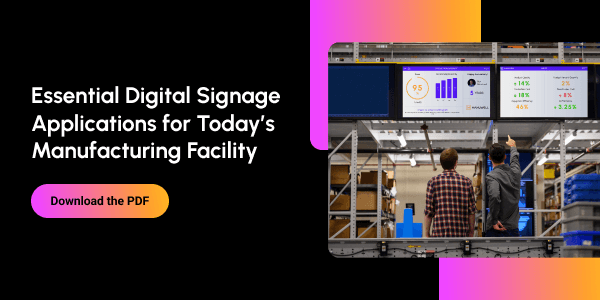
Essential Digital Signage Applications for the Modern Factory Floor
This guide explains how digital signage helps modern manufacturing facilities turn real-time information into action. Strategically placed screens give operators, supervisors, and plant leaders immediate visibility into production performance, machine status, schedules, alerts, standard work instructions, and operational milestones. It also highlights applications that support quality, safety, and employee communication. These include inspection and scrap dashboards, environmental monitoring, process-change notifications, safety metrics, hazard and emergency alerts, training reminders, company news, HR updates, and employee recognition. By connecting digital signage with MES, business intelligence, maintenance, quality, equipment, inventory, and logistics systems, manufacturers can bring previously siloed data directly onto the factory floor. The result is stronger situational awareness, faster responses, better coordination, and improved productivity, quality, safety, and workforce alignment.
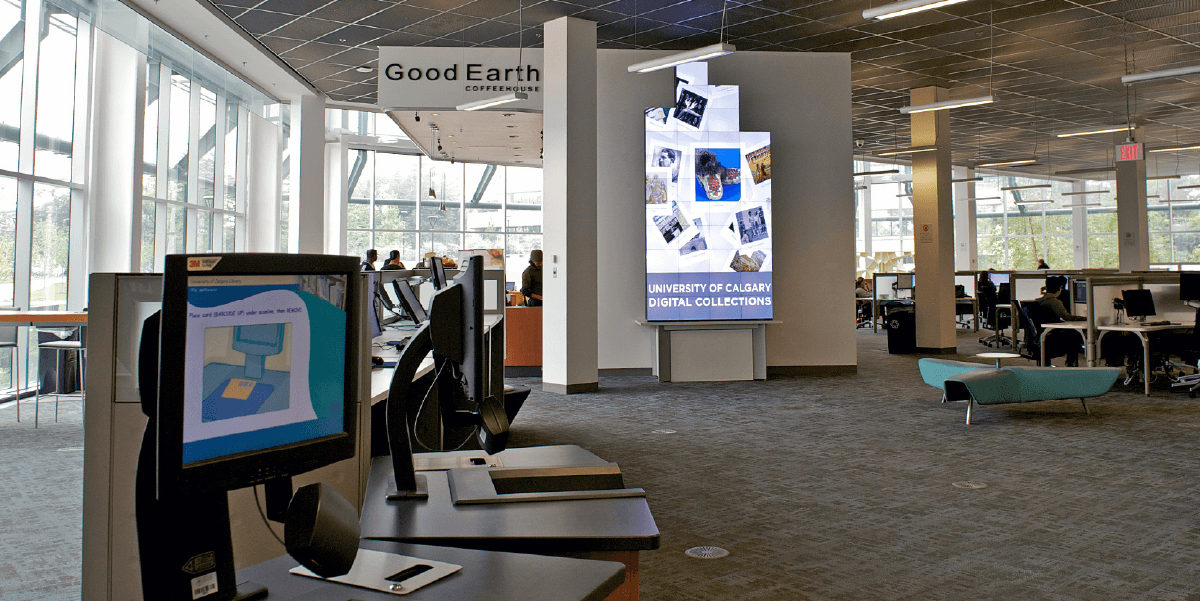
Campus Communication Reimagined: The Digital Signage Advantage
Over the past two decades, campus communication has shifted from posters and email blasts to a complex web of comms channels that are accessible to students, faculty, and visitors throughout their days. The modern university is both physical and digital, and the speed of communication must meet the needs of a digitally-native generation. In this environment, digital signage has moved from a nice-to-have to a strategic medium—visible, immediate, and flexible—one that connects a dispersed campus. This whitepaper explores how institutions are using digital signage to communicate smarter and faster, and how to build a program that is easy to operate, simple to scale, and resilient in the moments that matter most. Drawing on Poppulo’s expertise in digital signage for college campuses , we’ll share how leading universities are centralizing digital signage management, empowering multiple departments, and using data and design to make every message count. Keep reading to learn how top universities are leveraging digital signage to create more connected, informed, and vibrant campus communities, setting new standards for communication in higher education.