First in our industry to be responsible AI certified
Learn more →Internal communication is under real pressure. IC teams are expected to support leaders, shape culture, and deliver relevant, personalized communication to an increasingly diverse audience—all while operating at greater speed and scale than ever before. AI arrives at the right moment. It doesn’t replace communicators; it elevates them. Applied well, AI sharpens the fundamentals of effective communication: diagnosing issues, shaping the narrative, guiding leaders, and delivering messages that connect people to purpose and progress. At its best, AI accelerates drafting, adapts content for different formats, improves accessibility, and surfaces insights about what’s landing. Without governance, though, it can create noise or risk. The opportunity for IC teams is to bring AI in thoughtfully, with governance and human judgment at the center. This guide shows how to do exactly that. Inside, you’ll find practical guidance on when to use AI, where humans remain essential, how to establish guardrails, how to prompt effectively, and how to scale AI responsibly across channels and teams.
DOWNLOAD NOWPoppulo AI is designed to support communicators with drafting, adaptation, insight, and orchestration—while keeping humans in control of judgment, tone, and intent.
Governance is central to Poppulo’s AI approach: first employee comms company to earn ISO 42001, the global benchmark for Responsible AI. Every AI capability is designed with guardrails, approvals, and oversight—so speed never comes at the expense of trust.
"AI is no longer a luxury in internal communications. It’s fast becoming the standard for delivering clarity, speed, and strategic relevance at scale."
— Ruth Fornell,
Chief Executive Officer, Poppulo
Fast drafts and summaries
Stable tone and terminology
Multilingual, multichannel
Role or region-specific
Engagement and sentiment patterns
Nuance and context
Sensitive or emotional communication
Accuracy and compliance
Message priorities and intent
Creates content from prompts: drafts, rewrites, summaries, translations.
Performs multi-step tasks, uses tools, and works within guardrails.
General-purpose models trained on massive datasets.
Specialized models optimized for specific tasks.
Poppulo’s AI is strongest in exactly these areas. From first drafts to multilingual adaptation and channel specific versions, it helps teams move faster without sacrificing consistency.
Poppulo keeps humans firmly in the loop. AI assists with speed and scale, but accountability, empathy, and strategic intent always remain human-led.
Thinking of agentic AI as a chatbot is like calling a smartphone a pager. Both involve communication—but that’s where the comparison ends. Chatbots respond. Agentic AI changes how work actually gets done.
In most organizations, AI governance is a shared responsibility—shaped by collaboration across functions rather than formal authority. What matters is clarity around roles, so AI is used safely, consistently, and in alignment with organizational priorities.
Sets expectations for tone, clarity, and content quality. Provides prompting guidance and helps ensure AI-assisted messages remain accurate, human-centered, and aligned with brand and culture.
Defines where AI use is appropriate and reviews high-risk, regulatory, or sensitive content. Advises on compliance, disclosure, and risk boundaries.
Evaluates and enables approved AI tools. Manages access, integrations, and data-handling requirements to ensure privacy, security, and confidentiality standards are met.
Guides communication related to employee experience, cultural tone, and people impact. Helps ensure AI-assisted messages reflect organizational values and inclusion standards.
Provide context, intent, and subject-matter accuracy so AI-supported messages reflect operational realities and strategic priorities.
Poppulo applies AI within a connected communication system. Channels, audiences, workflows, and governance work together rather than in isolation.
Guardrails provide clear expectations and give teams confidence to use AI safely and consistently.
Keep messages human, respectful, and aligned with your brand.
Verify facts, policy language, and compliance details; AI never publishes independently.
Enter only approved, non-personal information into AI tools.
Use approved terminology and style guidelines.
Maintain plain language, readability, and inclusive phrasing.
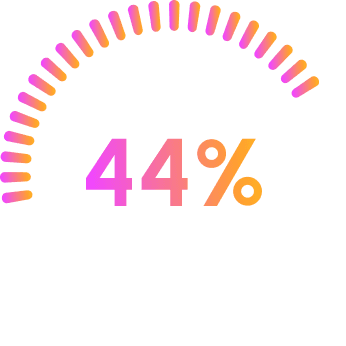
Avoiding AI entirely creates its own risks: slower turnaround times, inconsistent messaging across teams, and the rise of ungoverned “shadow AI.”
44% of employees have used AI in ways that violate company policies and guidelines. (KPMG, Shadow AI is already here, 2025).
These six pillars define the non-negotiables of responsible AI use.
Defines which tools, use cases, and content types AI may support; teams must know what’s allowed and what’s not.
Ensures AI outputs stay accurate, empathetic, and appropriate across roles, regions, and scenarios.
Clarifies what information can be entered into AI tools and what must remain restricted to protect privacy.
Sets human-in-the-loop requirements so AI-assisted content is checked for tone, accuracy, and risk before publishing.
Assigns ownership for maintaining the policy, updating it as tools evolve, and ensuring consistent adherence.
Responsible AI Standards: Choose AI partners aligned to global standards that demonstrate their systems are governed, secure, and trustworthy.
Trust starts with how AI is built. Poppulo’s Agentic AI is designed with governance, security, and human oversight at its core—reflected in its world-first Responsible AI Certification.
The first international standard for AI Management Systems, ensuring AI is developed and used responsibly.
Once the core message is defined, AI becomes a powerful partner in adapting it for each channel. One announcement can quickly become:
40-80 words with brief context.
1-2 concise sentences.
10–15 words highlighting today’s action.
6-8 words for fast reinforcement.
Longer detail, visuals, FAQs.
AI now enables fast, consistent, and highly accurate translations at scale, making it possible to communicate inclusively across global workforces without slowing teams down. For most everyday and operational communications, AI translation can be used confidently end-to-end.
Human review remains important for business-critical, high-risk, or emotionally sensitive messages, where cultural nuance, tone, or regulatory context matter most. Used this way, AI doesn’t replace judgment—it allows communicators to focus it where it adds the greatest value.
No matter the audience, strong communication remains:
Plain language and logical flow.
Culturally aware and bias-free.
Scannable formatting and accessible design.
Audience realities differ by environment:
Prioritize brevity, mobile-first content, and leader reinforcement.
Align timing and cadence across onsite and remote workers.
Use tighter review loops; keep high-risk language human-led.
Localize—not just translate—to respect cultural and regional nuance.
Poppulo’s AI-powered automatic email translation covers almost 50 languages and customers have said it’s better and more accurate than traditional translation services.
What’s happening? Why does this message exist?
Who will read it? What’s their environment, access, or concern?
What do you want them to understand, feel, or do?
How should it sound? What channel or length do you need?
[Graphic – designed as chat prompt window]
“Rewrite this announcement for frontline employees who don’t regularly check email [R]. Keep it under 40 words and focus on the one action required today [I]. Use a clear, conversational tone [T]. Context: We’re updating procedures for clocking in during equipment maintenance [C].”
“Summarize this 250-word leadership note into a short Teams post for hybrid employees [R]. Emphasize what’s changing next month [I]. Format it as 3 short sentences with a confident, supportive tone [T]. Context: We’re rolling out a new performance management cycle [C].”
“Translate this safety update into neutral Spanish for U.S. manufacturing teams [R]. Keep the instructions direct and action oriented [I]. Use a warm but firm tone [T]. Context: We’re introducing new PPE requirements following an equipment upgrade [C].”
AI can generate fluent content, but it cannot guarantee correctness. Humans must confirm facts, dates, policy language, and any content tied to compliance or risk.
Review AI output for empathy, inclusion, and cultural sensitivity. Small shifts in phrasing can significantly affect how messages land with different employee groups.
AI should never introduce commitments, promises, or guarantees on behalf of the organization. Clear guardrails prevent unintended or risky language.
AI can be overly agreeable, sometimes reinforcing assumptions instead of challenging them. Encourage it to offer alternative angles or questions to strengthen clarity and accuracy.
Where appropriate, consider small transparency notes such as “Drafted with AI assistance and reviewed by Communications and HR.” This reassures employees that while AI supports efficiency, humans remain responsible for accuracy, judgment, and intent.
AI doesn’t only support creation, it also sharpens understanding. By analyzing engagement data, surfacing sentiment patterns, or highlighting where messages aren’t landing, AI helps IC teams see how communication is actually being experienced.
Use AI to identify under-engaged audiences, detect fatigue, flag recurring questions, and recommend where to clarify or reinforce. This listening layer strengthens both message strategy and channel orchestration, ensuring content is delivered strategically.
Scaling AI in internal communications is an evolution. Most organizations begin small—one team, region, or message type—to test guardrails and refine workflows. As confidence grows, adoption expands across more channels, audiences, and content categories. Early adopters play a crucial role in sharing what works and normalizing AI use across the organization.
Did the message get to the right people?
Did employees open, view, or interact with it?
Did they grasp what the message meant or required?
Did behavior follow?
Did it move the needle?
Sharing results inside the organization helps build support for AI-assisted communication. Clear before-and-after examples—like stronger comprehension, higher action rates, reduced noise, or improved reach to frontline teams—demonstrate progress.
These stories reinforce the value of good governance, thoughtful content design, and consistent workflows.
“Traditional metrics show activity. Impact measurement shows whether communication changed something.”
— Andrew Hubbard
Senior Director of Communications, Poppulo
If AI still feels uncertain, begin in a low-risk area that shows value quickly. Many communicators build confidence by starting with research and analytics—summarizing surveys, surfacing themes, or spotting where messages have (or haven’t) landed. Once you see how quickly AI can reveal patterns and possibilities, expanding into content creation feels far more natural.
“If you’re unsure about AI, start with research and analytics and get it to ‘wow’ you. Those early insights make the rest much easier.”
— Frank Gauld
Chief Product & Technology Officer, Poppulo