

GUIDES
8 Top Tips & Insights for a corporate and personal brand development strategy
About this Guide
Lesley Everett of Walking Tall is one of the world's leading authorities on the importance of personal branding and its crucial role in business today. So it wasn't a surprise that her Poppulo webinar on corporate brand development strategy Creating Trust, Respect, and Authenticity in your Personal and Corporate and Brands, was such a success.
In the webinar, Lesley looked at the alignment of people behaviors with corporate brand messaging and the potential risk to business by not managing it effectively and leaving it to chance. So to make the insights from the webinar easily accessible, we have constructed this quick-read 8 Tips & Insights to create trust, respect, and authenticity in your personal and corporate brands.
Branding was once the sole preserve of commercial enterprises, but no more. Nowadays almost everybody has their own brand, whether they realize it or not – and it can overlap, influence and impact the brand of the company the person works for. At a most basic personal level, your digital footprint, your texts, and social media posts can define you and how you are perceived by others. Like it or not, you are a brand. The question no longer is if you have a personal brand, but rather whether you choose to guide and cultivate it or let it be defined by others on your behalf. It's about whether you want to control how you are perceived or cede the influencing of that perception to others.
Lesley Everett is unequivocal about this: "We need to take control of our personal brand more than ever before, rather than leaving it to chance". She illustrates how absolutely critical the personal brand is to the success of any business. "Clients and customers define your brand from the experiences they receive when dealing with people from your organization, and they talk about it," she said. The Tips & Insights take you through:
- How your people are your brand
- Creating a new dimension of customer experience
- Internal communications and the employer brand
- How your authentic self and values are the key
- The 7 key principles to building a personal brand
Author

Tim Vaughan
Editorial Director, Poppulo
Related content
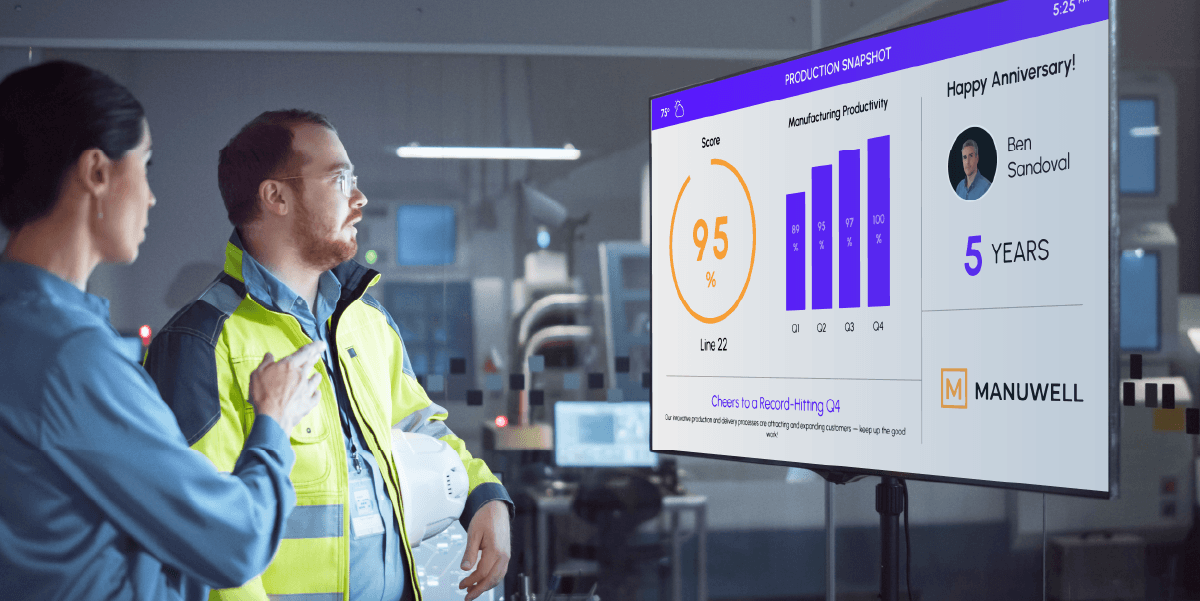
Manufacturing and production facilities are operating in an era defined by disruption, labor shortages, supply chain volatility, and rising safety and compliance demands. Leaders are under constant pressure to optimize processes, reduce downtime and rework, improve quality, and engage a workforce that is largely deskless. In this environment, clear, real-time communication isn’t a “nice to have”—it’s mission-critical. Yet production-floor employees are often the hardest to reach. Traditional channels like email, mobile apps, and intranet platforms don’t effectively connect with workers who don’t have access to devices during their shifts. When communication breaks down, so does alignment around KPIs, safety protocols, quality standards, and company goals. Digital signage has become a critical infrastructure layer in modern manufacturing environments. Together, Poppulo and BrightSign® enable manufacturers to deploy secure, scalable, and high-performance digital signage networks across thousands of endpoints. From KPI dashboards and manufacturing execution systems (MES) integrations to safety communications and employee engagement initiatives, this guide explores how manufacturers can leverage enterprise-grade digital signage to drive operational excellence, strengthen culture, and future-proof their production floor communications.

Manufacturing facilities face unique challenges when it comes to driving productivity, safety, and operational efficiency with a primarily deskless workforce—many of which can be addressed with strategically deployed digital signage. From production dashboards and manufacturing execution systems (MES) displays to wayfinding, standard work signage, safety messaging, and general employee communications, digital signage is an effective way to reach all on-site workers, regardless of their roles. That’s why manufacturing organizations around the world rely on Poppulo’s digital signage platform and secure, purpose-built media players from BrightSign® to deliver reliable, real-time information across their facilities. However, starting a new digital signage initiative or optimizing an existing network involves careful planning. In addition to defining integration requirements, you must determine the number and location of screens, the purpose of each endpoint, and the content each zone should display. Mapping out the zones in your facility that require digital signage—and identifying the audience and use case for each—can help define your digital signage footprint and uncover gaps in your current network. The templates included in this guide provide recommendations for endpoint planning across different facility zones, helping you align screen placement with operational goals and communications needs.
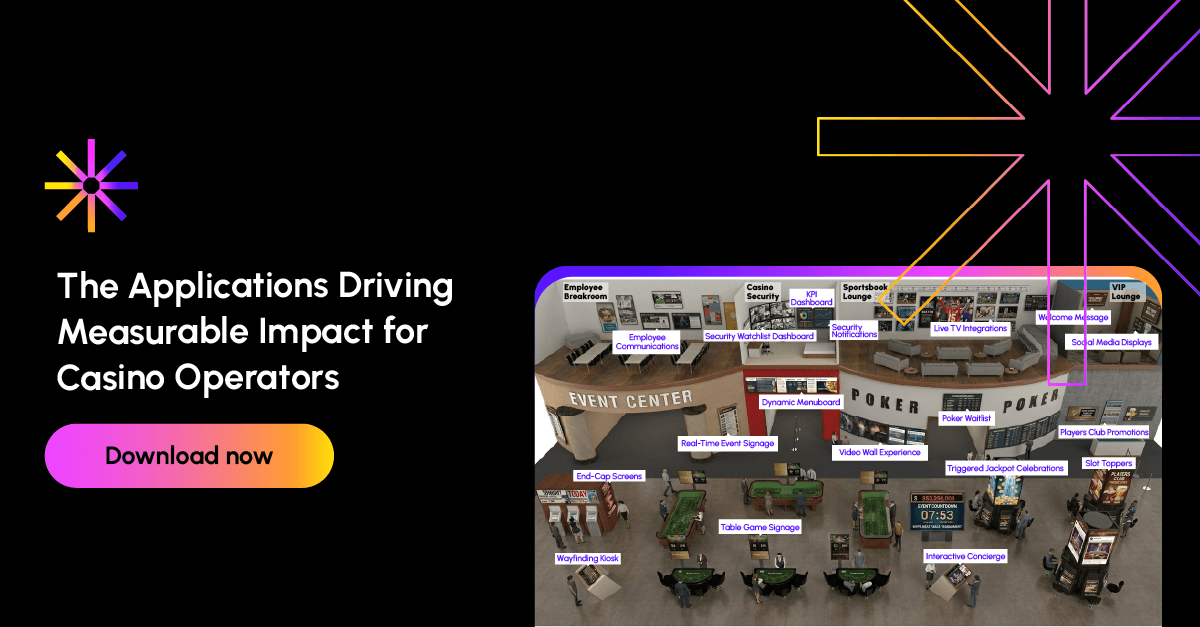
Digital signage is one of the most visible technologies on a casino floor. But, done correctly, digital signage can impact casinos in ways guests will never see. Top casinos are using digital signage as an integrated communications network—one that connects guests to experiences, empowers employee communication, andimproves casino operations. Yes, screens can and should be used for promotions, wayfinding, and menuboards. But they can be used for more than that. When used strategically, digital signage becomes more than a promotional tool. It becomes part of your casino’s attention infrastructure, and it can directly impact your bottom-line. Across your property, screens can influence decision-making in real time. They guide guests to amenities. They build anticipation for events. They amplify the excitement of a big win. They ensure staff are prepared before stepping onto the floor. They provide leadership teams with immediate operational insight. This shift in thinking can unlock tremendous value for your property. This guide explores the essential guest-facing and employee-focused applications that top casinos are deploying today to drive engagement, strengthen operational alignment, and unlock the full potential of their digital signage investment.