Are your employees being changed by their work, or are they just turning up for it?
Reading what I am writing, I know it sounds abstract, but bear with me.
This framing (borrowed as I love to do from two researchers who have nothing to do with HR) is a reframing of how we can create purposeful and fulfilling workplaces no matter what your company mission may be, from logistics to social enterprise.
Joe Pine, along with James Gilmore, wrote The Experience Economy in 1999 and laid out a framework that’s aged and evolved in an impressive way.
For all products, there is a spectrum of competitive positioning and pricing capacity, which starts at commodities (undifferentiated, low pricing) and stretches upwards...commodities become goods. Goods become services. Services become experiences. And experiences (at the top of the graph) become transformations.
The idea is that the most economically valuable thing you can offer someone isn’t a product or even an experience; it’s a change in them. You’re not selling a gym membership, you’re selling a stronger body. You’re not selling an MBA, you’re selling a different way of thinking. The customer doesn’t just consume the thing: they become someone different because of it.
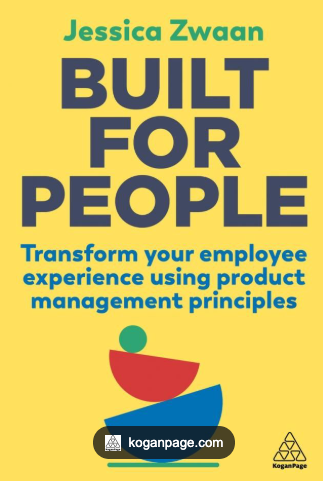
In my first book, Built for People, I argued that work is a product (a subscription product) which your People Team are the product managers of building: the Employee Experience product.
This product sits alongside your Consumer Product and Fiscal Product (shares, investor interest) as a symbiotic system that drives your company towards success.
But if that’s true, your job must be doing a job for you...right? If it’s a product we’re buying, it has some kind of utility, a purpose in our lives.
Okay...now meet Amy Wrzesniewski, a Yale organizational psychologist whose research categorizes how people relate to their work. Not by job title or sector, but by orientation.
You can see your work as a job (a transaction: time for money, no more), a career (a vehicle for progression and status), or a calling (work that is inseparable from identity, where the meaning is intrinsic).
Her research found that orientation isn’t determined by the work itself. Hospital cleaners who saw their role as central to patient recovery described their work as a calling. Lawyers who felt trapped in their practice described it as a job. Same structure, very different relationship with what that structure means.
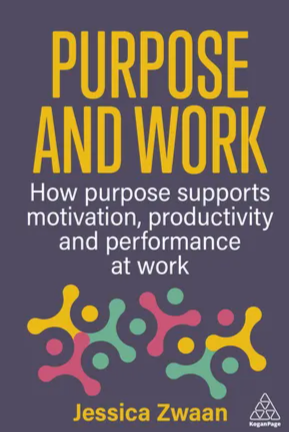
Writing my first book, the connection to People strategy was hard for me to ignore, so I went ahead and wrote another about just this: how do modern leaders build workplaces that offer a sense of purpose, across the “People Transformation Economy” and embracing Wrzesniewski’s research as a strength in their practice.
A calling, in Pine’s language, is a transformation. When someone experiences their work as a calling, the work is changing them: building their sense of identity, deepening their skills, connecting them to something larger.
The transaction goes both ways. The organization gets discretionary effort, loyalty, and genuine investment. The person gets, well, a reason to be there that doesn’t disappear the minute Glassdoor shows them a better offer somewhere else.
Most People strategies are most alive at the experience layer. We are very, very good at designing experiences, and for many folks that is what they are seeking at work: a career. People Teams have onboarding portals, offsites, well-being stipends, flexible working frameworks, and beautifully produced culture decks to support this kind of positioning.
And those things matter, very genuinely. And for some workplaces that is truly enough, your “customers” may only be in the market for experiences, but for some of them, they are looking for more.... They’re seeking transformations.
After all, an oat milk flat white in a nice office is an experience. Watching someone become a significantly better version of themselves through their work? That’s a transformation. One of those is substantially harder to copy.
The practical implication is this: if you’re designing Employee Experiences as you would products (and you should be), the question isn’t just “what do employees experience?” but “what do employees become?” That’s a different brief entirely.
A few ways to stress-test this in your own programs:
Your performance framework: is it designed to evaluate people, or to develop them? A calling orientation requires that employees can genuinely see their own growth. If your feedback process produces a score and a PDF that nobody takes seriously and respects, it’s an experience at best (and probably not a good one).
Your manager capability work: managers are the single biggest lever on whether someone experiences their work as a job or a calling. Not because they bestow meaning, but because they create the conditions for it. A manager who connects work to purpose, who names growth when it’s happening, who gives people problems worth solving, that’s transformation-oriented people management.
Your onboarding: you have a genuinely short window to set the orientation frame. If onboarding is mostly compliance and system logins, you’re communicating: this is a job. If it connects people to mission, introduces them to colleagues doing meaningful work, and explains why the role exists, you’re at least pointing toward calling.
One honest caveat: Wrzesniewski’s research is clear that you can’t manufacture a calling orientation, and you’d be right to be suspicious of any organization that tries. What you can do is remove the conditions that actively prevent it. Unclear expectations, bad managers, work that feels pointless, no visible progression—these reliably push people toward the job orientation. Fixing those isn’t inspirational. It’s just competent.
Pine’s transformation economy isn’t asking you to turn your People function into a spiritual retreat. It’s asking you to take seriously the question of what your employees are becoming, and whether your programs are actually designed with that in mind.
Most aren’t, but you can, if it’s right to invest in it.
Think; if you are building a workplace that wants to stretch into a new position in the market, there may be a gap there. That gap can be your roadmap.
- Jessica Zwaan is VP of People Strategy and Operations at Leapsome and author of Built for People and Purpose at Work. A leading voice in People Operations, she pioneered the "People Ops as a Product" framework, used in onboarding at Dropbox and Zapier. A sought-after speaker and founder of MPL Build, she helps organisations build people functions with commercial rigour and product-thinking precision.