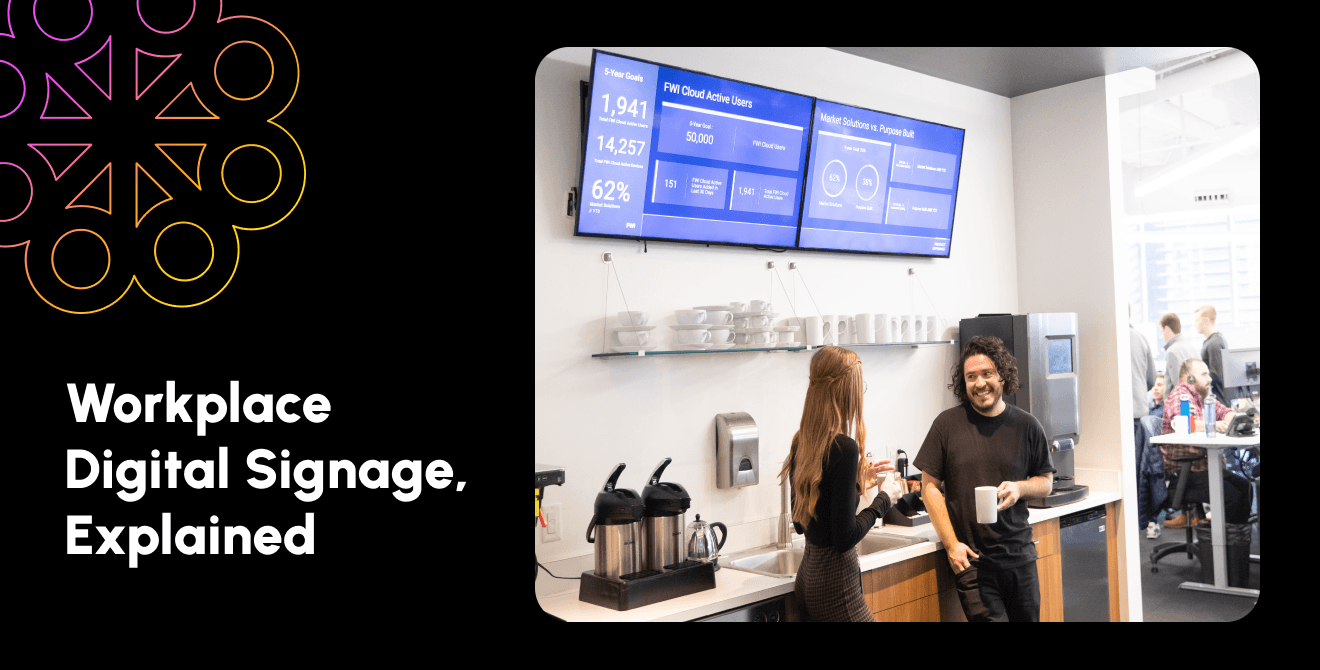
Digital signage has become a core channel for modern workplace communication. As organizations grow more distributed, fast-moving, and information-heavy, static posters can’t keep pace. Screens, when used strategically, solve that problem—delivering timely, visible, and relevant messages where employees already are.
Not all digital signage serves the same purpose, though. Different environments, audiences, and communication goals call for different approaches. Understanding the main types of digital signage—and how each supports specific workplace needs—helps organizations build a more effective internal communications strategy.
This blog breaks down the four most common types of digital signage used in workplaces today, with practical digital signage examples, real-world use cases, and the benefits that matter most to business leaders.
TL;DR
There are four primary types of digital signage used in modern workplaces:
- Indoor digital signage supports everyday internal communications, dashboards, and culture messaging.
- Outdoor digital signage delivers visibility, safety, and wayfinding across campuses and public-facing locations.
- Interactive digital signage enables self-service, navigation, and personalized experiences.
- Video wall digital signage creates high-impact storytelling and executive-level communication.
Together, these digital signage types help organizations share information faster, improve engagement, and maintain consistency across locations.
What Is Digital Signage in the Workplace?
Digital signage refers to networked screens used to display dynamic content—such as announcements, data, visuals, or video—in physical spaces. In the workplace, digital signage is primarily used to support internal communications, employee engagement, and real-time information sharing.
Unlike email or intranet posts, digital signage reaches employees passively and repeatedly throughout the day. Screens in lobbies, break rooms, hallways, and meeting areas reinforce key messages without adding to inbox overload. Think: complimentary communication.
When connected to a centralized platform, content can be updated instantly, scheduled by location, and governed consistently across the organization.
In short, workplace digital signage turns physical spaces into active communication channels.
Why Organizations Use Different Types of Digital Signage
No two workplaces look the same. A corporate headquarters, a manufacturing site, a healthcare campus, and a university all have distinct communication needs—and often multiple audiences moving through the same spaces.
That’s why organizations rely on different types of digital signage rather than a single screen format. Indoor displays work well for daily updates and culture-building. Outdoor screens prioritize visibility and safety. Interactive signage supports self-service and navigation. Video walls deliver scale and impact when the message needs to stand out.
Choosing the right mix allows organizations to tailor messaging to context, location, and intent—without fragmenting their communications strategy.
Type 1: Indoor Digital Signage
Indoor digital signage is the most common and versatile signage type used in workplaces. These displays are typically placed in offices, lobbies, meeting rooms, elevators, cafeterias, and shared spaces where employees naturally gather.
Because they sit inside controlled environments, indoor screens are ideal for frequent updates and a wide range of content formats.
Common Workplace Use Cases
Indoor digital signage supports many everyday communication needs, including:
- Company announcements and leadership updates
- KPI dashboards and operational metrics
- Wayfinding within large office buildings
- HR reminders, events, and policy updates
- Culture-focused messaging, recognition, and values
These digital signage examples help ensure important messages stay visible beyond a single email or meeting.
Key Benefits for Organizations
The primary digital signage benefits of indoor displays include:
- Higher engagement—messages are seen repeatedly throughout the day
- Consistency—standardized messaging across departments and locations
- Real-time updates—content can change instantly as priorities shift
Indoor digital signage becomes especially powerful when integrated with internal communications planning, reinforcing what employees hear through other channels.
Type 2: Outdoor Digital Signage
Outdoor digital signage is designed for visibility in open, high-traffic environments. These screens are commonly used across large campuses, building entrances, parking areas, and public-facing locations.
Because outdoor displays must withstand weather, lighting changes, and distance viewing, they serve a more focused but highly visible communication role.
Common Workplace Use Cases
Outdoor digital signage use cases often include:
- Directional signage and campus navigation
- Safety alerts and emergency notifications
- Visitor information and event messaging
- Public-facing brand or employer messaging
In multi-building workplaces, outdoor signage helps orient employees and visitors before they even step inside.
Key Benefits for Organizations
Outdoor digital signage delivers benefits such as:
- High visibility in busy or transitional spaces
- Durability built for long-term, external use
- Extended reach beyond interior walls
For organizations with distributed campuses or public access areas, outdoor signage plays a critical role in safety and experience.
Type 3: Interactive Digital Signage
Interactive digital signage allows users to engage directly with on-screen content through touch, motion, or connected devices. Unlike passive displays, interactive signage invites action—making it especially valuable for navigation, self-service, and onboarding.
These displays are often deployed as kiosks, directories, or room-based tools.
Common Workplace Use Cases
Typical interactive digital signage use cases include:
- Self-service kiosks for visitors and employees
- Room booking and space management
- Interactive directories and wayfinding
- New-hire onboarding and orientation support
Interactive digital signage examples reduce friction by giving people immediate access to the information they need—without relying on staff or printed materials.
Key Benefits for Organizations
The most notable benefits include:
- Stronger engagement through participation
- Operational efficiency via self-service tools
- Personalization based on user input or location
When used thoughtfully, interactive signage improves both employee experience and visitor perception.
Type 4 – Video Wall Digital Signage
Video wall digital signage uses multiple screens combined into a single, large-format display. These installations are designed for maximum visual impact and are typically placed in lobbies, town hall spaces, innovation centers, or executive areas.
Video walls elevate digital signage from informational to experiential.
Common Workplace Use Cases
Video wall digital signage is often used for:
- Executive and leadership messaging
- Company-wide announcements and milestones
- Brand storytelling and culture visuals
- Live events, broadcasts, and presentations
These digital signage examples are particularly effective during moments that require attention and emotional connection.
Key Benefits for Organizations
Key digital signage benefits of video walls include:
- Scale that commands attention
- Visibility from long distances and large spaces
- Storytelling impact through motion and design
For organizations looking to reinforce identity and leadership presence, video walls deliver unmatched presence.
How Digital Signage Supports Internal Communications Strategy
Digital signage works best when treated as part of a broader internal communications ecosystem—not as a standalone tool. Different signage types align with different communication objectives:
- Indoor screens reinforce daily updates and operational clarity
- Outdoor signage supports safety, navigation, and awareness
- Interactive signage empowers self-service and autonomy
- Video walls amplify leadership and brand storytelling
Together, these digital signage types ensure messages reach employees in the right place, at the right time, and in the right format—supporting clarity, trust, and alignment across the organization.
Elevate Workplace Communication with Poppulo Digital Signage
The Poppulo Digital Signage Platform brings all digital signage types together under a single, centralized system. Organizations can manage screens across locations, schedule content by audience or space, and maintain governance without slowing down communication.
With Poppulo, teams can:
- Deliver timely, relevant messages across every workplace screen
- Scale digital signage programs globally with confidence
- Align signage content with broader employee communications
The result is a connected workplace where information flows clearly—and employees stay informed, engaged, and aligned.
FAQs
What are the main types of digital signage?
The main types of digital signage are indoor, outdoor, interactive, and video wall displays. Each serves different workplace communication needs, from daily updates to high-impact storytelling.
Which type of digital signage is best for offices?
Indoor digital signage is typically best for offices, as it supports internal announcements, dashboards, and culture messaging. Many offices also benefit from interactive signage for room booking and navigation.
Can digital signage improve employee engagement?
Yes. Digital signage can improve engagement by making information more visible, timely, and relevant—especially when paired with strong internal communications strategy and consistent messaging.
Is digital signage suitable for large organizations?
Digital signage is highly scalable and well-suited for large, distributed organizations. Centralized platforms like Poppulo allow teams to manage content across regions while maintaining governance and consistency.
How does Poppulo help manage digital signage content?
Poppulo provides centralized content management, scheduling, and governance tools that make it easy to control digital signage across locations and align messaging with organizational goals.
Conclusion
Understanding the different types of digital signage helps organizations use screens more strategically—not just more frequently. Indoor, outdoor, interactive, and video wall displays each play a distinct role in workplace communication.
When combined thoughtfully, these digital signage types support clarity, engagement, and connection across the employee experience. With the right platform and strategy, digital signage becomes more than a screen—it becomes a powerful extension of internal communications.