Axero Solutions offers an intranet and collaboration platform designed to improve internal communication, knowledge sharing, and employee productivity. While it’s a solid option for mid-sized companies, organizations today are often looking for alternatives that go further, adding mobile-first design, employee advocacy, gamification, or advanced analytics.
If you’re exploring alternatives to Axero, the platforms below represent the most relevant and powerful options available this year.
Top 10 Best Alternatives to Axero Solutions
We’ve reviewed the leading options on the market and selected 10 platforms that stand out as strong alternatives to Axero Solutions. Each brings unique strengths to internal communication and employee engagement, helping organizations improve connection, culture, and overall productivity.
1. Poppulo
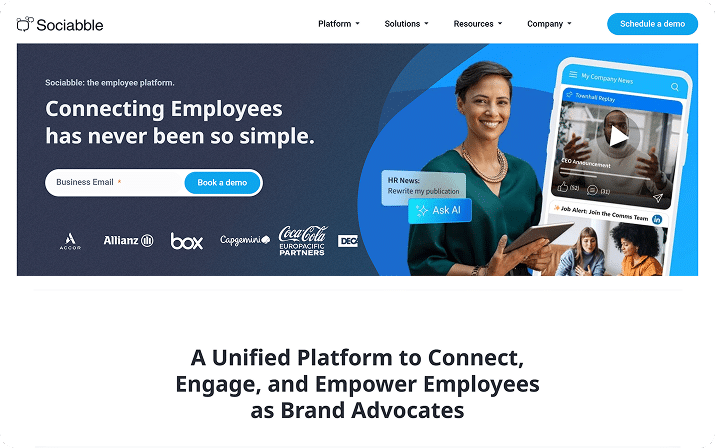
Poppulo is the all-in-one platform for employee communication, engagement, and brand advocacy. It gives companies a single hub to centralize news, amplify employee voices, and deliver personalized content across every channel. With its mobile-first design, Poppulo ensures communication reaches every employee—whether they’re at a desk, on the frontline, or working remotely.
Key Features
- Multichannel communication (mobile app, Teams, Slack, email, signage)
- Gamified employee advocacy with challenges and rewards
- AI-driven analytics and optimization
- Personalized content feeds and targeting
- Recognition and leaderboards to boost engagement
Pros
- Combines comms, engagement, and advocacy in one platform
- Fully mobile and frontline ready
- Advanced personalization and analytics
Cons
- Feature-rich design may require onboarding support
- Gamification adoption depends on company culture
Integrations
- Microsoft 365, Google Workspace, Salesforce
- Social platforms like LinkedIn, Facebook, X, Instagram
- HRIS and CRM tools
2. LumApps
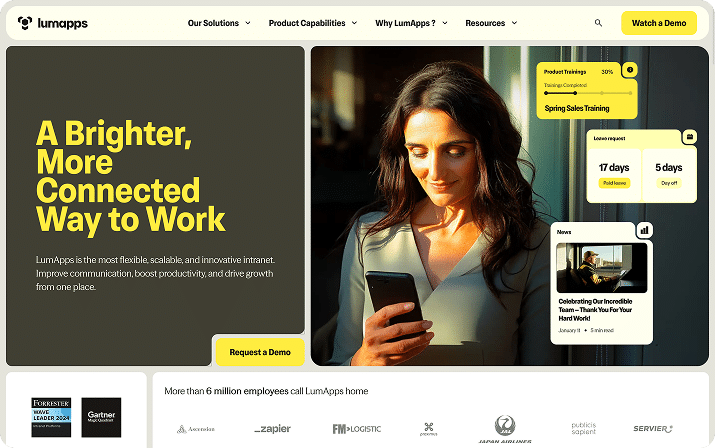
LumApps is a digital workplace platform focused on intranet and employee experience, with strong ties to Google Workspace and Microsoft 365.
Key Features
- Personalized intranet dashboards
- Communities and collaboration hubs
- Employee directories and social features
- Multilingual support
Pros
- Great for structured knowledge management
- Smooth integration with productivity suites
- Flexible content targeting
Cons
- Not designed for frontline workers
- Advocacy features are limited
Integrations
- Google Workspace, Microsoft 365, Salesforce
3. Staffbase
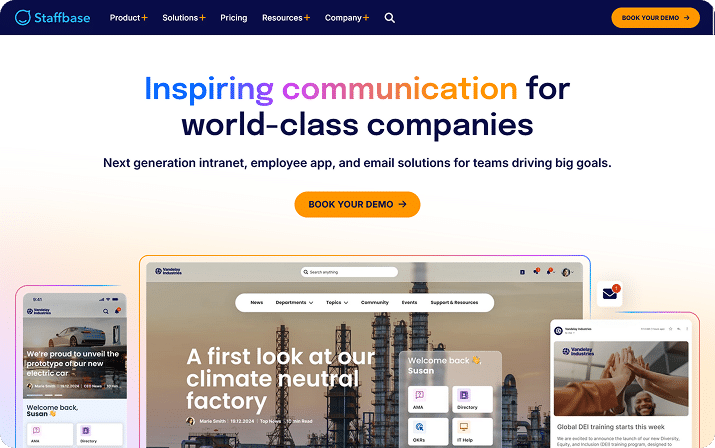
Staffbase is an internal communications platform offering branded mobile apps, newsletters, and intranet portals.
Key Features
- Mobile-first communication channels
- Email creation and distribution tools
- Targeted content by role or location
- Multilingual and secure infrastructure
Pros
- Strong mobile offering for frontline employees
- Flexible content targeting
- Secure, enterprise-ready
Cons
- Advocacy not a native strength
- Custom development may be required for advanced features
Integrations
- Microsoft 365, SAP, Workday, CRM platforms
4. Workvivo
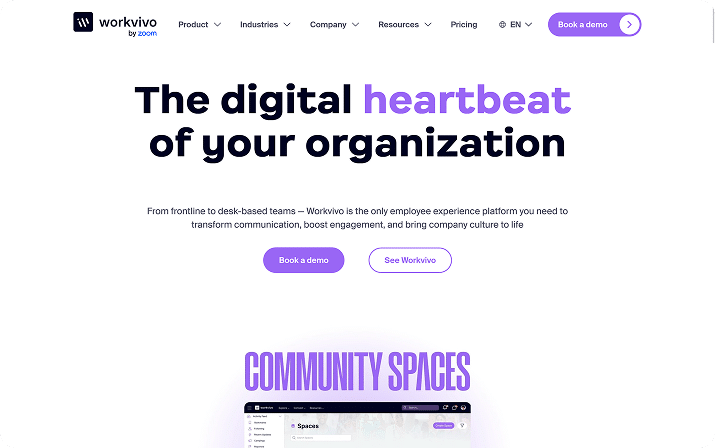
Workvivo is an employee experience platform with a social-media-like design that builds connection and culture.
Key Features
- Social-style activity feed
- Recognition tools and shout-outs
- Surveys and feedback
- Mobile-first design with strong adoption rates
Pros
- Familiar, engaging interface for employees
- Focused on culture and recognition
- Easy to use and adopt
Cons
- Limited analytics and advocacy capabilities
- Less structured for compliance-heavy industries
Integrations
- Microsoft Teams, Slack, Zoom
5. Haiilo
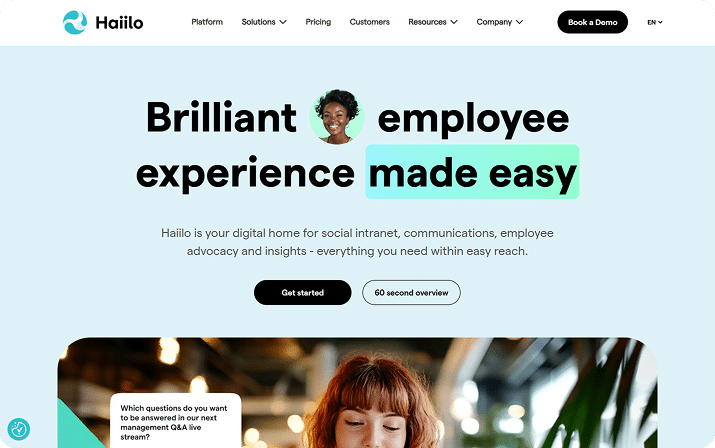
Haiilo is an employee experience platform combining internal communication, advocacy, and feedback.
Key Features
- Intranet and comms dashboards
- Social sharing tools for advocacy
- Employee surveys and sentiment analysis
- Gamification and leaderboards
Pros
- Combines comms and advocacy
- Advanced targeting and analytics
- Strong visual design
Cons
- Backend setup can be complex
- Mobile UX less polished compared to newer competitors
Integrations
- Microsoft 365, Google Workspace
- Social platforms, SSO
6. Simpplr
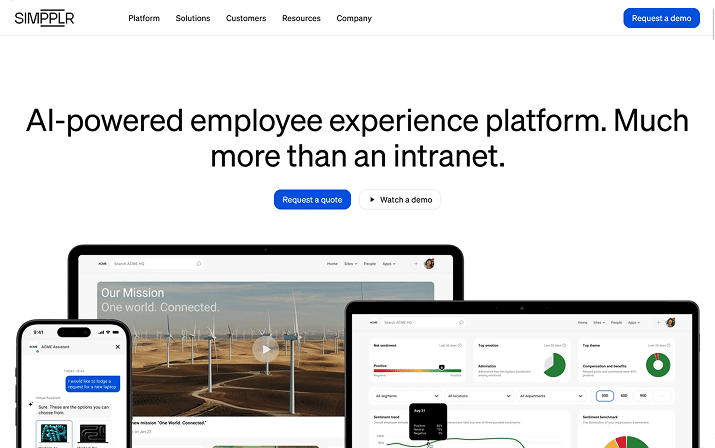
Simpplr is a modern intranet platform with AI-driven personalization and clean UX.
Key Features
- Personalized news feeds
- AI-powered search
- Engagement analytics
- Governance and compliance tools
Pros
- Strong UX with intuitive navigation
- Fast deployment for intranet needs
- Useful analytics for comms teams
Cons
- No native advocacy tools
- Limited gamification features
Integrations
- Microsoft 365, Slack, Teams
- HRIS and identity systems
7. Unily
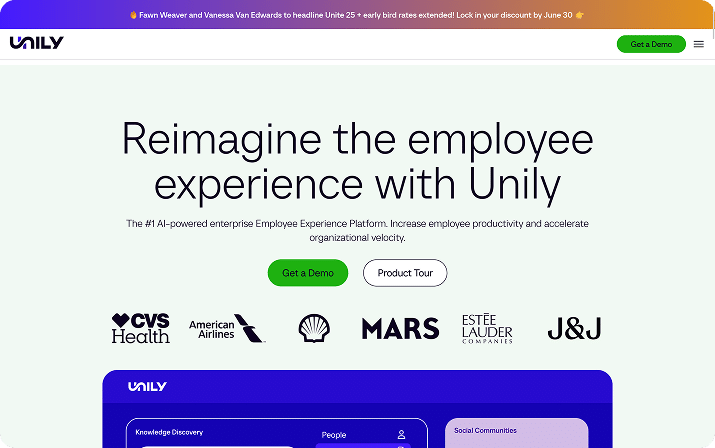
Unily is a customizable digital workplace with advanced branding options and scalable intranet tools.
Key Features
- Fully branded portals
- Personalized content delivery
- Multilingual support
- Enterprise-grade governance
Pros
- Highly customizable interface
- Great for global organizations
- Scalable across thousands of employees
Cons
- Complex to configure
- Advocacy and gamification missing
Integrations
- Microsoft 365, Azure AD, Salesforce
8. Happeo
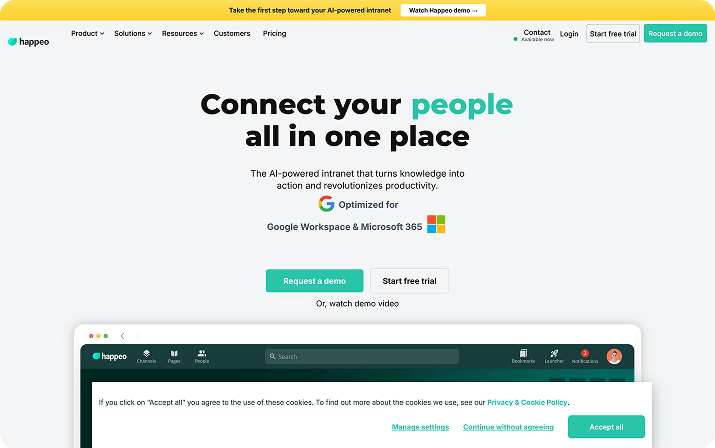
Happeo is a social intranet designed for Google Workspace users, combining communication and collaboration tools.
Key Features
- Customizable pages and feeds
- Collaboration spaces with Google integration
- Employee directories and org charts
- Analytics and reporting
Pros
- Excellent for Google Workspace environments
- User-friendly social features
- Encourages collaboration
Cons
- Limited outside Google ecosystems
- No built-in advocacy
Integrations
- Google Workspace, Microsoft Teams
- HR and CRM tools
9. Interact Software

Interact is an intranet platform built around content governance and structured communication delivery.
Key Features
- Smart search and content targeting
- Content approval workflows
- Employee directories and org charts
- Polls and surveys
Pros
- Excellent for compliance-heavy environments
- Strong structured content governance
- Scalable intranet capabilities
Cons
- Less modern UX compared to newer platforms
- No advocacy or gamification tools
Integrations
- Microsoft 365, HRIS systems
10. Igloo Software

Igloo is a configurable digital workplace platform focusing on intranet and knowledge management.
Key Features
- Content hubs and knowledge bases
- Collaboration spaces
- Access controls and workflows
- Dashboards and reporting
Pros
- Flexible for different industries
- Strong content organization features
- Secure and role-based
Cons
- Mobile UX less engaging than modern competitors
- No advocacy or gamification features
Integrations
- Microsoft 365, Google Workspace
- CRM and HR systems
Factors to Consider When Choosing an Axero Alternative
Not every platform will fit your company’s needs, so it helps to define what really matters before you choose. Think of it less as buying software and more as choosing a long-term partner in your communication strategy.
- Mobile readiness: Employees expect information at their fingertips, especially in hybrid or frontline roles.
- Employee advocacy: The right tool doesn’t just push messages—it empowers employees to amplify your brand voice externally.
- Personalization: Tailored content streams keep communication relevant and engaging for different teams and roles.
- Analytics: Clear insights into engagement and impact allow you to improve continuously.
- Scalability: As your workforce grows, the platform should adapt seamlessly across locations, languages, and business units.
Final Thoughts
While Axero is a capable intranet and collaboration platform, many organizations today are looking for more integrated solutions that combine communication, engagement, and advocacy.
Poppulo is the all-in-one employee communication, engagement, and brand advocacy platform. It helps companies go beyond traditional intranets by activating employees as ambassadors, unifying communications, and creating a culture of engagement.
Contact us to see how Poppulo can elevate your internal communication strategy.