EveryoneSocial is positioned as a dedicated employee advocacy platform, helping organizations amplify brand content through employee networks.
It’s efficient for curated sharing, but it’s limited when it comes to internal communication, frontline access, and personalized content delivery. If you're looking for a more all-in-one approach, or want to bring communication and advocacy under one roof, this guide highlights the best alternatives available today.
Top 10 EveryoneSocial Alternatives
We explored the most widely recommended alternatives to EveryoneSocial, breaking down their strengths, limitations, and how each blends communication, engagement, and brand advocacy. Here are the top 10 platforms to consider.
1. Poppulo
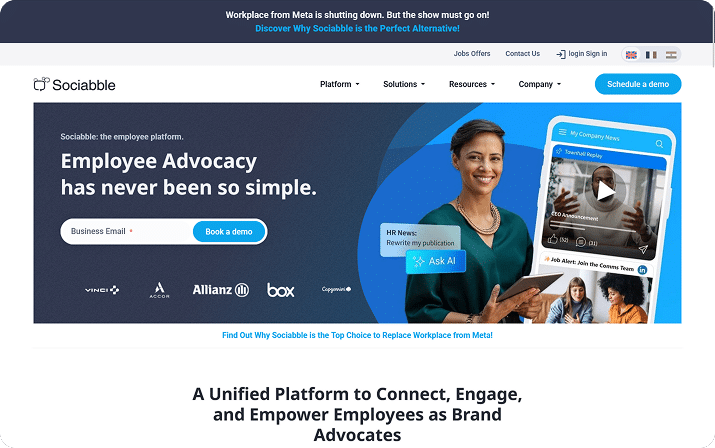
Poppulo is the all-in-one employee communication, engagement, and employee advocacy platform. It unites employee advocacy, internal communications, and gamification into a single, mobile-friendly hub that turns every employee into a powerful brand ambassador.
Key Features
- Native employee advocacy with challenges and leaderboards
- Multichannel content distribution (mobile, email, Teams, Slack, intranet)
- Personalization by location, role, and language
- Real-time analytics and AI-generated insights
- Gamification and reward management
Pros
- Combines advocacy with broader internal communication tools
- Built for frontline, deskless, and office-based teams
- Engagement scoring and rewards system
- Rich engagement metrics and segmentation
Cons
- May require onboarding support for advanced configurations
- Internal readiness impacts success with gamification features
Integrations
- Microsoft 365, Google Workspace, Salesforce
- LinkedIn, Facebook, Instagram, X (Twitter), WeChat, and more
Best for: Companies seeking a comprehensive advocacy solution tied to communication and engagement.
2. PostBeyond (by Influitive)
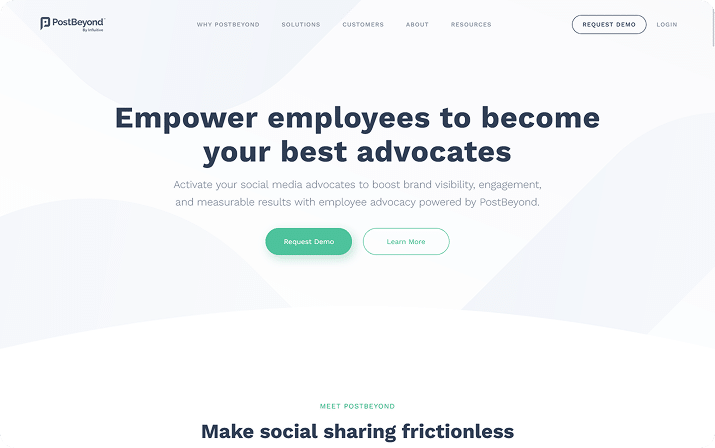
PostBeyond is an employee advocacy platform built for structured content sharing and brand-safe social amplification.
Key Features
- Curated content libraries
- Approval workflows for compliance
- Leaderboards and performance tracking
- Email notifications and mobile access
Pros
- Strong controls for regulated industries
- Clean interface and campaign setup
- Reliable analytics and user segmentation
Cons
- Focused solely on advocacy
- Limited internal communication tools
Integrations
- LinkedIn, Facebook, X (Twitter), CRM tools
Best for: Brands needing controlled and compliant advocacy at scale.
3. GaggleAMP
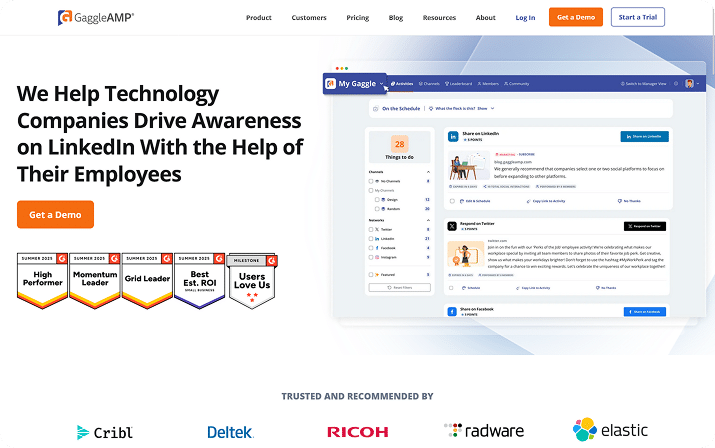
GaggleAMP is an advocacy platform that empowers employees to complete tasks like sharing content or engaging with posts, all gamified within a “Gaggle.”
Key Features
- Task-based engagement with incentives
- Leaderboards and activity scoring
- Detailed performance tracking
- Admin-level content control
Pros
- Task automation makes participation simple
- High flexibility for campaign structure
- Encourages broader engagement beyond sharing
Cons
- Interface can feel less modern
- Focused mostly on advocacy and social sharing
Integrations
- LinkedIn, X, Facebook
- Slack, HubSpot, Salesforce
Best for: Teams running structured, gamified employee advocacy campaigns.
4. Ambassify
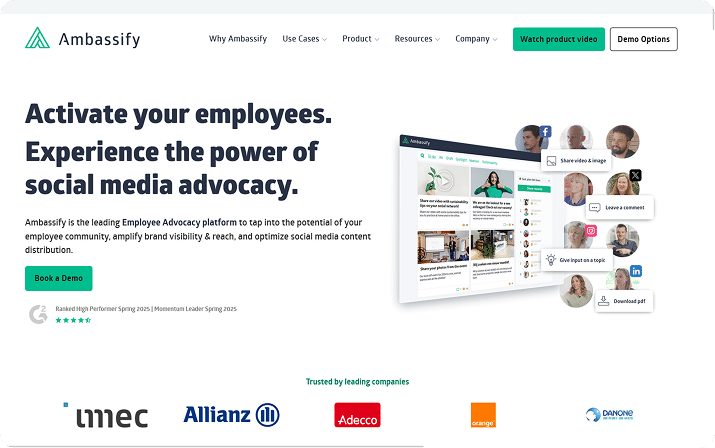
Ambassify is an employee engagement and advocacy platform that blends UGC campaigns, feedback collection, and content sharing.
Key Features
- User-generated content workflows
- Advocacy and referral tracking
- Feedback loops and internal surveys
- Campaign engagement dashboards
Pros
- Strong on community building and creativity
- Clean, user-friendly platform
- Useful for brand ambassadorship beyond just social media
Cons
- Less structured for large-scale content pushes
- Lighter on built-in gamification
Integrations
- LinkedIn, X, Facebook
- CRM and HRIS systems
Best for: Brands that want creativity and engagement, not just content broadcasting.
5. Sociuu
Sociuu is an email-driven employee advocacy tool that pushes pre-approved content to employees for easy one-click social sharing.
Key Features
- Automated email campaigns with shareable links
- Admin dashboards for tracking reach
- Simplified UI for fast adoption
- Centralized content management
Pros
- Quick setup and low training needed
- Works through inbox, reducing friction
- Minimal effort required from employees
Cons
- Narrow scope—no feedback or gamification features
- Not designed for mobile-first or frontline employees
Integrations
- Gmail, Outlook
- LinkedIn, Facebook, X
Best for: Organizations looking for simple, low-effort advocacy programs.
6. Dynamic Signal (now part of Firstup)
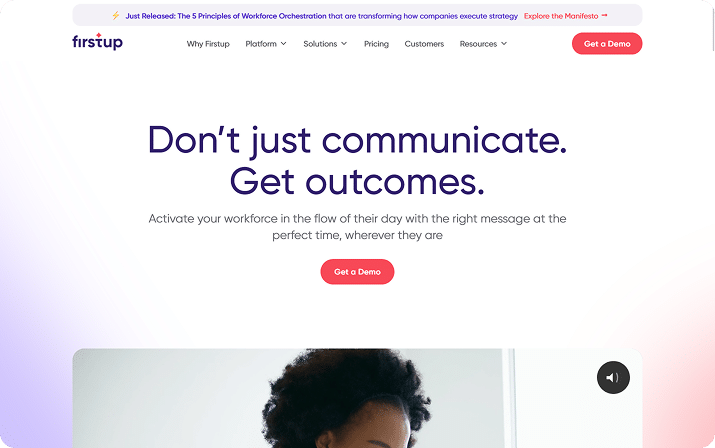
Dynamic Signal is an advocacy and employee communications solution that offers content distribution across multiple channels with some personalization.
Key Features
- Advocacy tools and push notifications
- Personalized content feeds
- Mobile app and desktop access
- Measurement and reporting dashboards
Pros
- Clean, brandable interface
- Good for companies needing outreach across email, app, and desktop
- Decent employee segmentation
Cons
- Advocacy is just one component
- Now integrated into Firstup’s broader ecosystem
Integrations
- Microsoft 365, Salesforce
- LinkedIn, Facebook, Slack
Best for: Companies looking for a communications+advocacy solution.
7. AdvocateHub (by Influitive)
AdvocateHub is a customer and employee advocacy platform with a heavy focus on engagement tasks, referrals, and challenges.
Key Features
- Missions and challenges for employees
- Points and reward systems
- Referral and feedback tracking
- Advocacy campaign templates
Pros
- High engagement through gamified tasks
- Flexible campaign types (not just social sharing)
- Built-in recognition tools
Cons
- More focused on community building than large-scale content delivery
- UI feels geared toward marketing use cases
Integrations
- CRM platforms, social networks, HR systems
Best for: Companies focused on building active brand communities and advocates.
8. Bambu (by Sprout Social)
Bambu is an employee advocacy add-on to Sprout Social that enables employees to easily share approved social content from one platform.
Key Features
- Curated social media content feed
- Scheduled and suggested posts
- Share metrics by employee
- Mobile-ready sharing
Pros
- Smooth integration with social media workflows
- Simple UI for employees
- Best for marketing-aligned comms
Cons
- Lacks broader communication or feedback features
- Only available as an add-on to Sprout Social
Integrations
- Sprout Social, LinkedIn, X, Facebook
Best for: Organizations already using Sprout Social for brand content management.
9. Clearview Social
Clearview Social is an employee advocacy platform built for law firms, agencies, and regulated industries, offering one-click social sharing with admin control.
Key Features
- Email-based sharing with pre-approved content
- Weekly email digests
- Admin analytics and reporting
- Simple user experience
Pros
- Very easy for users with minimal tech knowledge
- Good for professional services and compliance needs
- Effective onboarding process
Cons
- Lacks mobile-first advocacy tools
- Not intended for enterprise-scale usage
Integrations
- Outlook, Gmail, LinkedIn, Facebook, Twitter
Best for: Law firms or consultancies needing a low-effort advocacy workflow.
10. Bravely Social
Bravely Social is a lightweight advocacy platform designed to help organizations promote social sharing with minimal complexity.
Key Features
- Employee sharing feed with suggestions
- Basic reporting on reach and engagement
- Campaign-based structure
- Optional moderation workflows
Pros
- Streamlined UI
- Easy campaign rollout
- Affordable for mid-sized teams
Cons
- Fewer enterprise features
- Lacks native engagement mechanics or gamification
Integrations
- LinkedIn, X, Facebook
Best for: Mid-size businesses launching their first employee advocacy program.
Factors to Consider When Choosing an EveryoneSocial Alternative
Choosing the right employee advocacy platform requires more than just reviewing feature checklists. While EveryoneSocial provides strong content-sharing functionality, the right alternative should fit seamlessly into your overall employee engagement and brand communication strategy. Here are the key aspects to consider:
1. Ease of Use for Employees and Admins
The platform should be intuitive for both employees and administrators. If employees find it cumbersome to log in, find content, or share posts, engagement will drop. Look for tools with a clean interface, mobile accessibility, and minimal steps between content and sharing.
2. Gamification and Motivation Tools
To keep participation high over time, your platform should offer features like points, badges, leaderboards, and rewards. These elements turn advocacy into a fun and competitive activity, reinforcing consistent behavior without requiring constant nudging from internal teams.
3. Integration with Internal Communication Channels
Advocacy doesn’t happen in a silo. The best platforms integrate with tools you’re already using (Microsoft Teams, Slack, intranet portals, HRIS, and email) so that advocacy content can be distributed where employees already spend time. This encourages adoption and ensures advocacy aligns with wider internal messaging.
4. Support for Mobile and Frontline Teams
If a large portion of your workforce is mobile or deskless, the platform must be designed for mobile-first access. Look for responsive apps, offline access, push notifications, and lightweight sharing features that work well in real-world conditions.
5. Content Management and Personalization
A good platform allows you to personalize content feeds based on role, location, department, or language. Segmentation ensures that employees only see content relevant to them—making it more likely they’ll engage and share.
6. Robust Analytics and Reporting
Effective advocacy is measurable. You should be able to track participation, reach, engagement, and even the business impact of advocacy campaigns. Bonus points for platforms that offer AI-driven insights to optimize performance or identify top advocates.
7. Security and Compliance
For regulated industries, advocacy tools must include compliance workflows, user permissions, and clear auditing features. Ensure that the solution meets security standards like GDPR, SOC 2, or ISO certifications if required.
8. Scalability and Long-Term Flexibility
As your organization grows, your platform should scale with you. Choose a provider that can support global teams, multilanguage content, and complex org structures without sacrificing performance or usability.
Conclusion
While EveryoneSocial is a proven advocacy platform, today’s organizations are aiming for more: more integration, more engagement, and more business value.
Poppulo is the all-in-one employee communication, engagement, and brand advocacy platform. It goes beyond content sharing by aligning advocacy with culture, communication, and business strategy. Whether you’re building an advocacy program from scratch or evolving an existing one, Poppulo delivers a connected experience that inspires action.
Let’s Talk!
Want to turn your workforce into a team of engaged brand ambassadors? Contact Poppulo today o explore how you can build an advocacy program that delivers real impact, inside and out.