As organizations strive to enhance intranet capabilities, employee engagement, and frontline connectivity, solutions like Happeo have become popular choices. However, every organization has unique needs, and today there are several compelling alternatives that offer broader features, deeper integrations, or a more holistic approach to the employee experience.
Whether you’re seeking a more customizable platform, advanced analytics, or stronger employee advocacy tools, this guide highlights the top 10 alternatives to Happeo worth considering this year.
The 10 Best Alternatives to Happeo
To help you choose the right platform for your organization, we’ve reviewed the best alternatives to Happeo available this year. Below, you’ll find an overview of each platform’s key features, strengths, and potential drawbacks, so you can make an informed decision aligned with your internal communication and employee engagement goals.
The best alternatives to Happeo include:
- Poppulo
- LumApps
- Unily
- Interact
- Workvivo
- Staffbase
- Firstup
- Haiilo
- Powell Software
- Simpplr
1. Poppulo
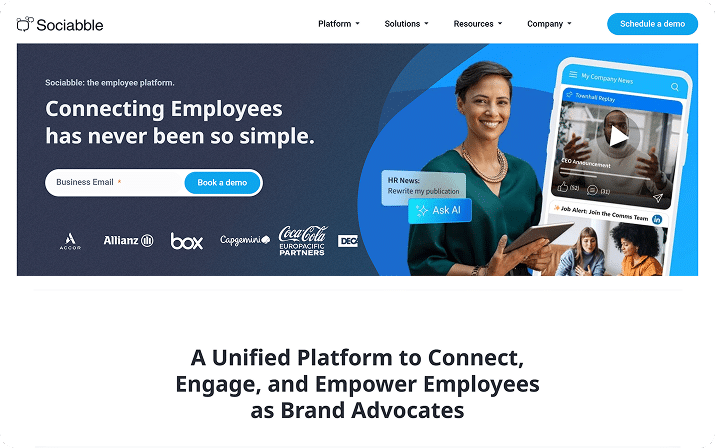
Poppulo is an all-in-one employee communication and engagement platform built to connect global workforces, while turning them into powerful brand advocates. Designed with a mobile‑first approach, Poppulo unifies company messaging, streamlines content sharing, and delivers personalized news through advanced segmentation, gamification, and advocacy features.
Key Features
- Multichannel content delivery (Teams, Slack, mobile app, email, and more)
- Personalized news feeds and push notifications
- Built-in employee advocacy and gamification
- AI-powered content performance and engagement insights
Pros
- Strong integration between communication and advocacy
- User-friendly for both admins and employees
- Real-time analytics with actionable metrics
Cons
- Deep configuration may require onboarding support
- Gamification may need internal alignment for full adoption
Integrations
- Microsoft 365, Google Workspace, LinkedIn, Salesforce, SAP, and more
Best for: Companies that want to bring together communication, engagement, and advocacy on a single platform.
2. LumApps
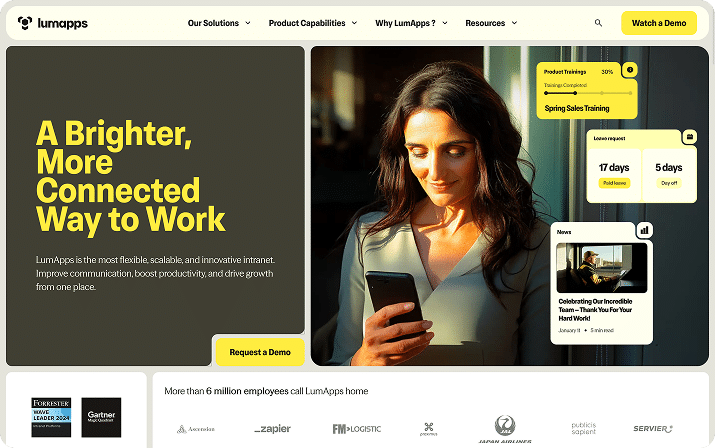
LumApps is a digital employee experience platform built to help large organizations centralize communication and collaboration, especially those already using Google Workspace.
Key Features
- Integration with productivity suites
- News targeting by role and location
Pros
- Good for structured knowledge management
- Multilingual and scalable
Cons
- Less support for mobile-first or frontline engagement
- No native advocacy tools
Integrations
- Google Workspace, Microsoft 365, Salesforce
Best for: Enterprises looking to build a structured, knowledge-centric intranet.
3. Unily
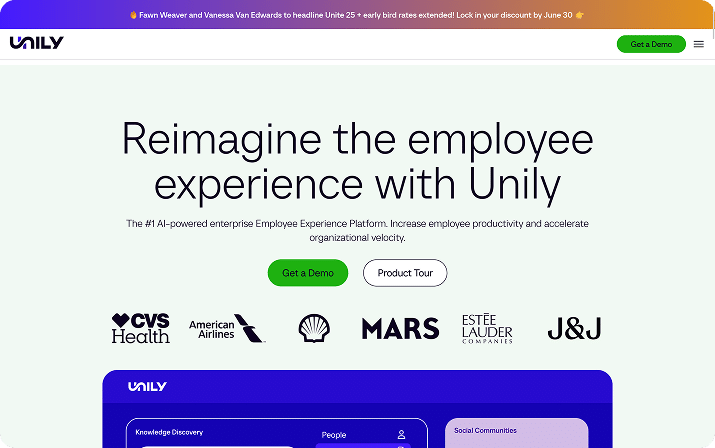
Unily is a digital workplace platform that connects employees with content, knowledge, and tools in a unified hub, featuring strong branding and design flexibility.
Key Features
- Advanced CMS and content targeting
- Internal campaign management
- Multilingual support and analytics
Pros
- Highly customizable UI
- Strong search and navigation tools
Cons
- Requires configuration and training
- Advocacy features are not built-in
Integrations
- Microsoft 365, Okta, Workday, Salesforce
Best for: Global enterprises needing custom branding and rich content experiences.
4. Interact

Interact is an intranet software platform that helps companies structure internal communications, knowledge sharing, and employee engagement.
Key Features
- Dynamic content targeting
- Employee directories and org charts
- Internal comms campaign planning
Pros
- Good for HR and internal communications alignment
- Searchable knowledge management
Cons
- Not advocacy-focused
- Fewer integrations than some competitors
Integrations
- Microsoft 365, Active Directory, Okta
Best for: Companies looking to upgrade their intranet without overhauling existing systems.
5. Workvivo
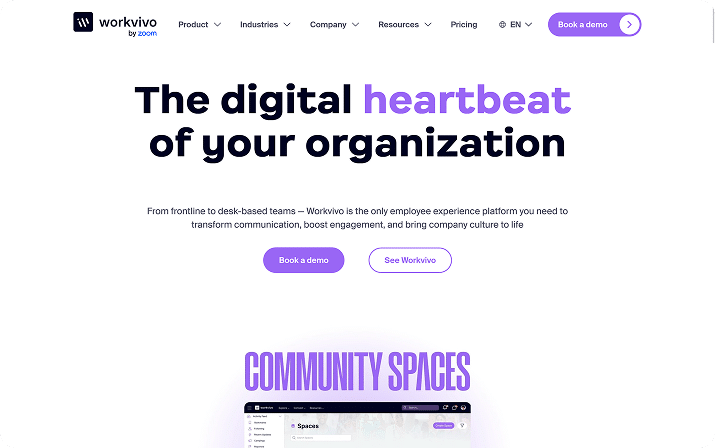
Workvivo is an employee experience platform that combines internal communications, culture-building tools, and engagement surveys.
Key Features
- Social-style activity feeds
- Recognition tools and pulse surveys
- Podcasts, video, and community groups
Pros
- Easy to adopt thanks to its social UX
- Encourages culture-sharing and interaction
Cons
- Lacks robust advocacy workflows
- Limited content automation features
Integrations
- Microsoft Teams, Slack, Zoom, HR systems
Best for: Organizations prioritizing employee culture and community-building.
6. Staffbase
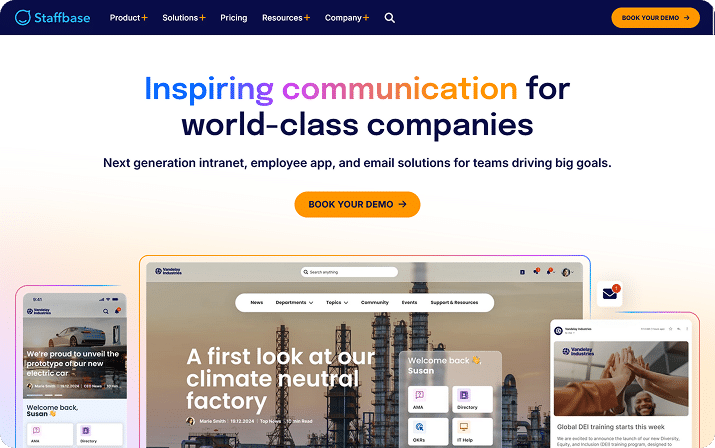
Staffbase is an internal communication platform known for its mobile apps and branded intranet environments.
Key Features
- Personalized content feeds
- Email and mobile app publishing
- Multilanguage support
Pros
- Strong focus on deskless workers
- Secure and compliant infrastructure
Cons
- Advocacy capabilities are limited or third-party
- Complex integrations may be resource-intensive
Integrations
- Microsoft 365, SAP, Workday, SuccessFactors
Best for: Companies with large frontline populations that require mobile-first solutions.
7. Firstup
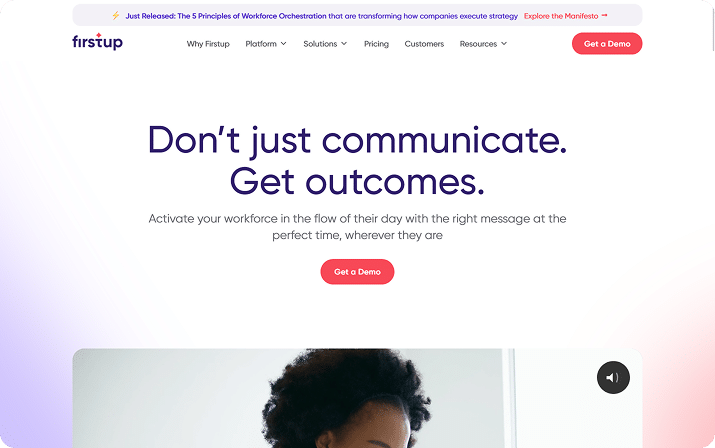
Firstup is an employee communication platform designed to orchestrate content across multiple channels with data-driven targeting and personalization.
Key Features
- Campaign automation and content journeys
- Audience targeting and analytics
- Channel-agnostic publishing
Pros
- Strong AI capabilities and insights
- Ideal for large, distributed organizations
Cons
- Advocacy is not a core feature
- Higher learning curve for non-technical users
Integrations
- Microsoft Teams, Slack, email, HRIS systems
Best for: Enterprises looking to centralize communication workflows across channels.
8. Haiilo
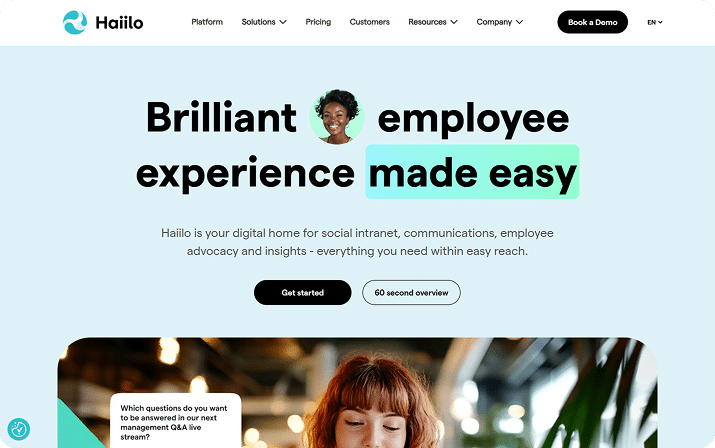
Haiilo is an employee communications and advocacy platform that merges intranet, feedback, and social sharing tools.
Key Features
- Intranet and communication channels
- Advocacy with gamified sharing
- Employee surveys and feedback
Pros
- Combines internal comms with advocacy
- Multilingual and scalable
Cons
- Backend can feel complex without training
- Mobile experience is improving but not yet leading
Integrations
- Microsoft 365, Google Workspace, LinkedIn
Best for: Companies that want a dual focus on comms and social advocacy.
9. Powell Software
Powell Software is a digital workplace platform built to enhance Microsoft 365 by adding structure, engagement, and governance to internal portals.
Key Features
- Pre-designed intranet templates
- Governance and compliance management
- Social features and widgets
Pros
- Strong for Microsoft-centric environments
- Visual customization and widgets
Cons
- Heavily reliant on Microsoft infrastructure
- Advocacy features missing
Integrations
- Microsoft 365, Teams, SharePoint
Best for: IT-driven organizations seeking a structured layer on top of Microsoft 365.
10. Simpplr
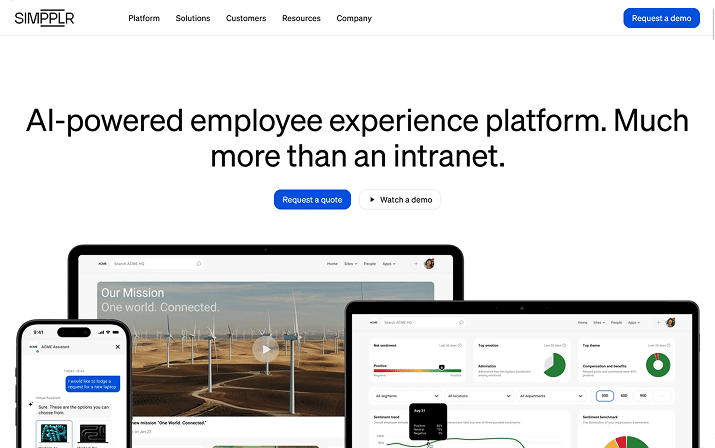
Simpplr is a modern intranet platform with a focus on employee experience, content discovery, and AI-powered search.
Key Features
- Personalized content feeds
- Smart search and knowledge hubs
- Multi-device and mobile access
Pros
- Clean interface with good UX
- Useful for structured communications
Cons
- No advocacy capabilities
- Lacks real-time social elements
Integrations
- Microsoft 365, Google Workspace, HRIS tools
Best for: Companies focused on intranet modernization with a clean user experience.
What to Look for in a Happeo Alternative
Choosing the right intranet platform goes far beyond comparing feature lists. To ensure long-term success, it’s crucial to evaluate how well a solution aligns with your company’s structure, workforce needs, and strategic objectives. Here are the key factors to consider when selecting a Happeo alternative:
1. Unified Communication & Collaboration
Look for platforms that centralize messages, news, and updates across devices, especially for teams working in hybrid or distributed setups.
2. Mobile Accessibility
If you have deskless or field teams, mobile-first access is critical. Native apps with push notifications, offline modes, and responsive design are essential.
3. Customization & Branding
An effective platform should reflect your organization’s identity. Prioritize those with customizable layouts, branding, and content targeting.
4. Content Governance & Analytics
Admins need control and insights. Choose a tool that offers content approval workflows, performance dashboards, and audience segmentation.
5. Integration Ecosystem
Make sure the platform connects with the systems you already use (Microsoft 365, Google Workspace, HRIS tools, CRM platforms, etc.) to ensure seamless operations.
Conclusion
While Happeo offers a strong intranet experience with Google Workspace alignment, there are many alternatives that bring deeper engagement, stronger personalization, or broader feature sets.
Poppulo is the all-in-one platform for employee communication, employee engagement, and brand advocacy. It combines internal communications, frontline access, and advocacy in one place, helping organizations unify their voice and activate employees as brand ambassadors.
Curious about how Poppulo compares to Happeo in your context? Let’s talk. Contact us to see how Poppulo can help you streamline communications, improve engagement, and grow advocacy in one seamless experience.