Powell Software offers flexible intranet templates and hybrid work tools, especially for Microsoft 365 environments. But as the digital workplace evolves, so do the needs of companies aiming to unify communication, engagement, and culture, across every device and employee segment.
If you’re looking for platforms that support deeper personalization, better employee advocacy, or broader multichannel communication capabilities, this guide presents the top alternatives to Powell Software.
The 10 Best Alternatives to Powell Software
We’ve rounded up ten standout platforms that bring their own strengths to internal communication, intranet design, employee engagement, and advocacy. Here’s what makes each one worth a closer look.
1. Poppulo
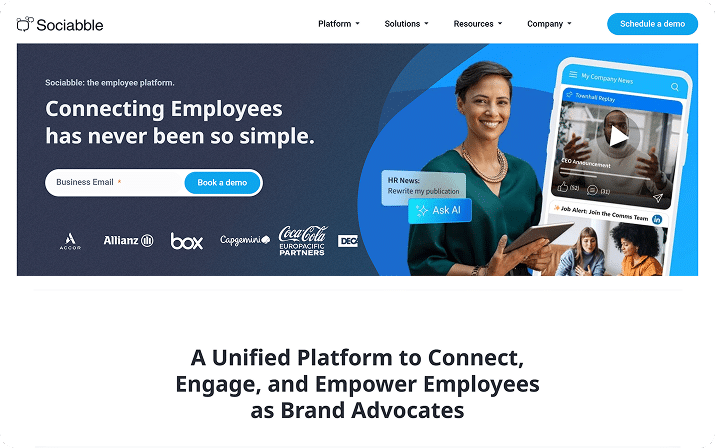
Poppulo is the all-in-one employee communication, engagement, and employee advocacy platform. It enables companies to centralize news, activate employee networks, and personalize content delivery, while engaging every employee, whether they’re in the office or on the move.
Key Features
- Multichannel publishing (Teams, Slack, email, app, digital signage)
- Advocacy programs with gamification and leaderboards
- Personalized feeds based on role, region, and language
- Analytics dashboards powered by AI
- Modular content hubs and push notifications
Pros
- Unifies communication and advocacy in one platform
- Supports frontline and hybrid workforces
- Clear dashboards for engagement insights
Cons
- Requires onboarding to configure personalization at scale
- Gamification success may vary by company culture
Integrations
- Microsoft 365, SharePoint, Teams, Viva
- Google Workspace
- HRIS and CRM systems
- Social networks
Best for: Large companies seeking to bring together internal communication, mobile access, and brand advocacy on one scalable platform.
2. Interact Software

Interact is an intranet platform designed to improve employee experience through targeted communication, content personalization, and feedback tools.
Key Features
- Personalized content feeds and recommendations
- Pulse surveys and user feedback forms
- AI-powered search and content targeting
- Knowledge base and policy management
Pros
- Simple to navigate and personalize
- Good support for policy compliance
- Built-in employee feedback features
Cons
- No native advocacy or gamification
- Mobile app lacks real-time push capabilities
Integrations
- Microsoft 365
- Azure AD
- Google Workspace
- Salesforce
Best for: Organizations focused on internal communication and policy management with user-friendly intranet tools.
3. Igloo Software

Igloo Software is a digital workplace platform that helps companies organize communication, collaboration, and documentation within structured hubs.
Key Features
- Team and department zones
- Knowledge base and onboarding resources
- Document lifecycle management
- Usage analytics and engagement reports
Pros
- Good for documentation and cross-team collaboration
- Offers structured, permission-based content access
- Flexible content widgets and layouts
Cons
- Lacks real-time notifications
- No built-in employee advocacy
Integrations
- Microsoft 365
- SharePoint
- Google Drive
- Box, Dropbox
Best for: Teams seeking a structured, collaboration-focused intranet with policy control and knowledge management.
4. Unily
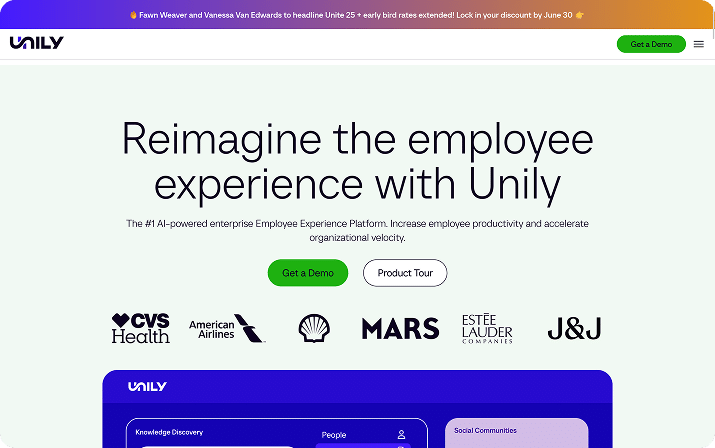
Unily is a digital employee experience platform that supports intranet, communications, and collaboration at scale for global organizations.
Key Features
- Multilingual content delivery
- Role-based personalization
- Unified digital workplace portal
- In-depth analytics on engagement and usage
Pros
- Supports international, large-scale rollouts
- Personalization capabilities are broad
- Offers strong document access and search tools
Cons
- Platform setup may be resource-intensive
- Employee advocacy not included
Integrations
- Microsoft 365
- HRIS and IT systems
- Third-party business apps (via APIs)
Best for: Enterprises with global teams looking for a central communication and knowledge hub with customization options.
5. LumApps
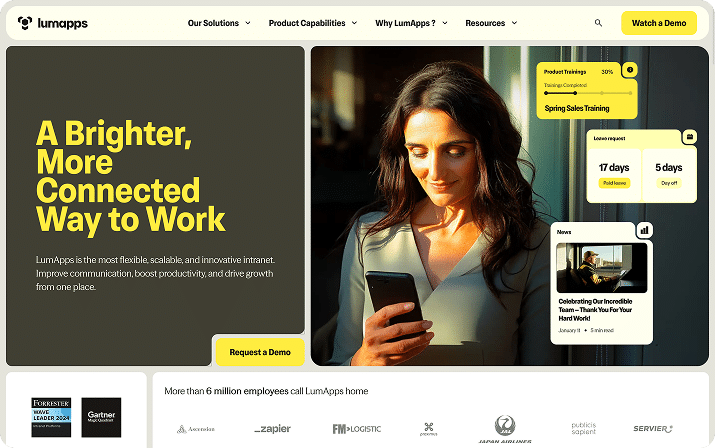
LumApps is a digital workplace platform that integrates communications, knowledge sharing, and employee services into a unified experience, especially for organizations using Google Workspace.
Key Features
- Personalized news feeds
- Corporate social network features
- Search and taxonomy tagging
- Employee directory and onboarding pages
Pros
- Clean and modern interface
- Good support for knowledge sharing and HR content
- Integrates well with existing enterprise tools
Cons
- Limited frontline communication features
- No integrated advocacy capabilities
Integrations
- Google Workspace
- Workday, SAP SuccessFactors
Best for: Mid- to large-sized companies focused on internal knowledge and employee lifecycle communication.
6. ExoPlatform
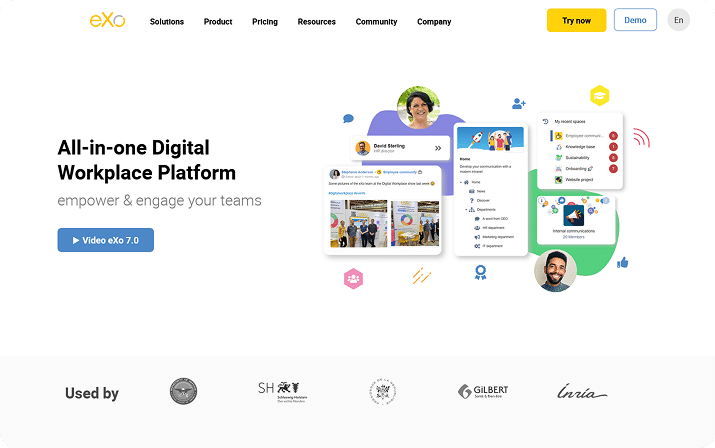
ExoPlatform is an open-source digital workplace platform with tools for intranet, document management, forums, and task collaboration.
Key Features
- Community spaces and discussion forums
- File storage and document workflows
- Calendars and task lists
- In-app messaging and notifications
Pros
- Highly customizable and open-source
- Offers collaboration tools in addition to comms
- Useful for dev and tech-heavy environments
Cons
- Requires developer resources for setup
- UI may feel outdated compared to newer platforms
Integrations
- LDAP, SAML, Active Directory
- Microsoft 365
- APIs for custom connectors
Best for: Organizations with IT resources looking for a customizable, open-source intranet and collaboration suite.
7. Firstup
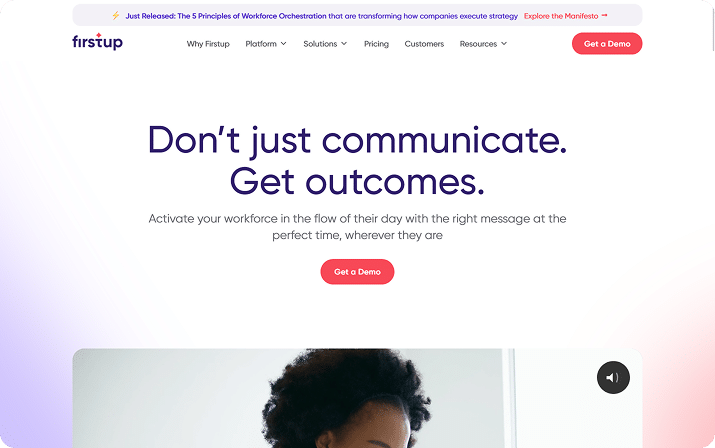
Firstup is an employee communication platform designed to automate content delivery and streamline multichannel publishing through AI-driven orchestration.
Key Features
- Personalized content journeys
- Channel-agnostic publishing
- Intelligent targeting and segmentation
- Detailed campaign performance analytics
Pros
- Scalable for large audiences and multiple locations
- Efficient content orchestration
- Deep engagement insights
Cons
- No native employee advocacy features
- Content experience is more top-down than collaborative
Integrations
- Microsoft 365
- SharePoint
- Slack, Teams
- HR platforms
Best for: Enterprises that want to streamline content delivery across channels with intelligent automation.
8. Happeo
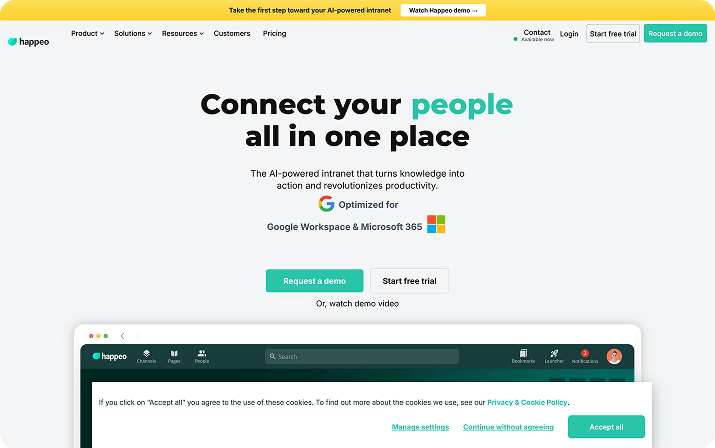
Happeo is a social intranet platform that connects communication and collaboration within Google Workspace environments.
Key Features
- Intranet pages and team channels
- Employee directory and org charts
- Search across Google Drive and shared files
- Widget-based page builder
Pros
- Fast setup for Google-native teams
- Combines comms and collaboration
- Easy to manage and update
Cons
- No employee advocacy features
- Mobile functionality could be more robust
Integrations
- Google Workspace
- Slack
- HR and CRM tools (via APIs)
Best for: Small to mid-sized companies that want a simple, Google-based intranet and communication space.
9. Jive Software
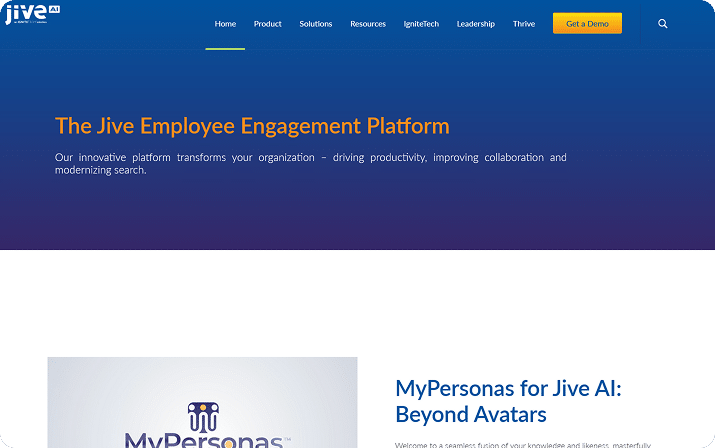
Jive is a collaboration and communication platform that combines intranet, forums, and social engagement features into one digital workplace.
Key Features
- Discussion forums and comment threads
- Team workspaces
- Smart news streams and alerts
- Searchable content hub
Pros
- Enables two-way communication
- Supports knowledge exchange and peer learning
- Suitable for community-driven companies
Cons
- UI can feel dated
- May require user training for full adoption
Integrations
- Microsoft 365
- Salesforce
- Google Workspace
- APIs available for custom use cases
Best for: Organizations that prioritize collaborative communication and discussion-based knowledge sharing.
10. ContactMonkey

ContactMonkey is an internal email communication platform embedded into Outlook and Gmail, enabling teams to send and track newsletters and surveys.
Key Features
- Drag-and-drop email editor
- Open and click tracking
- eNPS and pulse surveys
- Email template library
Pros
- Works directly in familiar email tools
- Real-time analytics on newsletter performance
- Easy deployment with no new platform to learn
Cons
- No intranet or centralized content experience
- Lacks employee advocacy or cultural engagement tools
Integrations
- Outlook
- Gmail
- Salesforce
- CSV imports for HR data
Best for: Teams that want to simplify internal newsletters and email-based communication workflows without switching platforms.
Key Factors to Consider When Choosing a Powell Software Alternative
Exploring Powell Software alternatives is just the beginning. The real question is: which platform will support the way your people actually work?
Some solutions shine when it comes to mobile engagement or frontline activation. Others focus on personalization, advocacy, or building a true sense of community across regions. A few go beyond intranet basics to deliver a fully integrated employee experience.
Here’s what to keep in mind as you evaluate your options:
1. Centralized, Accessible Communication
Employees should be able to find everything, news, documents, updates, forms—in one place, whether they’re at a desk or in the field.
2. Frontline and Mobile Access
Support for offline access, real-time notifications, and lightweight UX is essential for frontline adoption and field-based engagement.
3. Seamless Integration
Platforms must plug into your existing digital workplace, especially Microsoft 365 or Google Workspace, while allowing data sync with HR systems and CRM.
4. Advocacy and Engagement
A communication platform should also enable employees to become content contributors and brand advocates. Look for gamification, recognition, and sharing tools.
5. Clear Analytics
Data should inform decisions—from campaign performance to adoption trends and engagement scores.
Conclusion
Powell Software offers flexibility within the Microsoft ecosystem, but it may fall short for companies that prioritize deeper engagement, stronger mobile experiences, or integrated advocacy tools.
Poppulo leads the way among Powell Software alternatives by uniting communication, personalization, and external activation in one platform. It empowers organizations to go beyond static intranets and foster dynamic, people-driven communities.
Contact Poppulo today to explore how Poppulo helps organizations bring internal culture and external influence together—whether your teams are in the field, at a desk, or on the move.