Staffbase is an employee communications platform known for its mobile app and email capabilities aimed at reaching frontline workers, while also fitting seamlessly into many existing corporate tech ecosystems.
However, there are some limitations to keep in mind, particularly for organizations aiming to go beyond communication and drive deeper employee engagement. Staffbase can fall short in areas like advocacy, gamification, and robust analytics. In this review, we highlight top alternatives to help you find a solution that offers more interactivity, flexibility, and brand amplification.
Top 10 Staffbase Alternatives
To help you find the right fit for your organization, we’ve analyzed ten alternatives to Staffbase that offer broader functionality, deeper employee engagement, and more flexible communication capabilities.
1. Poppulo
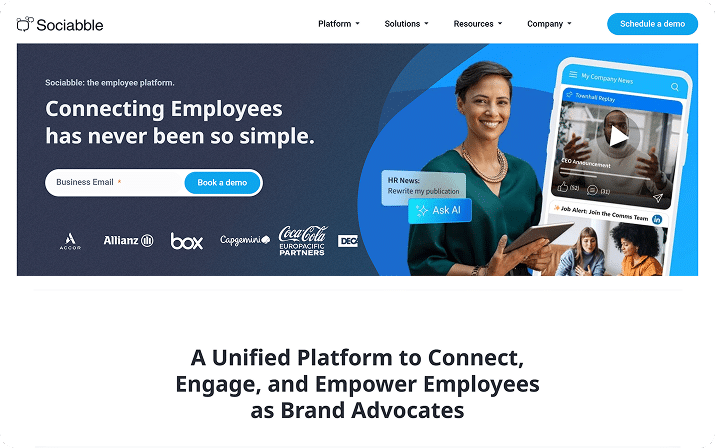
Poppulo is the all-in-one employee communication and engagement platform that connects global workforces while transforming them into active brand advocates. Built to serve large organizations (especially those with frontline teams) Poppulo combines multichannel messaging, gamified social sharing, and AI-powered insights in one platform.
Pros
- Comprehensive internal communications via email, app, desktop, Teams, Slack, and more
- Advocacy tools with gamification, contests, and social sharing
- Personalized content by role, language, location
- AI-driven analytics for performance tracking
- Deep integrations with Microsoft 365, Google Workspace, HRIS, and CRM
Cons
- Admin training recommended for advanced use
- Gamified engagement may need culture fit for full impact
2. Haiilo
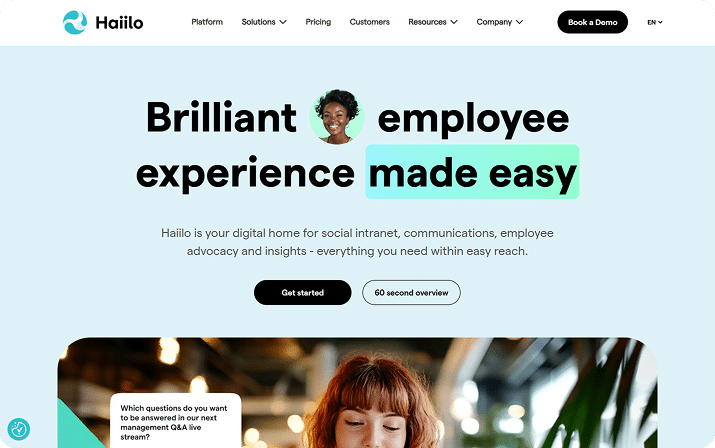
Haiilo unites intranet, engagement, and advocacy into one digital employee experience platform. It offers organizations an integrated way to communicate, listen, and inspire employees.
Pros
- Full spectrum: internal comms, feedback, and advocacy
- Smart content targeting
- Social sharing and gamification features
Cons
- Rich backend may have a learning curve
- UX is more intranet-style than social/mobile native
3. Firstup
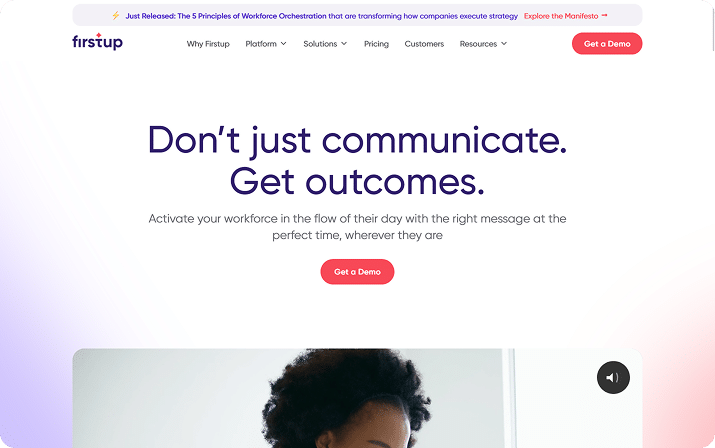
Firstup is designed for automated content delivery across multiple channels, driven by machine learning. It suits large enterprises looking to launch campaigns with precision.
Pros
- Content automation and journey personalization
- Broad channel coverage
- Analytics and segmentation
Cons
- Advocacy features are minimal
- Setup can be complex and resource-heavy
4. Workvivo
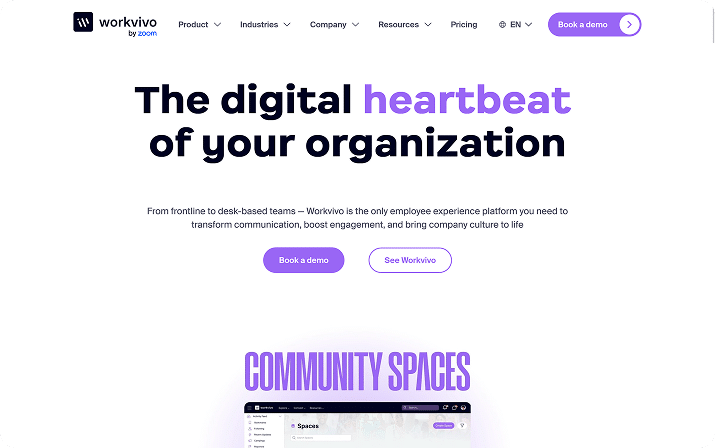
Workvivo focuses on building a company culture through a social media-style employee app. It enables employees to interact, recognize, and engage in an intuitive, familiar format.
Pros
- Social features: likes, comments, shout-outs
- Mobile interface
- Easy-to-use for frontline employees
Cons
- Advocacy tools are limited
- Less sophisticated in orchestration and data visualization
5. Unily
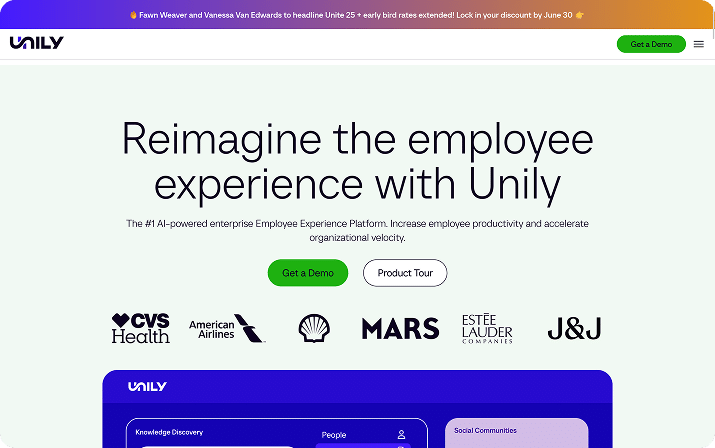
Unily offers enterprise intranet and communications solutions with personalization at scale. It’s suitable for companies with distributed global teams.
Pros
- Multilingual, personalized content delivery
- Rich digital experience with search and insights
- Integrates with Microsoft and third-party systems
Cons
- Advocacy must be managed through third-party tools
- Implementation can be resource-intensive
6. Blink
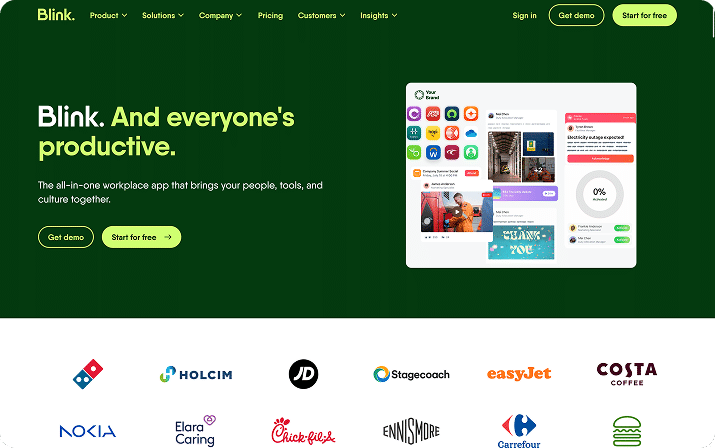
Blink is a mobile-first employee experience platform built for frontline workers who need fast access to communication, tools, and updates on the go. It is a strong fit for organizations that want a simple app experience for deskless teams without relying on email-heavy workflows.
Pros
- Mobile-first design built for frontline adoption
- Easy access to news, chat, documents, and essential tools in one app
- Good fit for organizations with large deskless or shift-based workforces
Cons
- Employee advocacy is not a core capability
- Less suited to organizations that need deeper multichannel publishing
- Analytics and personalization are not as advanced as broader employee experience platforms
7. Simpplr
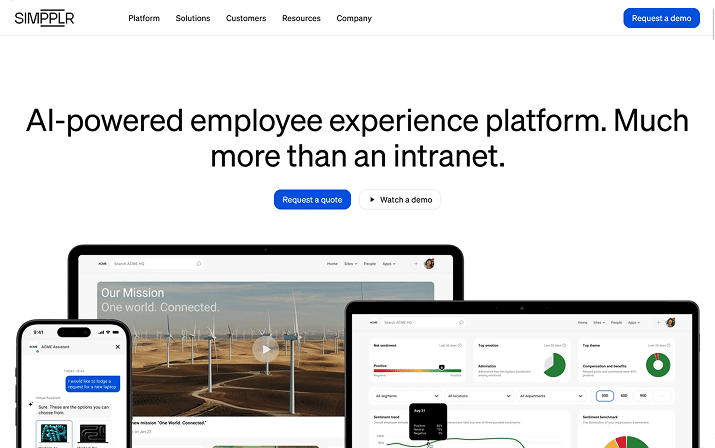
Simpplr is a modern intranet solution focused on intuitive content discovery and a clean user experience. It's popular for fast-moving companies that prioritize self-service.
Pros
- AI-powered content suggestions
- Easy UI and admin interfaces
- Segment-based targeting
Cons
- No advocacy, sharing, or gamification
- Frontline and mobile support are less advanced
8. Happeo
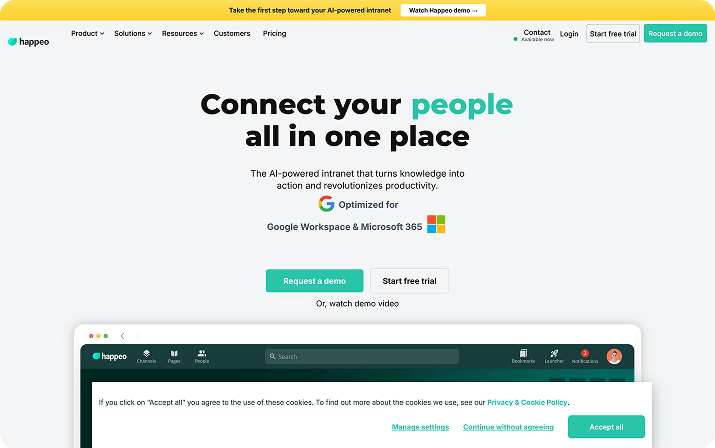
Happeo is a Google Workspace-native social intranet offering collaboration channels, pages, and search capabilities. It’s suited for digital-first teams.
Pros
- Channel-based comms, search, and file integration
- Efficient for knowledge sharing
- Simple setup for Google environments
Cons
- Lacks features for mobile/frontline engagement
- No native advocacy or incentives
9. Powell Software
Powell Software helps organizations deliver hybrid work experiences with customizable intranet modules built on Microsoft 365.
Pros
- Quick-to-deploy intranet templates
- Hybrid work and HR integration tools
- Microsoft-native workflows
Cons
- Advocacy and gamification not a core focus
- UI can feel more corporate than dynamic
10. ContactMonkey

ContactMonkey is a communication platform that brings newsletters, surveys, and analytics directly into Outlook or Gmail, making it good for companies rooted in email.
Pros
- Seamless use in Outlook and Gmail
- Drag-and-drop newsletter builder
- Campaign tracking and survey feedback
Cons
- No mobile-first employee app
- Advocacy and omnichannel support not available
Factors to Consider When Choosing a Staffbase Alternative
After reviewing the top Staffbase alternatives, it’s worth stepping back to consider what matters most for your organization.
Some platforms excel in multichannel publishing or offer a more flexible approach to mobile communication. Others stand out for their emphasis on employee-generated content, engagement analytics, or integration with existing workflows. A few go even further by blending internal communications with gamification, recognition, or real-time feedback.
The following factors can help you determine which Staffbase alternative best aligns with your goals and your team’s needs.
1. Multichannel and Mobile Reach
Make sure the platform effectively reaches all employees (whether at a desk, in the field, or in transit) via mobile apps, email, and integrations with tools like Teams or Slack.
2. Employee Advocacy
If boosting brand awareness and employee involvement matters, look for built-in advocacy tools with social sharing, gamification, and tracking.
3. Engagement Depth
Staffbase offers great communication tools, but some alternatives go deeper with interactive feeds, recognition, and two-way dialogue. This is crucial for culture-driven companies.
4. Insights and Optimization
Choose platforms that provide actionable engagement analytics (not just open rates) and use AI to inform content strategy.
5. Integration and Scalability
Ensure smooth integration with your existing systems (HRIS, productivity suites, etc.) and scalable architecture that grows with your organization.
Conclusion
Staffbase is a solid player in the internal comms space, especially for companies focused on mobile messaging and content governance. But for organizations that want to go beyond communication into engagement, advocacy, and insight-driven strategy, several other platforms offer more.
Poppulo leads the pack as the most comprehensive Staffbase alternative. With its mobile-first design, advanced segmentation, gamified advocacy, and AI-driven analytics, it empowers teams to inform, engage, and activate employees at every level of the organization.
If you're ready to transform how your company communicates and turn every employee into an active participant, then it’s time to explore what Poppulo can do for you.
Book a demo with our team and discover how Poppulo can help you go beyond the basics.