eXo Platform is an open-source digital workplace that blends intranet, collaboration, and knowledge management. While its flexibility appeals to IT teams, many organizations now prioritize platforms that drive stronger employee engagement, deliver mobile-first experiences, and include built-in advocacy features.
If you’re considering eXo Platform but want to ensure the best fit for your workforce, here are ten powerful alternatives to explore.
Top 10 Exo Platform Alternatives
Here are 10 of the best eXo Platform alternatives to consider this year, each offering distinct strengths for modern internal communication and employee experience.
1. Poppulo
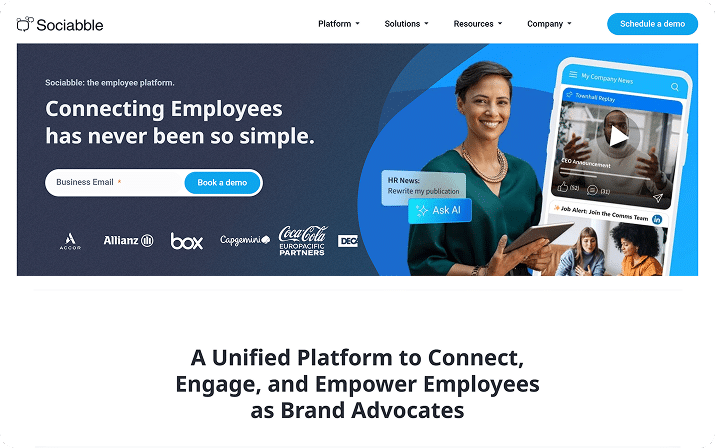
Poppulo is the all-in-one employee communication, engagement, and brand advocacy platform. It unifies internal communication, employee engagement, and social sharing into a single mobile-first platform. With gamification, analytics, and AI-driven personalization, Poppulo empowers employees to stay informed while also becoming active brand ambassadors.
Key Features
- Multichannel communication (mobile app, Teams, Slack, email, signage)
- Gamified advocacy with challenges and rewards
- AI-powered analytics and content optimization
- Personalization by location, role, or language
- Recognition systems with badges and leaderboards
Pros
- Combines communications, engagement, and advocacy in one solution
- Excellent mobile experience for frontline and deskless workers
- Strong integration ecosystem
Cons
- Requires onboarding to unlock advanced features
- Gamification depends on cultural fit
Integrations
- Microsoft 365, Google Workspace, Salesforce
- Social platforms like LinkedIn, Instagram, X, Facebook
- HRIS and CRM tools
2. LumApps
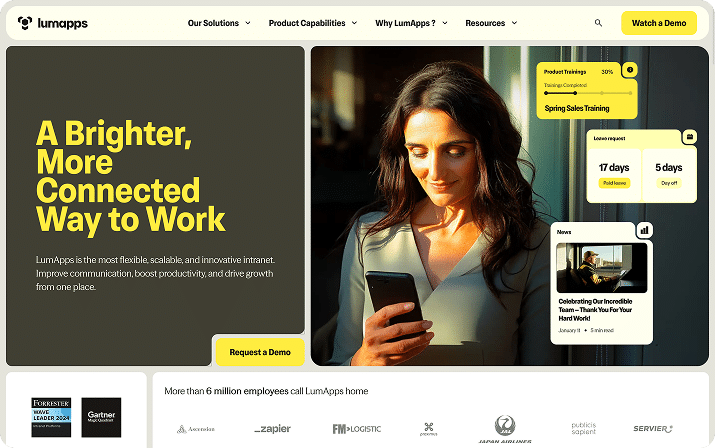
LumApps is a digital workplace platform built around intranet, communication, and collaboration. It’s especially popular among Google Workspace and Microsoft 365 users.
Key Features
- Personalized intranet dashboards
- Knowledge management and directories
- Community and collaboration hubs
- Multilingual content
Pros
- Excellent for structured knowledge sharing
- Smooth integration with collaboration suites
- Flexible for global organizations
Cons
- Limited advocacy and gamification
- Not tailored for frontline employees
Integrations
- Google Workspace, Microsoft 365, Salesforce
3. Staffbase
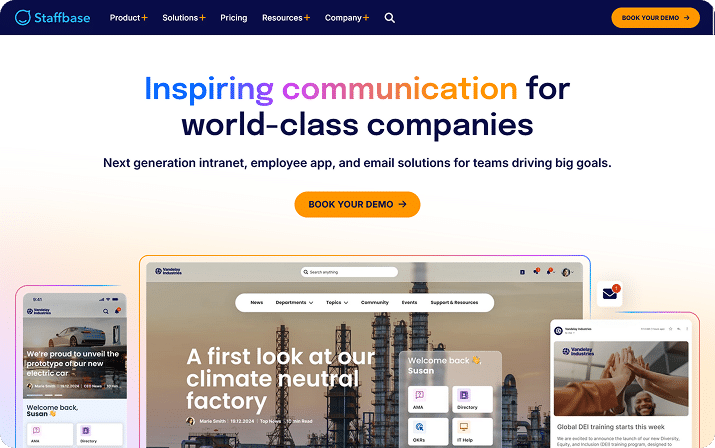
Staffbase is an internal communications platform with branded apps, intranet, and email tools, built for enterprises with dispersed teams.
Key Features
- Custom-branded mobile apps
- Employee email studio
- Targeted communication feeds
- Secure, enterprise-ready infrastructure
Pros
- Strong for frontline and deskless employees
- Flexible content targeting
- Branded, mobile-first approach
Cons
- Advocacy features are limited
- Advanced integrations can be resource-intensive
Integrations
- Microsoft 365, SAP, Workday
4. Workvivo
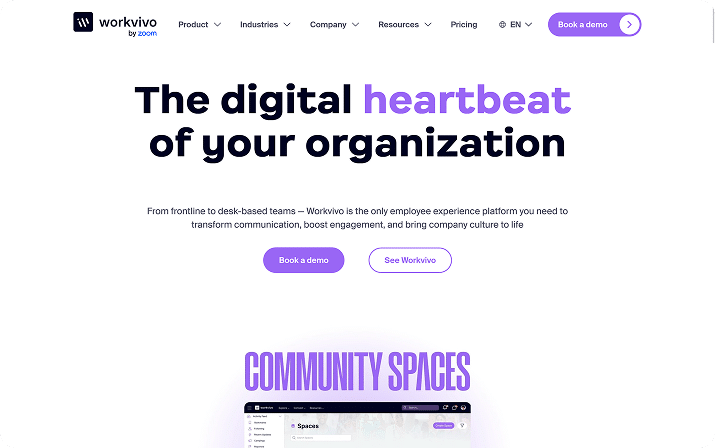
Workvivo is an employee experience platform designed to build culture and engagement with a familiar social interface.
Key Features
- Social-style activity feeds
- Recognition tools and shout-outs
- Pulse surveys and employee feedback
- Native mobile app with strong adoption
Pros
- Familiar, easy-to-use social experience
- Great for recognition and cultural alignment
- Strong for remote or hybrid teams
Cons
- Limited analytics compared to others
- No built-in advocacy
Integrations
- Microsoft Teams, Slack, Zoom
5. Haiilo
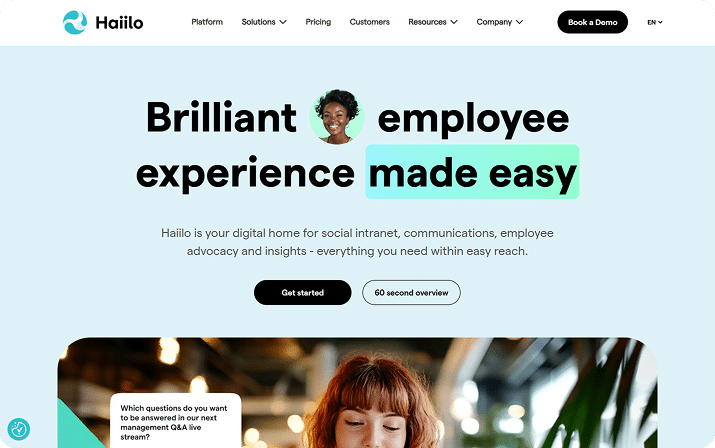
Haiilo is an employee experience platform combining comms, advocacy, and feedback into one solution.
Key Features
- Advocacy dashboards and social sharing
- Intranet-style content management
- Surveys and sentiment analysis
- Gamification and leaderboards
Pros
- Combines advocacy with communications
- Strong analytics and personalization
- Supports multilingual deployments
Cons
- Mobile UX could be more advanced
- Initial configuration requires training
Integrations
- Microsoft 365, Google Workspace
- Social media, SSO platforms
6. Simpplr
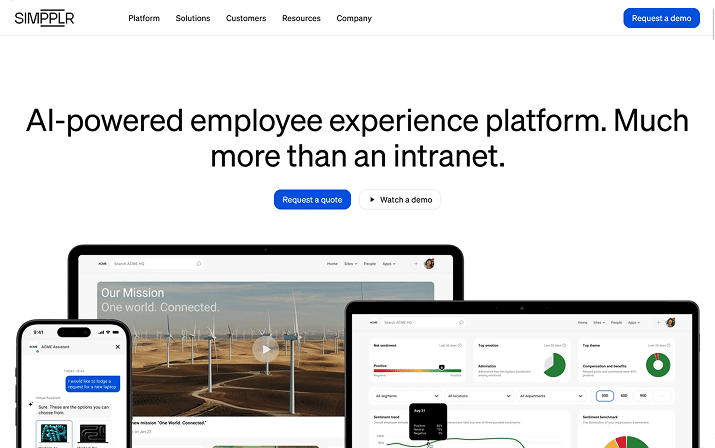
Simpplr is a modern intranet platform focused on AI-powered personalization and employee experience.
Key Features
- AI-driven search and personalization
- News feeds and content governance
- Engagement analytics
- Mobile and desktop access
Pros
- Simple, modern UI
- Effective for intranet modernization
- Strong search functionality
Cons
- No advocacy or gamification features
- Less focused on frontline workers
Integrations
- Microsoft 365, Slack, Teams
- HR and CRM tools
7. Unily
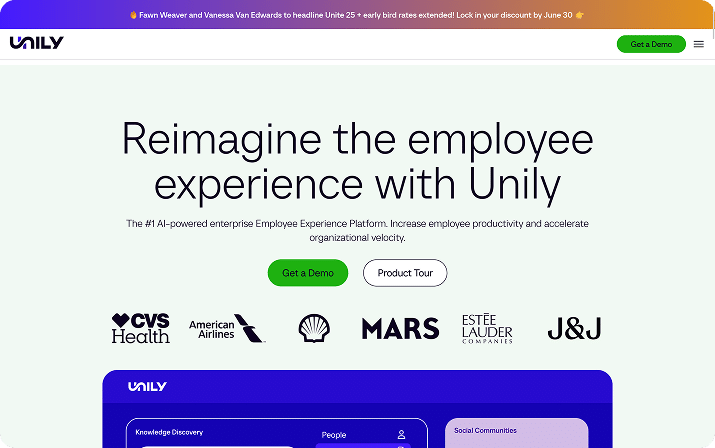
Unily is a customizable digital workplace solution that delivers branded intranet experiences at scale.
Key Features
- Custom-branded intranet portals
- Advanced personalization and targeting
- Multilingual support for global rollouts
- Analytics dashboards
Pros
- Highly customizable
- Scalable for large enterprises
- Rich intranet features
Cons
- Requires IT support for advanced customizations
- Lacks advocacy and gamification
Integrations
- Microsoft 365, Azure AD, Salesforce
8. Happeo
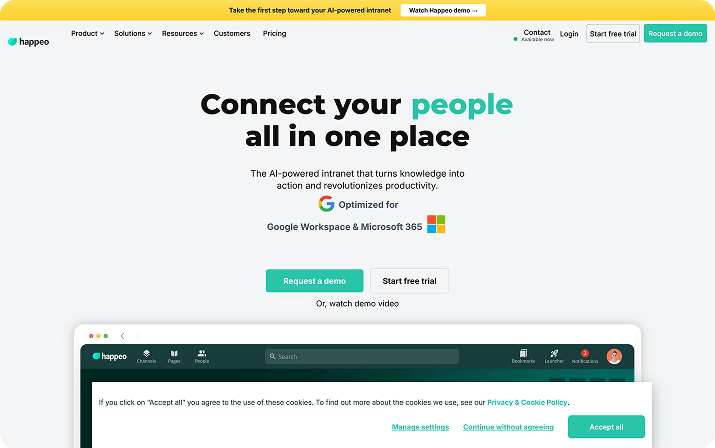
Happeo is a social intranet that blends communication, collaboration, and knowledge sharing, with deep ties to Google Workspace.
Key Features
- Customizable intranet pages and feeds
- Social channels for collaboration
- Employee directory and org charts
- Analytics and search
Pros
- Excellent for Google Workspace users
- Clean, intuitive social interface
- Encourages peer-to-peer collaboration
Cons
- Limited for non-Google environments
- No advocacy features
Integrations
- Google Workspace, Microsoft Teams
- CRM and HR tools
9. Interact Software

Interact is an intranet platform designed for structured communication, compliance, and knowledge sharing.
Key Features
- Content approval workflows
- Employee directories and org charts
- Personalized homepages
- Surveys and polls
Pros
- Strong governance and compliance support
- Good for content-heavy organizations
- Scalable for mid-to-large enterprises
Cons
- Interface feels less modern
- Advocacy features are missing
Integrations
- Microsoft 365, HRIS platforms
10. Igloo Software

Igloo Software is a configurable intranet and digital workplace solution designed for communication and collaboration.
Key Features
- Knowledge repositories and content hubs
- Custom workflows and dashboards
- Social tools for collaboration
- Secure, role-based access
Pros
- Flexible for different industries
- Good document and knowledge management
- Secure content governance
Cons
- Mobile UX less engaging than newer platforms
- No advocacy or gamification
Integrations
- Microsoft 365, Google Workspace
- CRM and HR systems
Factors to Consider When Choosing an eXo Platform Alternative
After testing these ten platforms, one lesson stands out: the ‘best’ tool depends less on feature checklists and more on how well it aligns with your people and culture. To help narrow the field, here are the criteria we recommend weighing most heavily when replacing eXo Platform.
- Mobile-first capabilities: Critical for hybrid and frontline teams.
- Advocacy features: Platforms that enable employees to amplify company messages add external reach.
- Personalization: Tailored feeds keep content relevant.
- Analytics: Actionable insights help optimize communication strategies.
- Scalability: Ensure the platform can support your organization’s growth.
Final Thoughts
While eXo Platform appeals to organizations seeking open-source flexibility, many modern alternatives offer richer employee experiences, built-in advocacy, and advanced analytics.
Poppulo is the all-in-one employee communication, engagement, and brand advocacy solution. It empowers employees to connect, engage, and amplify your brand, going far beyond the capabilities of traditional intranets.
Contact us today to learn how Poppulo can transform your employee communications strategy.