November calendars are crowded just when employees have less energy for another compulsory activity. The answer is not more noise, but timely recognition, practical support, and genuine influence.
Key Takeaways
- The key takeaways: engagement comes from relevance and participation, not seasonal decoration.
- Balance gratitude, business clarity, and practical year-end support.
- Localize holidays, weather, deadlines, and resources for each audience.
- Give every content block one obvious way to engage.
- Measure employee action after opening, not just inbox delivery.
Think November is short on occasions to boost engagement? Think again.
In this article, we're going to explore nine November employee engagement ideas that strengthen recognition, support, voice, learning, and connection. Each includes an execution plan and measurement signal that you can deploy at your company.
Use the list to plan activities around one workforce need. And for a wider foundation, feel free to start with this guide to employee engagement.

9 November Employee Engagement Ideas That Employees Can Actually Join
These November employee engagement ideas give employees several ways to participate without relying on office attendance, personal disclosure, physical ability, or a specific holiday. They also answer the practical question behind most searches: good November employee engagement activities combine recognition, voice, useful learning, well-being, and connection.
The top five for most workforces are the recognition relay, friction sprint, skills swap, pulse question, and workload reset. But all of them can be effective if properly executed.
1. Start a World Kindness Day Recognition Relay
A recognition relay turns World Kindness Day on November 13 into specific, peer-led appreciation rather than a generic gratitude message.
- How to run it: Invite employees to recognize one helpful action, explain its effect, and nominate another colleague or team. Appreciation notes can celebrate milestones or day-to-day help.
- Make it inclusive: Allow public and private recognition, with text, audio, and manager-assisted participation. This makes employee recognition accessible to remote employees and team members working in person.
- Measure: Track unique contributors, recipients, locations represented, and completed recognition chains.
- Avoid: Popularity contests, vague praise, or rewards large enough to distort participation.
Unlike a static gratitude wall, the relay explains why an action mattered. A physical or digital gratitude wall can support it, but specific peer recognition does more to boost morale. Keep friendly competition out so employees feel valued, not ranked.
A gratitude wall should never replace a specific thank-you.
2. Build a Practical Caregiver Support Check-In
A caregiver check-in makes resources and flexibility visible without requiring employees to disclose their personal lives.
- How to run it: Publish one concise hub covering benefits, flexible-work options, flexible schedules, flexible hours, manager contacts, and local support. Share resources through an employee newsletter and existing channels.
- Make it inclusive: Treat caregiving broadly, including children, partners, relatives, friends, and aging family members.
- Regional note: National Family Caregivers Month is US-specific, so adapt the framing elsewhere.
- Measure: Track resource visits, benefit inquiries, manager-toolkit usage, and anonymous usefulness feedback.
- Avoid: Public storytelling requests or appreciation language unsupported by practical help.
Allowing employees to access support on paid time can improve employee engagement, job satisfaction, and well-being more credibly than compulsory social events.
3. Run a “Fix One Friction” Sprint
A short improvement sprint gives employees influence over one everyday problem before year-end processes become fixed.
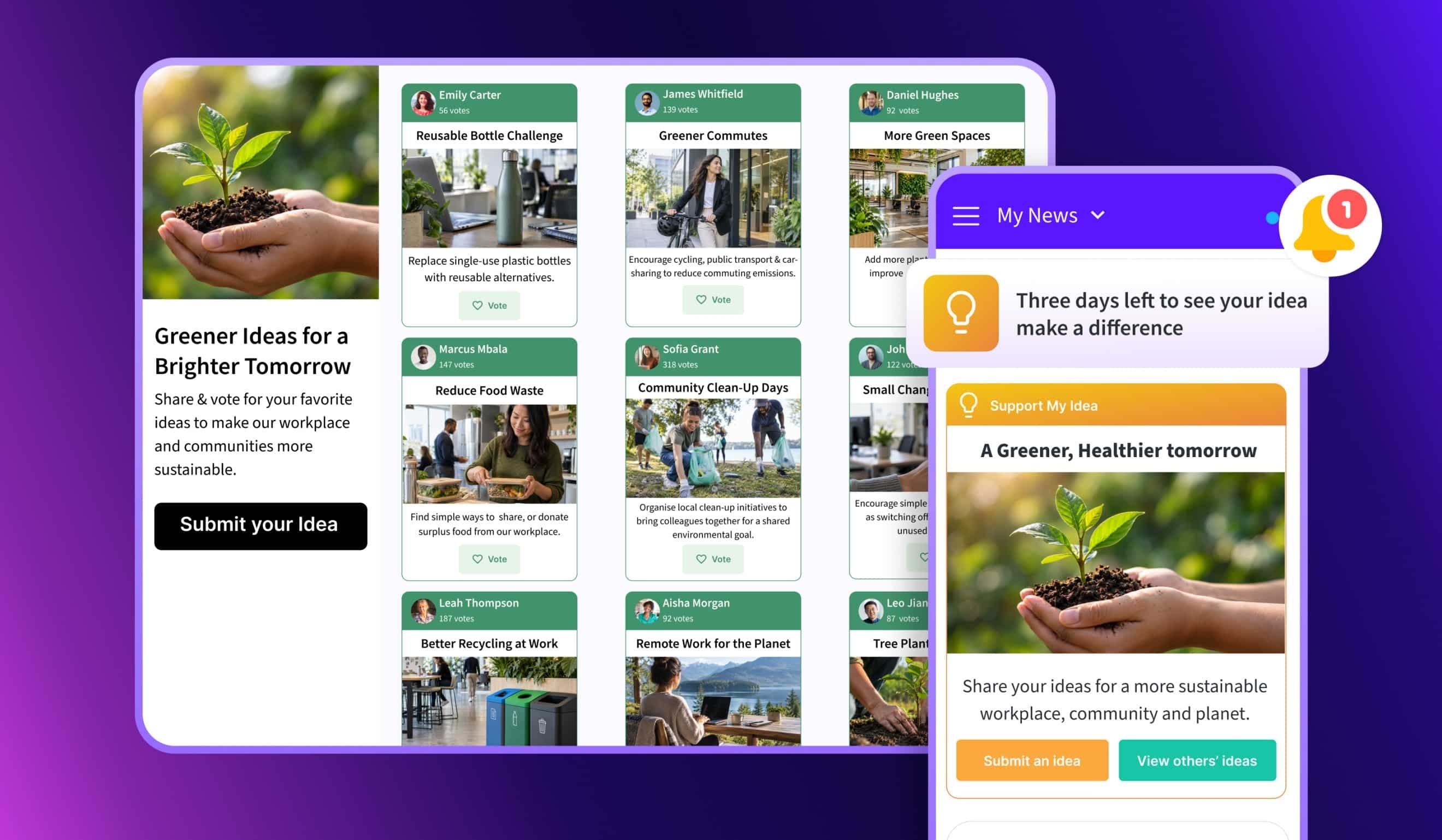
- How to run it: Ask team members to submit one small, solvable friction. Select one to address during November, then publish the owner and deadline.
- Make it inclusive: Accept voice notes, manager-submitted ideas, and anonymous suggestions. Employee idea crowdsourcing can encourage employees to gather, share ideas, vote, and see decisions.
- Measure: Track ideas submitted, workforce groups represented, time to decision, and implemented improvements.
- Avoid: Collecting new ideas without explaining what happens next.
Most companies need employees to feel heard and see one useful change. That can improve engagement and show how the team works together.
4. Launch an Employee-Chosen Community Action
A community initiative creates shared purpose when employees help choose the cause and have more than one way to participate.
- How to run it: Let employees vote among verified local or global causes, then offer paid volunteering, skills sharing, collections, or awareness support.
- Make it inclusive: Include remote and frontline alternatives, and never require donations. Let local team members plan activities that fit community needs.
- Measure: Track participation by location, volunteer hours, skills contributed, or items collected.
- Avoid: Unverified impact claims, compulsory participation, or a headquarters-only cause.
Community service can bring employees together around purpose without forced fun. These team-building activities strengthen relationships, foster inclusion, and boost morale when access is equitable.
5. Organize a November Skills-Swap Relay
A skills-swap relay recognizes employee expertise while sharing useful knowledge before the year closes.
- How to run it: Invite employees to contribute one five-minute lesson, practical shortcut, customer insight, or role-specific tip, then nominate the next contributor.
- Make it inclusive: Accept video, audio, written tips, demonstrations, and shift-huddle contributions so team members and new hires can choose a format.
- Measure: Track contributors, lessons viewed, teams represented, and tips reused elsewhere.
- Avoid: Turning the activity into unpaid training production or favoring presentation-confident employees.
This relay supports career development and professional development while helping employees build skills from other employees. It can improve customer satisfaction and is lighter than guest speakers or team-building games.
It also gives team members another career development and professional development route.
6. Spotlight a Frontline Team’s Working Day
A day-in-the-life spotlight makes operational contributions visible to colleagues who rarely see how another role, shift, or location works.
- How to run it: Ask one team to share three moments, one challenge, one improvement, and one lesson other employees can reuse.
- Make it inclusive: Rotate shifts, regions, languages, and job types; obtain consent for names, photos, and employee stories.
- Measure: Track nominations for future spotlights, employee contributions, and cross-team questions.
- Avoid: Staged celebration, romanticizing difficult conditions, or featuring only flagship sites.
A mobile employee app helps frontline team members contribute without corporate email. The goal is a connected team and workplace culture in which employees feel visible.
7. Create a Five-Day Energy and Workload Reset
November well-being support is credible when it removes friction or protects recovery rather than prescribing generic self-care.
- How to run it: Review unnecessary meetings, protect breaks, clarify priorities, share resources, and hold a manager workload check-in across five days.
- Make it inclusive: Let local teams choose actions that fit their workload and environment, including remote or hybrid teams and in-office teams.
- Measure: Track actions completed, meeting time removed, resource use, and a short before-and-after pulse.
- Avoid: Fitness challenges, personal health disclosure, or implying employees should solve structurally excessive workloads themselves.
Wellness programs and wellness initiatives help most when they protect employees’ time. Optional mindfulness or yoga may help, but effective employee engagement activities address workload first and encourage employees through busy seasons.
8. Share “November Where We Are” Stories
A location-led story challenge creates global connection without assuming every employee experiences Thanksgiving, autumn, or colder weather.
- How to run it: Invite employees to share one November tradition, community moment, seasonal change, local priority, or ordinary working-day detail.
- Make it inclusive: Provide text, image, audio, and video options with translation support through multichannel communication.
- Measure: Track countries, locations, roles, formats, employee reactions, and follow-up exchanges.
- Avoid: Treating employees as cultural representatives or pressuring anyone to share religious or personal traditions.
Thanksgiving can be one optional US activation. November themes can include kindness, caregiving, community action, learning, voice, energy, and local stories. They travel better than a global gratitude wall or instructions to celebrate holidays one way.
9. Ask One Question That Shapes Year-End Plans
One consequential pulse question can generate more useful input than a long seasonal survey.
- How to run it: Ask about one decision employees can genuinely influence, such as the year-end information they need or the process that needs clarification.
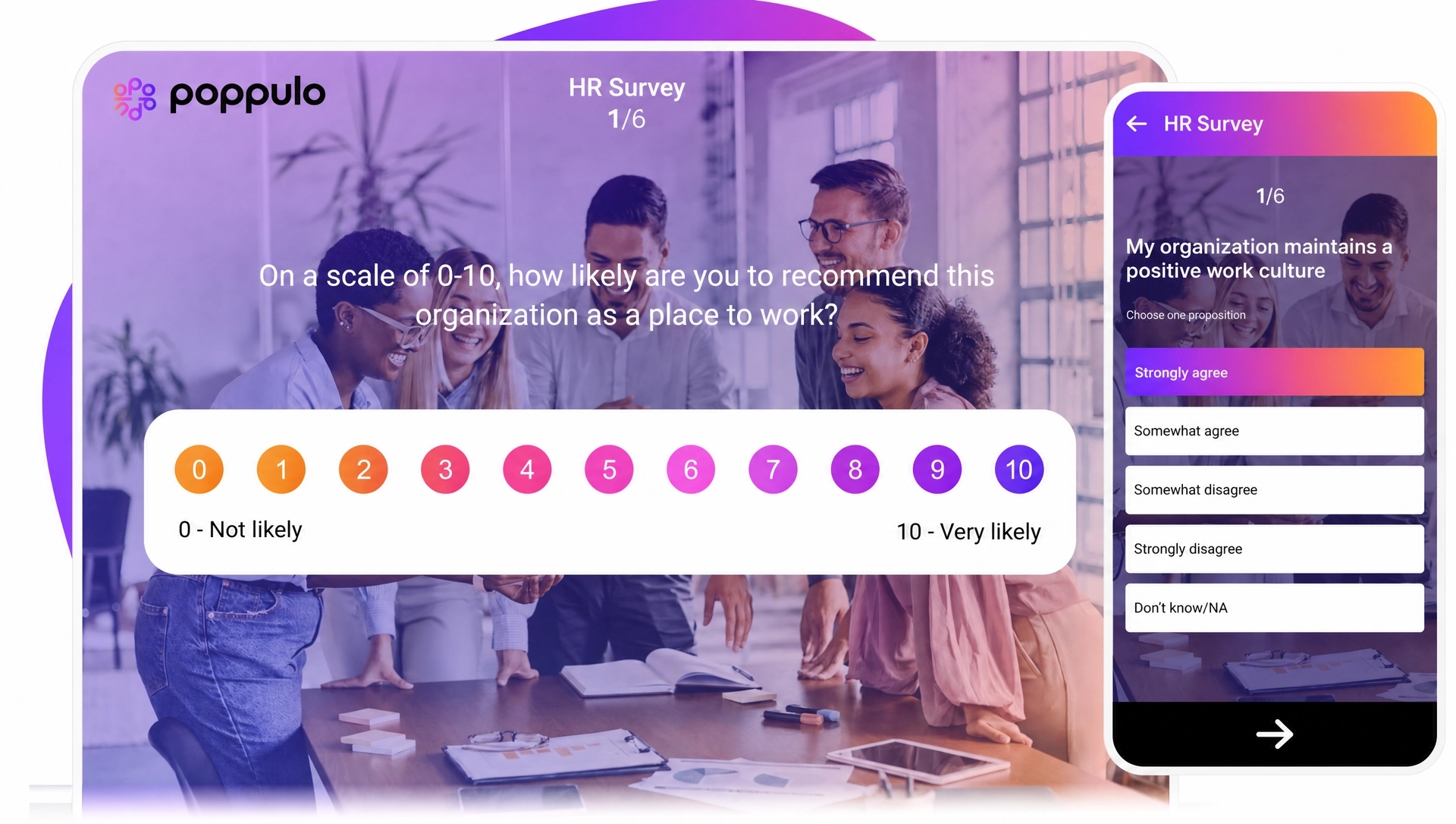
- Close the loop: Publish the result, the resulting decision, and anything leadership cannot change. Multilingual pulse surveys and polls help engage employees across locations.
- Measure: Compare response rate and representation across locations, roles, shifts, and languages.
- Avoid: Asking for feedback after the decision has already been made.
Pulse surveys build employee engagement when employees feel heard afterward. Most organizations gain more from one acted-on question than repeated surveys without consequences.
November Engagement Ideas for Remote Employees
Remote employees need asynchronous employee engagement activities that create connection without adding another compulsory call.
Prioritize the recognition relay, skills swap, pulse question, workload reset, and location stories for remote employees and hybrid teams. Keep sign-ups simple and use text, audio, or video. Virtual coffee breaks and escape rooms may suit some team members, but a virtual spirit week should not replace practical support. For remote or hybrid teams, fun employee engagement activities must be easy to leave as well as join.
When remote employees can join in person, keep the asynchronous route open.
November Engagement Ideas for Frontline Employees
Frontline employee engagement activities succeed when employees can join during paid working time across repeated shifts.
Repeat invitations across shifts, offer mobile, shared-device, manager-facilitated, and offline routes, and keep sign-ups open. Use the friction sprint, skills swap, spotlight, pulse question, or community action to engage employees around real work.
A global internal communications approach extends access across languages and locations. When employees participate in person, keep alternatives open. This matters more than copying an in-person spirit week built for in-office teams.
Engagement Success Story: Babilou Family
Babilou Family uses the Poppulo Experience Platform to connect nearly 14,000 employees across ten countries, with employees creating 73% of platform content. Poppulo helps organizations coordinate challenges, pulse surveys, multilingual campaigns, and recognition and rewards across office, remote, and frontline populations.
Final Thoughts
A successful November calendar is measured by whether employees feel recognized, supported, heard, or connected, not by the number of employee engagement activities. Choose two or three November employee engagement ideas around a known need, provide voluntary access in working time, and show employees what changed. Follow-through makes all the difference to employee morale, team morale, and company culture, while scalable delivery sustains employee engagement.
Done well, these ideas protect well-being and boost morale because employee morale rests on credible support. If you'd like to learn more, let's talk. At Poppulo, we've already partnered with global leaders like Coca-Cola CCEP, Primark, and L'Occitane Group to boost engagement, and we'd love to do the same for you.
Book a free personalized demo to discover what the Poppulo Experience Platform can do for your internal communications.
November Employee Engagement Ideas FAQs
These are the questions that come up most frequently when discussing employee engagement in November.
How many November engagement activities should a company run?
Run two or three focused employee engagement activities tied to a known need. Most companies get better participation rates from a manageable campaign than a full calendar. Capacity, accessibility, and follow-through matter more than volume, because employees feel valued when leaders support participation and report what changed.
How can November activities include frontline and shift employees?
Give frontline employees paid-time participation, repeat access across shifts, and mobile or shared-device options. Managers can facilitate short contributions during huddles, while posters, paper forms, and offline submissions cover digital gaps. Allowing employees several routes to participate prevents one channel or schedule from excluding team members.
Should November employee engagement focus on Thanksgiving?
No. Thanksgiving is US-specific and should be one optional local activation, not the global campaign backbone. Invite employees in each location to adapt November engagement ideas around relevant community moments, working realities, or observances. This helps employees feel included without asking global teams to celebrate holidays that are not theirs.
How should companies measure seasonal employee engagement?
Separate reach, participation, representation, and follow-through. Measure who received the campaign, who joined, which locations, roles, shifts, and channels were represented, and what action followed. A company-wide total can hide exclusion, while segmented participation rates show whether employee engagement ideas reached the employees they were designed to serve.