A price change reaches store managers at 8:00 a.m. By noon, the opening shift has updated labels, the late shift is quoting yesterday's offer, and customers are challenging both. How do you fix this? With a smart communication strategy and the right digital tools.
Key Takeaways
- Map access by store, role, shift, language, and device conditions.
- Give each message type one primary communication channel and one fallback.
- Provide an option that does not require a personal phone.
- Deliver messages directly, then let managers add local context.
- Measure receipt, understanding, and action separately.
- Pilot internal communication before rolling it across the entire organization.
Most retail communication fails before the message is written. Why? Because the internal communication system assumes every employee has an inbox, a device, and time to read. This is a structural access problem, not a lack of employee interest. A retail message is delivered only when the intended associate has a realistic opportunity to receive, understand, and act on it.
So what's the solution? Reaching deskless retail associates requires accessible entry points, clear channel ownership, targeted messages, manager follow-through, team building, and store-level measurement.
This guide shows how to build that internal communication for employees without desktop or corporate-email access. The goal is not another employee app. It is dependable employee communication software and strategy that, when combined, help stores act consistently while improving the employee experience.
Why Desk-First Communication Misses Retail Associates
Retail associates work in a different information environment from headquarters. Rotating shifts, customer interruptions, shared terminals, seasonal turnover, language differences, and limited paid reading time make desktop-first internal communication unreliable.
When internal communication depends on an inbox, managers become human forwarding systems. They screenshot company news, recap policy in chat apps, or squeeze updates into huddles. That creates inconsistent promotion guidance and frustrated customers. It also obscures whether frontline employees received the original message.

7 Steps to Reach Deskless Store Associates
These seven steps turn employee communication from publishing activity into a verifiable delivery system. We'll go through them one by one for clarity.
1. Map access by store, role, and shift
An access map reveals who your current internal communication excludes. Audit corporate email access, permitted employee devices, connectivity, language, accessibility needs, and paid communication time across shifts and locations.
Ask associates and managers how they receive urgent updates, operating guidance, and culture content. Include mobile devices, an employee app, shared tablets, digital signage, printed notices, and huddles. Focus groups can expose workarounds that analytics miss, especially among younger employees and staff members with no permanent corporate identity. A practical internal comms audit produces an access map by employee segment and store environment that you can reference.
2. Give every message type one primary channel
Clear channel ownership helps employees know where authoritative internal communication lives. Separate critical alerts, operational changes, reference material, recognition, and feedback, then give each one a primary communication channel, a fallback, and a named owner.
A communication channels plan might assign safety alerts to push notifications with SMS fallback, promotions to the employee app, and reference material to a social intranet. Microsoft Teams, instant messaging, and social media platforms can support employee app access, but they should not all become duplicate publishing destinations. A multichannel communication strategy should streamline internal communication and keep every shift on the same page.
3. Remove email-dependent identity and onboarding
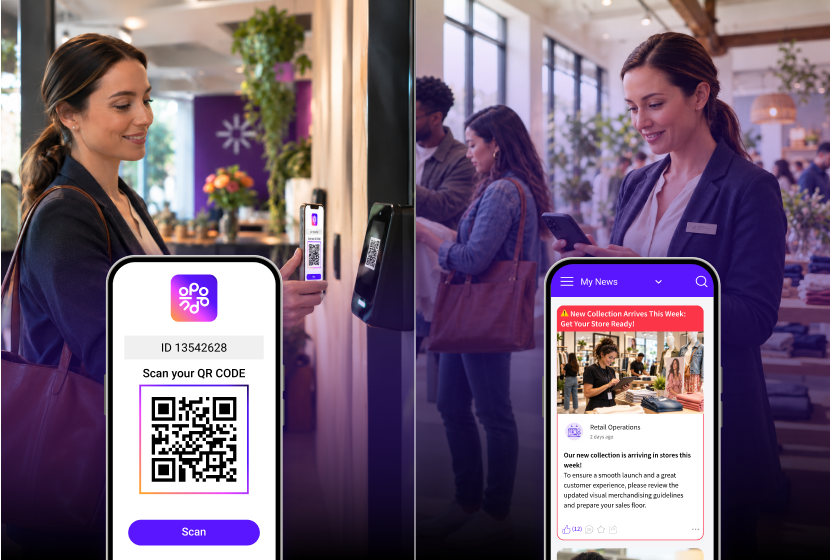
The right employee app must let associates activate access without an unused corporate mailbox. Offer QR codes, SMS invitations, employee numbers, store badges, SSO, or existing operational credentials connected to HR systems.
Make employee app activation part of paid onboarding. Test the employee app journey from invitation to first useful action, track employee app activation by store and shift, and remove seasonal employee app access promptly. An employee app with a steep learning curve or password-heavy setup will not connect employees at scale. Modern employee communication software should make the mobile-first employee app path the easiest path.
The key features are practical: the employee app must communicate easily, support real-time communication, and make employee app help accessible. The employee app should integrate with the digital workplace and collaboration tools. These communication tools must improve communication instead of creating another silo.
4. Design messages for the flow of a store shift and retail employee engagement
Shift-ready internal communication tells associates what changed, who is affected, what action is required, and by when. Use short employee app posts, captions, and brief video, targeted by store, role, region, and language. Link to one authoritative document and distinguish urgent, must-do, reference, and culture content.
Protect attention with notification rules and Quiet Hours. Reserve push notifications for urgent updates, because every employee app alert competes with customers and personal lives. Clear communication on daily goals, task allocation, inventory, pricing, and project progress helps employees work in the same direction and make informed decisions.
5. Deliver directly and let managers add context for effective communication
Direct delivery preserves accuracy; managers should explain, not reconstruct, the message. Send the original internal communication to every eligible associate through the employee app, then give managers an employee app brief covering local implications, likely questions, and the escalation route.
Keep huddles for context, coaching, team building, and employees without digital access. Good communication bridges headquarters and frontline workers while leaving local leaders room to translate priorities into store reality. It also stops senior management and senior leaders from assuming a cascade happened simply because managers received an email. Use alerts and required acknowledgments when failure to act creates material risk.
6. Build two-way feedback with visible follow-through
Two-way communication only builds trust when someone actually owns the response. Give employees comments, short surveys, anonymous options, structured ideas, and non-digital routes. Route questions to key stakeholders with a response expectation, then publish “You said / We did / We cannot yet” follow-ups.
This open communication helps teams surface unclear policies and broken processes before they harm customers. The employee app can gather feedback and employee sentiment while giving employees evidence that speaking up matters. Regular manager feedback helps employees feel valued; open dialogue supports creative thinking, team building, company culture, and workplace engagement.
Engagement is not just an HR metric. It shows whether people understand what the organization stands for and how their work supports organizational goals.
7. Measure receipt, understanding, and action
Effective communication measurement separates three questions:
- Receipt covers activation, delivery, reach, and acknowledgment.
- Understanding covers pulse questions, quizzes, manager feedback, or comprehension checks.
- Action covers the requested behavior in the relevant operational system.
Segment employee app results by store, region, role, shift, language, and employment type. Set escalation thresholds for critical messages, and do not treat send counts, total posts, or company-wide averages as proof. Advanced internal communication metrics help communication professionals link communication channels to store execution and employee engagement.
What to Do When Associates Cannot or Do Not Want to Use Personal Phones
Personal-device access is an option, not a hidden employment requirement. Provide shared managed devices, kiosks, or company-issued mobile devices during paid time. Use workplace digital signage for broad awareness, not personal or sensitive information, and retain concise huddles and printed fallback materials. This digital workplace fallback improves the employee experience.
Explain compensation, privacy, security, notification, and support before rollout. Required reading or responses outside scheduled hours may be compensable work, depending on local law. Protect remote employees and store associates from after-hours pressure.
In the case of an outage, fall back to SMS or phone trees, manager contacts, and signage, then confirm receipt when systems return. A documented crisis communication approach matters because 23% of surveyed businesses had no plan or were unsure one existed.
How the Poppulo Experience Platform Supports Deskless Retail Communication
When it comes to actual digital tools to deploy this strategy, the Poppulo Experience Platform provides the governed communication layer businesses need. Features of the platform include:
- A branded employee app that supports email-free QR, employee-ID, or existing-credential onboarding.
- Offline access, targeted push notifications, and Quiet Hours for controlling message availability
- Digital signage and targeting by store, region, role, and language.
- Translation into 50+ languages, for universal comprehension.
- Must-Read acknowledgments to verify critical internal communication, with surveys, comments, and employee ideas to enable two-way communication.
- Location and audience analytics to help communication professionals separate reach from employee engagement.
The unified platform can streamline communication across a social intranet, Microsoft Teams, video calls, social media, and other digital tools. The result? A centralized communication hub that can reach employees wherever they are.
Client Success Story: Euromaster
Euromaster, a multi-site automotive service organization with an ongoing deskless access challenge, used the Poppulo Experience Platform to onboard distributed teams without corporate email and provide mobile-first access. The positive results were immediate:
- +93.7% users since launch
- 994 monthly active users, a 43% activation rate
- An average of 132,767 monthly impressions, proving content visibility
- On average, 30 likes and 10 comments per employee-generated post
- 1 weekly newsletter sent, totaling 5,852 opens in the past six months
The lesson is not that all communication channels belong in one employee app per se. It's that the right employee communication software and a unified platform can reduce communication tools while preserving choice for frontline workers. That, ultimately, makes a huge difference in adoption and daily usage.
Final Thoughts
Retail associates become reachable when internal communication reflects how employees work in stores. The simplest answer is to map access, assign communication channels, simplify employee app onboarding, and measure receipt and understanding at the store level.
That foundation improves employee engagement. It also helps employees feel included in the company's goals, supports team building, and turns associates into informed brand ambassadors rather than passive recipients of company news. Giving employees dependable access is how good communication becomes store performance. It strengthens culture and boosts overall productivity and satisfaction.
At Poppulo, we specialize in helping frontline and retail employees stay connected and informed. We've already partnered with global leaders like L'Occitane Group, Primark, and Coca-Cola CCEP, and we'd love to discuss ways we can boost the employee experience at your organization.
Sign up for a free Poppulo demo and discover what the Poppulo Experience Platform can do to improve communication and connection with your retail staff.
Deskless Retail Employee Communication FAQs
These are the questions that come up most often when discussing deskless retail employee communication.
Who should own retail employee communication across headquarters and stores?
Internal Communications should own strategy, channel governance, and measurement. Operations owns operational accuracy; HR owns people policy; IT owns access, security, and integrations. Store managers provide context and follow-up. Named decision rights keep the comms platform useful with each target audience and the entire team aligned.
How should retailers communicate during a platform or network outage?
Use a documented fallback: SMS or phone alerts for urgent updates, manager contact trees, digital signage, and printed notices. After service returns, resend the authoritative internal communication through the employee app and verify receipt. Test this plan during normal operations, not during crisis management with poor communication.
How often should retailers audit communication access?
Review access quarterly and whenever seasonal hiring, store openings, workforce changes, or platform changes occur. Audit sooner when activation, reach, or acknowledgment falls below the threshold. Combine internal comms analytics with manager interviews and associate feedback so weak adoption triggers informed decisions, not more messages.