The service industry is a unique sector with its own specific engagement demands. Luckily, these seven restaurant employee engagement ideas are built for the work as it actually happens.
Key Takeaways
- The strongest restaurant employee engagement ideas happen during paid work.
- Every shift and role needs equal access, including BOH and employees without corporate email.
- Recognition, listening, employee development, and manager follow-through should reinforce one another.
- For 2027, sustainable routines will do more for employee engagement than one-off morale campaigns.
Here's the truth: restaurant and QSR leaders need employee engagement ideas that fit across shifts, roles, languages, and locations. Retention pressure, technology change, and workforce stability make that harder, but also more urgent.
No employee engagement program can repair unfair pay, unsafe work, chronic understaffing, or unstable schedules. But the right engagement strategy can play a part in fixing those kinds of challenges, creating a better and more efficient work environment. When considering these employee engagement ideas, pose these three questions: can people join on paid time, can every role and shift take part, and will employees see what happens next?

7 Restaurant and QSR Employee Engagement Ideas for 2027
These seven ideas are designed to get restaurant employees involved and engaged while on the job. See which ones are most feasible and relevant to your own work environment.
1. Turn pre-shift huddles into two-way five-minute rituals
A repeatable huddle gives every shift the context and voice it needs before service begins. Menu availability, promotions, staffing, delivery volume, and safety issues change quickly. Open communication at the start of a shift makes employee engagement practical and prevents communication gaps from becoming guest complaints or lost productivity.
Be sure to keep the team meeting to just five minutes: what changed, what matters now, one team win, and one restaurant employee question. Record anything the manager cannot answer, name an owner, and set a response date. Track completion, questions, response time, and repeated errors. A huddle should encourage employee voice, improve employee engagement, and strengthen workplace culture, not become an unpaid manager monologue.
2. Recognize one specific save after every shift
Specific employee recognition shows which service, teamwork, safety, and judgment behaviors should be repeated. More than half of restaurant workers say more recognition from management would improve employee engagement, while a quarter said they rarely received feedback.
Name one concrete save from the previous shift: someone caught an allergen risk, helped another station, or protected service during a surprise rush. Rotate employee recognition across FOH, BOH, prep, drive-thru, delivery, cleaning, and closing so recognition programs improve workplace culture instead of becoming popularity contests. Track frequency, recipients, shift coverage, and peer praise. Timely employee recognition improves employee engagement and helps employees feel valued because it connects employee contributions to exceptional service. And that's a good thing.
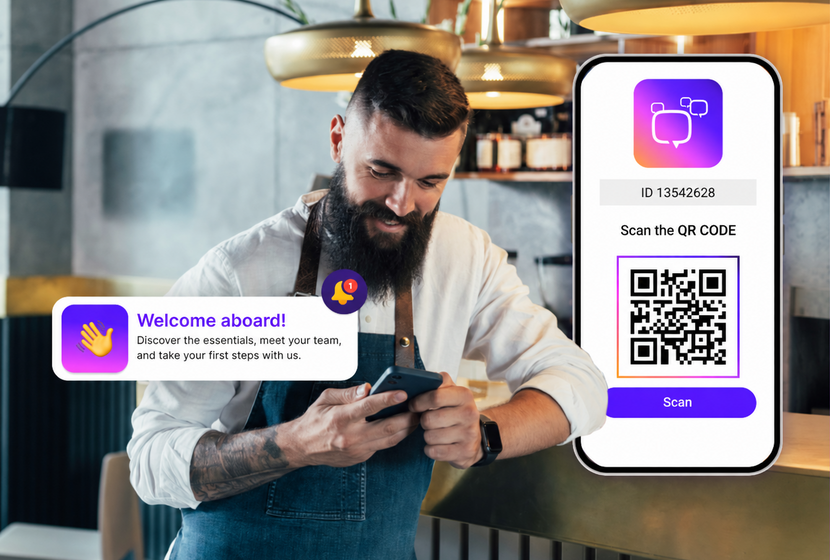
3. Give every new hire a 30-day buddy passport
A structured first month helps new employees build confidence before uncertainty turns into disengagement. Pair each new restaurant employee with a trained peer, then mark practical milestones for the first shift, first week, and first 30 days. This early onboarding approach to employee engagement can improve employee satisfaction and job satisfaction.
Cover people to know, station basics, safety, escalation routes, guest scenarios, and digital tools. In QSR settings, include kiosk, mobile-order, delivery, and handoff workflows. Track completion, questions, buddy coverage, confidence, and employee retention. The buddy supports employees and introduces the workplace culture; they do not manage performance, and mentoring belongs on paid time.
4. Build station-to-station skill passports
Visible skill progression turns training programs into a credible career growth path. Define verifiable skills across prep, grill, expediting, guest recovery, inventory, opening, and closing. Then connect employee engagement to cross-training, preferred responsibilities, supervisor readiness, or a documented development conversation.
Try offering training across shifts and on paid time. Clear expectations, mentorship, and career growth opportunities support employee retention. Skill passports make employee engagement and workplace culture tangible.
5. Rehearse new digital workflows before the rush
Short scenario practice makes technology change less disruptive and gives employees influence over the workflow. Consider running a 10-minute paid drill for a new kiosk, mobile-order handoff, menu system, AI-assisted task, or equipment process.
Don't forget: ask where the process creates friction, what guests may misunderstand, and what support employees need. This turns training programs into two-way employee engagement and builds employee knowledge before peak service. Measure confidence, errors, escalations, and improvements.
6. Close one pulse question within seven days
A one-question pulse builds trust only when employees receive a visible response. Every two to four weeks, ask about one issue: tools, workload, training, communication, manager support, or a recent change. Offer mobile, QR, kiosk, paper, or facilitated participation during paid time.
Within seven days, publish three lines: You said; We are doing; We cannot change yet. That loop can encourage employee feedback and boost employee engagement more effectively than a long annual survey. Track response time and completed actions.
7. Equip managers with a weekly engagement kit
Restaurant managers need a people rhythm they can still use during a busy week. Give them one huddle prompt, one employee recognition cue, one listening question, one onboarding reminder, and one escalation route. Add brief coaching on topics like feedback, conflict, and new-hire support. Consistent coaching makes employee engagement important in daily restaurant management.
Collect feedback and keep an eye on results. Consider tracking adoption, coverage, response time, and employee feedback. And remember: leadership development programs should support restaurant managers while also helping retain employees.
Choose and Pilot the Right Ideas
It's a good idea to begin with an engagement pilot to gauge which ideas work best. Start with one diagnosed employee-experience gap and test the smallest credible intervention in real restaurant conditions.
And don't be afraid to add some fun in the mix. Engagement ideas built around enjoyment, such as a paid tasting quiz, station relay, scavenger hunt, or menu knowledge game, can make team-building activities amusing for restaurant staff and significantly boost morale. More ambitious team-building activities, including cross-station service challenges, should still protect employee engagement and service quality.
Keep in mind: strong recognition programs make employee recognition visible, help create engaged employees, and support job satisfaction and mental health. Engaged employees then know which behaviors matter.
These are three steps to help you run your initiative effectively:
1. Match the idea to the problem
- Communication gaps: start with the two-way huddle.
- Recognition gaps: start with the specific save.
- Early-tenure problems: start with the buddy passport.
- Development gaps: start with the skill passport.
- Technology friction: start with workflow rehearsals.
- Trust or voice gaps: start with the seven-day pulse loop.
- Manager inconsistency: start with the weekly manager kit.
2. Apply the restaurant-floor test
- Can employees participate during paid time?
- Can every role and shift access it without corporate email?
- Can multilingual employees participate fully?
- Can a manager sustain it during a busy week?
- Is there a named owner and response deadline?
- Does the measure support a decision rather than surveillance?
3. Run a 30-day pilot
- Select a representative mix of restaurants, roles, and shifts.
- Record a baseline tied to the chosen problem.
- Explain how participation and employee feedback will be used.
- Review access barriers and manager workload weekly.
- At day 30, stop, revise, expand, or scale.
On a related note, your pilot is also the right place to test employee wellness initiatives. Employee perks such as gym subscriptions, counseling services, mental health resources, wellness challenges, or stress management workshops can support physical health and mental well-being. Pay close attention to work-life balance, personal life, and mental health. They all have a positive impact only when workplace culture takes steps to protect them.
Scale Engagement Across Restaurants and Shifts with Poppulo
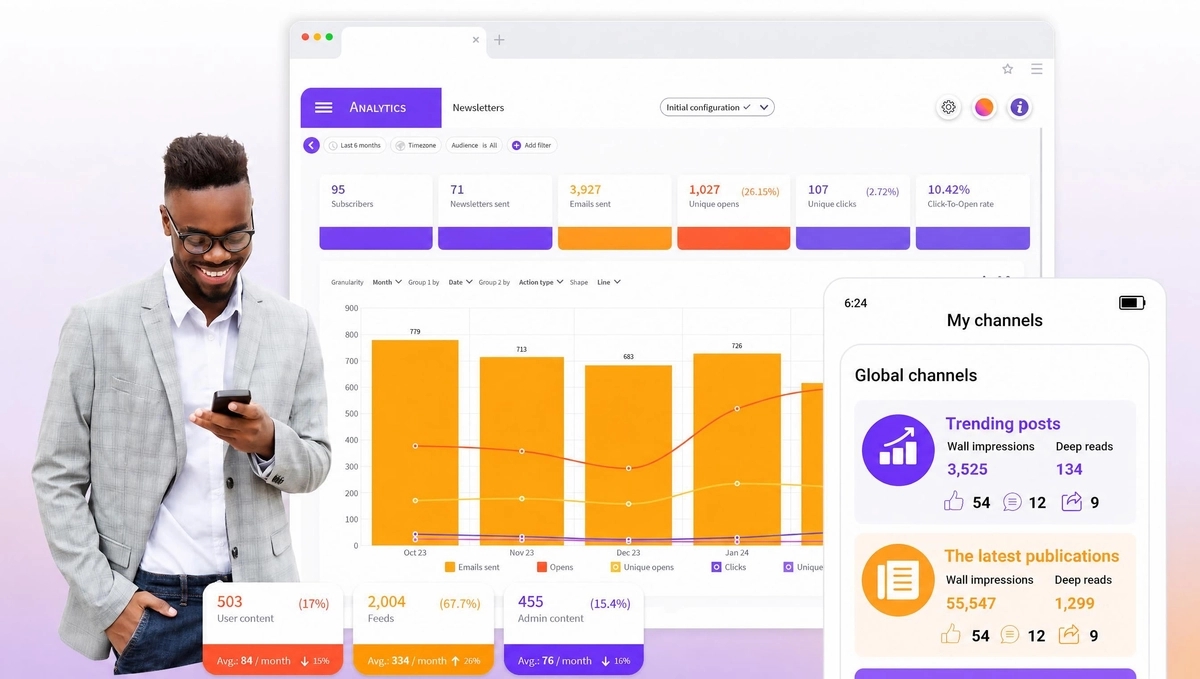
For multi-location employee engagement to work, it needs a shared operating layer that preserves local relevance while giving central teams visibility. This is exactly where the Poppulo Experience Platform comes in. It can coordinate:
- frontline communication
- employee recognition
- employee voice
- measurement across mobile, web, email, Teams, and digital signage
The Poppulo Experience Platform is designed so that employees without corporate email can access a mobile-first experience, while teams can target communication by location, role, shift, or language, improving employee engagement across the entire workplace culture. When all of these features are combined, it empowers internal communications teams to support employees, run recognition programs and pulse surveys, and boost employee engagement across the group.
A real restaurant example: Patapain
Patapain used the Poppulo Experience Platform to connect nearly 1,000 frontline employees across 61 restaurants. Patapain reported 98% active adoption in the first weeks and said more than 80% of published content came from employees.
Thanks to the platform, Patapain teams share practices, ask other restaurants for support, and highlight employee achievements. This example shows how employee engagement grows when technology fits the work environment, employees have autonomy to contribute, and useful local ideas strengthen workplace and company culture. That is strong employee engagement built through participation.
Final Thoughts on Restaurant Employee Engagement in 2027
Improving employee engagement means making participation accessible, relevant, and visible during paid work. Start with one gap, give every role a fair way in, and make manager follow-through part of the design. It's not so complicated if you break it down to the basics. That is how restaurant employee engagement builds engaged employees, a positive workplace culture, and a repeatable operating rhythm.
At Poppulo, we've helped global leaders around the world enhance their internal communications and employee engagement, including brands like Patapain, Coca-Cola CCEP, and L'Occitane Group. We'd love to do the same for you.
Sign up for a free demo to see how the Poppulo Experience Platform can turn isolated employee engagement efforts into consistent employee engagement strategies.
Restaurant Employee Engagement Ideas FAQs
These are the questions that come up most often when discussing employee engagement in the restaurant industry.
What should a restaurant fix before launching engagement activities?
Fix unsafe work, chronic understaffing, unstable schedules, missing breaks, and unfair pay first. Employee engagement programs cannot compensate for a work environment that exhausts people. Predictability, competitive salaries, respectful management, and a positive work environment create the foundation for employee satisfaction, job satisfaction, employee retention, and sustainable employee engagement.
How can restaurants engage employees without corporate email or personal phones?
Use paid-time channels: huddles, shared kiosks, QR access on workplace devices, paper pulse questions, and digital signage. Equal access matters. No restaurant employee should use a personal phone or unpaid time to receive essential information or join employee engagement programs.
How should QSR brands adapt engagement practices across franchise locations?
Set a few non-negotiables, such as paid-time access, local-language materials, response deadlines, and privacy standards. Let each franchise choose examples, timing, and recognition that fit its team. Compare participation and follow-through across locations, but avoid public rankings that punish restaurants facing different staffing or operational conditions.
How can restaurants measure engagement without surveilling employees?
Measure patterns, not individual behavior. Combine voluntary pulse feedback, participation by shift, recognition coverage, response time, training completion, absenteeism, and employee retention. Report aggregated results, explain how data will be used, and collect only what supports a decision. Trust is part of the measurement system.