Unily has built a reputation as a customizable digital workplace, often chosen by enterprises that need scale and branding flexibility. But, most organizations expect more than a branded intranet. They want platforms that blend communication, advocacy, and real-time engagement into a mobile-first experience, something that works just as well for frontline employees as it does for corporate staff.
If you’re considering Unily but want to be sure you’re making the right choice, we’ve tested and compared 10 strong alternatives worth evaluating this year.
Top 10 Unily Alternatives
Choosing a digital workplace solution isn’t just about ticking boxes on an intranet checklist. The real challenge is finding a platform that adapts to the way your people actually work: whether they’re in HQ, on the shop floor, or out in the field.
We’ve tested and compared the top Unily alternatives that stand out for their ability to make communication seamless, boost employee engagement, and flex to the diverse needs of hybrid organizations. Each option below brings something different to the table, so think of this list as a guide to matching the right strengths with your priorities.
1. Poppulo
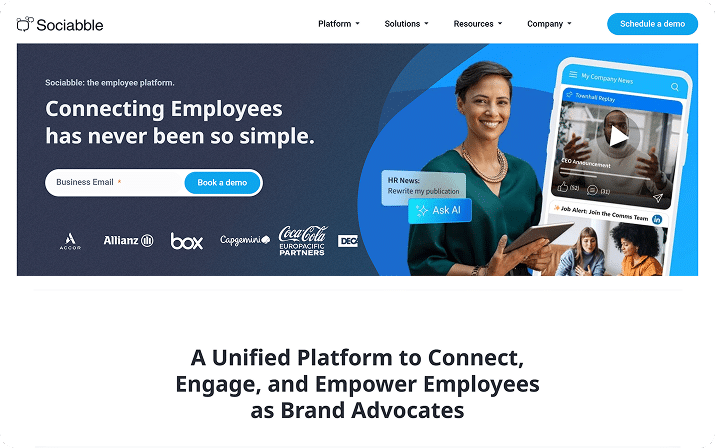
Poppulo is the all-in-one employee communication, engagement, and brand advocacy platform. It centralizes company news, personalizes content for every employee, and empowers teams to become active brand ambassadors. With gamification, advanced analytics, and multichannel delivery, Poppulo is designed for organizations that want to connect employees and extend brand reach at the same time.
Key Features
- Multichannel communication (mobile, email, Teams, Slack, signage, intranet)
- Built-in employee advocacy with gamification and rewards
- AI-powered analytics for content performance
- Personalized content feeds by role, location, or language
- Mobile-first design for frontline workers
Pros
- Combines comms, engagement, and advocacy in one solution
- Strong personalization and targeting capabilities
- Excellent for hybrid and global organizations
Cons
- Rich features may require onboarding support
- Gamification success depends on internal culture
Integrations
- Microsoft 365, Google Workspace, Salesforce
- Social media platforms (LinkedIn, Instagram, X, Facebook)
- HRIS and CRM tools
2. LumApps
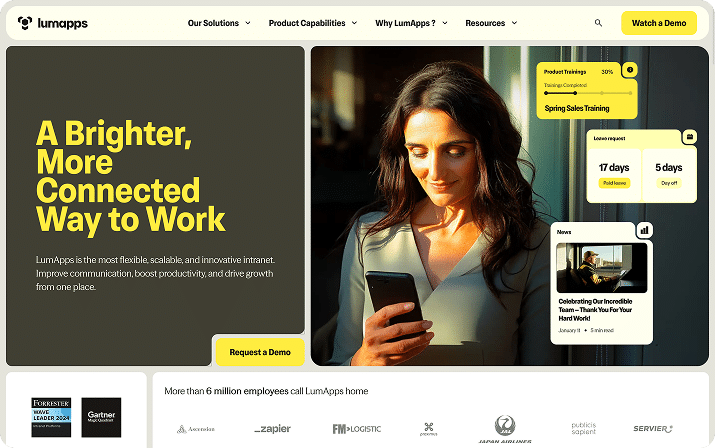
If your organization runs primarily on Google Workspace or Microsoft 365, LumApps is often the smoothest fit. It’s a digital workplace platform that centralizes communication and knowledge sharing.
Key Features
- Personalized intranet pages
- Knowledge management and employee directories
- Community spaces for collaboration
- Multilingual support
Pros
- Strong for knowledge and intranet management
- Good UX and content targeting
- Seamless integration with productivity tools
Cons
- Limited advocacy and gamification features
- Less focused on mobile-first experiences
Integrations
- Google Workspace, Microsoft 365
- HRIS and third-party applications
3. Staffbase
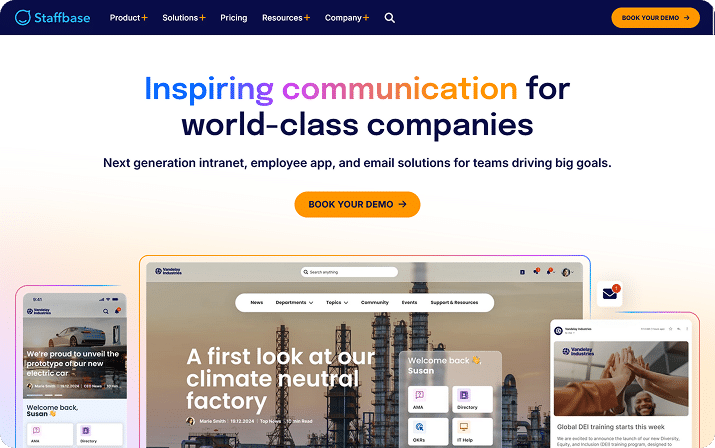
Staffbase shines when mobile-first communication for frontline workers is the priority. Many of the companies we’ve seen succeed with Staffbase operate in logistics, retail, or healthcare.
Key Features
- Custom-branded mobile apps
- Targeted news feeds
- Internal email tools and newsletters
- Governance and compliance features
Pros
- Strong support for deskless and frontline workers
- Secure and scalable infrastructure
- Flexible content targeting
Cons
- Advocacy is not a native focus
- Advanced integrations can be resource-heavy
Integrations
- Microsoft 365, SAP, Workday
- CRM and analytics platforms
4. Workvivo
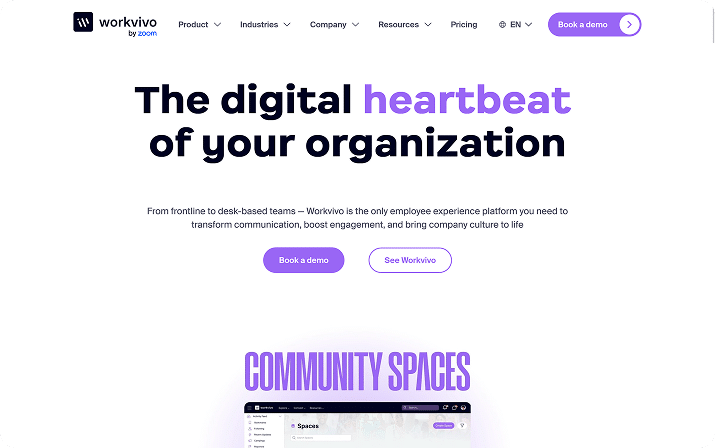
Workvivo is ideal for organizations where culture and recognition are central to the comms strategy. Its social-style interface feels familiar and easy to adopt.
Key Features
- Social news feed with posts, likes, and comments
- Recognition and shout-outs
- Pulse surveys and employee feedback
- Video, podcast, and live stream support
Pros
- Familiar, social interface for employees
- Encourages peer recognition and culture sharing
- Mobile-first and easy to adopt
Cons
- Advocacy features are limited
- Fewer advanced analytics tools
Integrations
- Microsoft Teams, Slack, Zoom
- HRIS and collaboration platforms
5. Haiilo
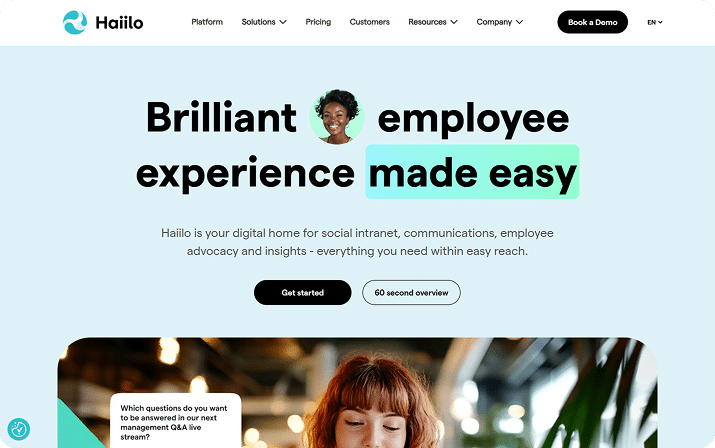
Haiilo combines internal communications with advocacy and feedback, making it a versatile alternative.
Key Features
- Intranet and communication hubs
- Social sharing and advocacy dashboards
- Feedback and pulse surveys
- Advanced targeting and analytics
Pros
- Combines multiple engagement tools in one place
- Good personalization and reporting
- Supports global rollouts with multilingual options
Cons
- Backend may feel complex at first
- Mobile UX less advanced than some competitors
Integrations
- Microsoft 365, Google Workspace
- Social media and SSO platforms
6. Simpplr
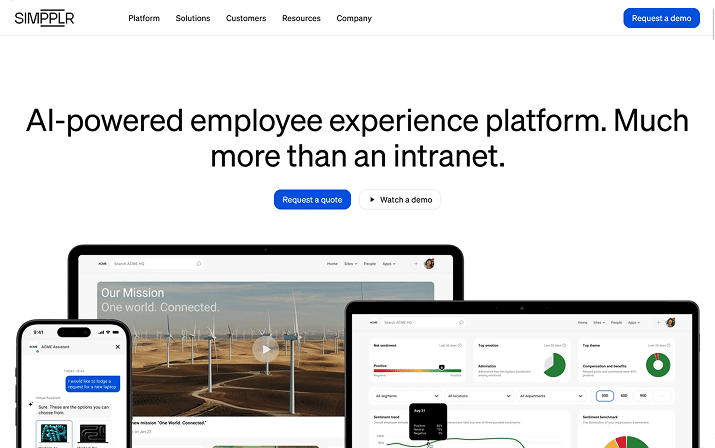
Simpplr focuses on intranet modernization, powered by AI-driven search and personalization.
Key Features
- Personalized employee news feeds
- Smart content search and governance
- Engagement analytics
- Clean, user-friendly intranet design
Pros
- Strong UX for employees
- Useful for intranet modernization
- Good analytics for communication teams
Cons
- No native advocacy or gamification features
- Less suited for frontline communication
Integrations
- Microsoft 365, Google Workspace
- HRIS and identity platforms
7. Happeo
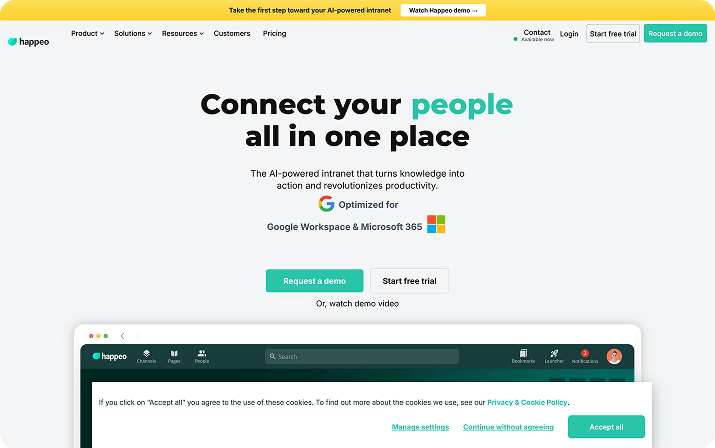
Happeo integrates tightly with Google Workspace, making it a natural choice for Google-native companies.
Key Features
- Intranet pages and customizable layouts
- Social channels and feeds
- Employee directory and org charts
- Collaboration and knowledge hubs
Pros
- Very effective for Google Workspace users
- Social-style interaction
- Clean and easy-to-use interface
Cons
- Limited advocacy tools
- Less robust outside of Google ecosystems
Integrations
- Google Workspace, Microsoft Teams
- HR and CRM tools
8. Interact Software

Interact is an intranet platform with strong content governance and structured communication features.
Key Features
- Personalized homepages
- Content approval and workflows
- Employee directories and org charts
- Feedback tools like surveys and polls
Pros
- Good for compliance and governance-heavy orgs
- Structured knowledge management
- Reliable for internal comms
Cons
- Less engaging UX compared to newer platforms
- No advocacy capabilities
Integrations
- Microsoft 365, HRIS systems
- Collaboration platforms
9. Igloo Software

Igloo offers configurable intranet and collaboration hubs with strong knowledge management.
Key Features
- Knowledge hubs and content repositories
- Social tools for collaboration
- Workflows and access controls
- Customizable dashboards
Pros
- Flexible for different industries
- Good content organization
- Secure role-based access
Cons
- Mobile UX less engaging than newer tools
- No advocacy or gamification
Integrations
- Microsoft 365, Google Workspace
- CRM and HR tools
10. Axero
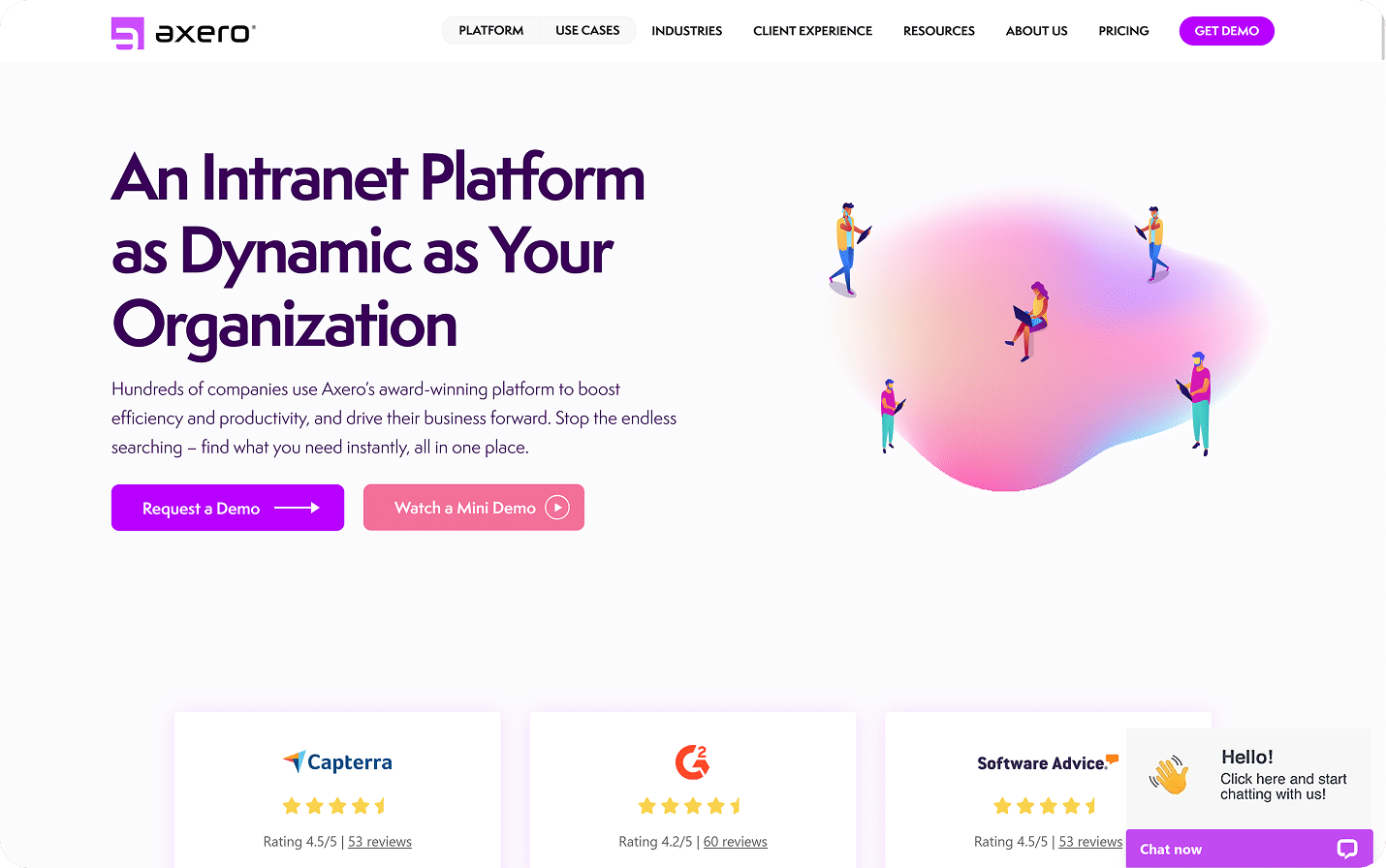
Axero is an intranet and collaboration platform designed to improve communication, knowledge sharing, and employee engagement.
Key Features
- Social intranet with blogs, forums, and wikis
- Document management and workflows
- Task management and employee directories
- Mobile app for on-the-go access
Pros
- Combines communication with productivity tools
- Strong knowledge sharing features
- Intuitive design for mid-sized organizations
Cons
- Limited advocacy features
- Fewer prebuilt integrations than larger platforms
Integrations
- Microsoft 365, Google Workspace
- APIs for custom integrations
What to Look for in a Unily Alternative
Once you’ve explored the platforms, the next step is deciding what matters most for your organization. Too often, companies get caught up in short-term fixes — a prettier intranet, a new email tool — only to realize those choices don’t scale. After testing these solutions across different industries, we recommend focusing on capabilities that will stand the test of time and deliver value beyond day one:
- Mobile-first design: Critical if you want to engage frontline and hybrid teams consistently.
- Smooth integrations: A platform that fits naturally with Microsoft 365, Google Workspace, Slack, Teams, and HRIS saves both IT headaches and employee friction.
- Employee advocacy: The ability for employees to amplify company messages externally is no longer a “nice-to-have”; it’s a measurable growth driver.
- Analytics: Actionable insights separate guesswork from strategy, helping you double down on what works.
- Scalability: Your platform should evolve with you, whether you’re adding new teams, new regions, or new communication channels.
By focusing on these long-term differentiators, you’ll avoid the trap of investing in yet another static intranet and instead build a communication strategy that grows with your business.
Final Thoughts
Unily remains a reliable intranet option, but modern organizations expect more than a branded portal. They want solutions that unify communication, foster culture, and empower employees to represent the brand externally.
That’s why so many enterprises are turning to alternatives that combine mobile-first communication, personalization, advocacy, and real-time engagement. These aren’t “extras” anymore, they’re the foundation of a digital workplace that actually works for people.
Poppulo brings all of these capabilities together in one platform. It informs, connects, and motivates employees while also turning them into authentic brand advocates. The result is more than improved communication; it’s a workforce that feels engaged, aligned, and proud to carry your brand forward.
We’ve already partnered with global leaders like Primark, Coca-Cola CCEP, and AXA to modernize their communication strategies.
Ready to see what Poppulo can do for your teams? Book a demo today.