Reaching a dispersed workforce scattered across regional or global offices comes with a unique set of obstacles. But like all obstacles, they are surmountable with the right approach. The key is to balance both local and universal concerns in a way that connects workers who have many things in common, while also addressing their unique needs.
Key Takeaways
- A weekly digest, manager briefing kit, and targeted decision summary are among the best internal communication ideas for turning company priorities into useful local information.
- Accessible internal communication uses multiple channels, such as mobile, web, workplace screens, and face-to-face huddles, because employees have different devices and schedules.
- A small internal communications team can scale its work by giving local contributors reusable formats, defined publishing rights, and a manageable communications calendar.
- A pilot should test two communication ideas at contrasting sites and measure readership, understanding, participation, and action separately.
With that in mind, this guide gives you 12 internal communication ideas for multi-site enterprises, with ways to adapt each one across languages, devices, and shifts. Use each internal communication idea's audience, owner, access route, and measure to choose two initiatives and assess what works best for your workforce.

Top Internal Communication Ideas for Multi-Site Enterprises
The best internal communication ideas usually fit employees' real-world working conditions. Each option below gives your internal communications strategy a defined audience, owner, access route, and useful success measure.
1. A Weekly Digest With Corporate and Local News
Use a shared format that pairs company news and strategic initiatives with site deadlines, achievements, and upcoming events sections. The corporate internal communication function owns the template and subject lines; a local communicator checks the local items.
Deliver employee newsletters by email, mobile, or intranet according to access, then measure readership by location. For example, VINCI Energies created regional and business-unit spaces with their own publishing rights, built on the intranet and multi-channel communication capabilities of the Poppulo Experience Platform.
2. Manager Briefing Kits for Team Huddles
A useful kit gives managers a core message, local implications, discussion prompts, and an escalation contact. The internal comms owner prepares it; site managers explain it during an existing huddle, then employees use a QR code, app, or shared computer to reach the source.
This approach supports managers without turning them into a relay. Track huddles completed, recurring questions, and unresolved issues. Our guide to supporting manager communication offers additional ways to build confidence through consistent messaging and effective communication.
3. Workplace Screen Updates for Every Shift
Keep each screen message to one point, one next action, and a follow-up route. An internal communication owner adapts it across shift patterns and pairs screens with mobile or kiosk access. The audience is employees who pass the screen, but a display count is not individual readership.
A good example of this is BBGR, a brand that combined mobile and web communication with screens in factories and common areas. Using Poppulo's workplace digital signage, they were able to extend employee communications to shared screens, to reach every worker. When it comes to analytics, measure QR visits, follow-up actions, or a shift-level quick check rather than impressions alone.
4. Employee Stories That Rotate Across Sites
Run an employee-created content feature that shows what one team does and how it supports company goals. An internal communication editor shapes the story, while a central owner rotates locations, roles, languages, and departments.
Publish through channels the target audience can access, then measure readership and representation. Comments create peer-to-peer communication, while our guide to global internal communications explores local relevance. Check whether remote workers, plant teams, and night shifts appear regularly, not only headquarters contributors. This boosts morale and will solidify company culture.
5. Recognition Stories That Include Frontline Contributions
Recognition is credible when colleagues can explain who benefited, what changed, and which company values the contribution demonstrated. A manager or HR partner collects examples across roles and shifts; the internal comms team reviews site representation.
Share stories through huddles, mobile, screens, or employee newsletters. Measure represented locations and roles alongside readership and employee engagement. You can reference the Poppulo guide to frontline employee recognition ideas for tips on making recognition specific to individual workers and roles.
6. A “You Said, We Did” Feedback Update
Have a site manager or HR partner report what employees raised, what changed, what remains unresolved, and when the next update will come. Gather feedback through employee surveys, focus groups, or an existing conversation, including an option without corporate email.
The owner tracks response time and overdue commitments, while the communication plan gives unresolved issues a return date. This approach to change through employee feedback helps close the loop and build a supportive environment.
7. Cross-Site Exchanges of Practical Improvements
Invite one location to share a tested improvement: the problem, change, owner, and contact. Another site decides whether to try it, adapt it, or explain why it does not fit. That turns horizontal communication into practical learning.
Use an intranet page, short video, or existing huddle to share the idea. Measure adoption by counting trials at other sites and recording what those sites learned, not the number of posts published.
8. Welcome Content Built Around Each Location
Combine an introduction to the company mission, core values, and employee benefits with local contacts, site rules, transport details, and a manager check-in. HR owns the journey; a site owner maintains local information.
Give new hires without corporate email mobile, QR-code, kiosk, or printed access. A location-specific employee app route can support onboarding across frontline sites. Measure completed steps, questions at the check-in, and outdated items reported.
9. A Recurring “Where to Find It” Feature in Your Communications Calendar
Choose one common employee question each week and point to an owned, current resource. The knowledge owner confirms the answer; an internal communication owner adapts it for the employee's location and shows how to report outdated information.
Use the same recognizable label across communication channels, but link to one source of truth. Track resource visits, failed searches, and corrections. AI can also be extremely effective when it comes to finding the right resource, as part of your system for knowledge management.
10. Short Quizzes After Important Updates
Use two or three scenario-based questions after a policy, safety, or process update. The subject owner explains every answer and names a follow-up contact; the internal communication owner provides mobile, kiosk, or huddle access.
Participation shows who attempted the quiz; correct responses indicate demonstrated understanding of those questions. Neither proves that an employee completed the required action. Compare results by site and shift, then clarify any key points that teams consistently miss.
11. Targeted Decision Summaries With a Clear Next Action
Translate a corporate decision into a local summary: what changes, who is affected, when it applies, and what to do. The decision owner approves the facts; local publishers tailor messages for language, schedule, and site impact.
Use audience segmentation and targeted delivery through the most accessible internal communication channels. Track reach, questions, demonstrated understanding, and completed action separately. An acknowledgment confirms receipt, not comprehension, while a completed form or changed process shows action.
12. Leadership Videos With Questions From Every Location
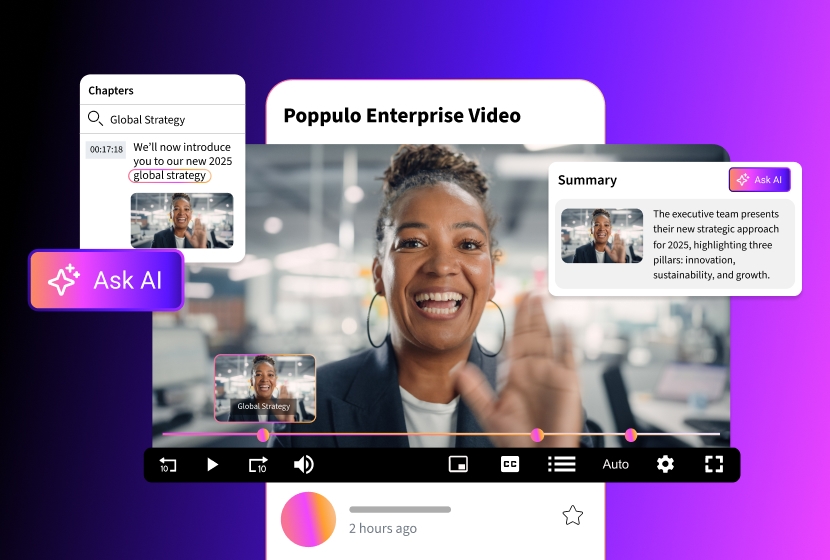
Ask a senior leader to record a focused update, add captions, and provide translations where needed. The internal communication owner leaves questions open across shifts and names who will publish answers. Employees watch through web, mobile, or a break-room screen and can submit questions privately.
Measure viewing by location, question themes, and the time taken to answer. Our article on internal communication videos can help you choose a format that serves the message.
How to Choose and Pilot Ideas Across Your Sites
When it comes to selecting the best pilot ideas, choose communication ideas first by the problem they solve, then test them in real working conditions. For example, Jenni Field's guidance for multi-site organizations recommends understanding how people work at each site and equipping managers to communicate well. This table breaks it down:
| Idea | Objective | Audience Access | Local Effort | Owner and Success Measure |
|---|---|---|---|---|
| Weekly digest | Relevant news | Email, mobile, intranet | Medium | Editors; site readership |
| Briefing kit | Explain change | Huddle plus source | Medium | Managers; questions resolved |
| Screen update | Reach shifts | Screen plus follow-up | Low | Site comms; next actions |
| Leadership video | Dialogue | Web, mobile, screen | Medium | Leadership comms; answers |
| Employee story | Site understanding | Web, mobile, newsletter | Medium | Editor; representation |
| Recognition story | Visible contribution | Huddle, mobile, screen | Medium | Manager or HR; representation |
| Feedback update | Close the loop | Form plus update | Medium | Site manager; response time |
| Improvement exchange | Share practice | Intranet, video, huddle | Medium | Owner; trials elsewhere |
| Welcome content | Onboarding | Mobile, QR, kiosk, print | High | HR and site; completed steps |
| Where to find it | Find answers | Owned resource | Low | Knowledge owner; corrections |
| Short quiz | Check understanding | Mobile, kiosk, huddle | Medium | Subject owner; correct responses |
| Decision summary | Prompt action | Targeted channel | Medium | Decision owner; action |
1. Select Ideas Against a Specific Communication Need & Communication Strategy
Start with an observed problem, not a favorite format. Missed shift updates might call for screens plus manager kits; unanswered questions might need videos plus a “You Said, We Did” update. This ties your internal communications plan to business objectives.
Choose two ideas and two contrasting sites, such as headquarters and a plant, or a large store and a small distribution center. Record each site's baseline, intended audience, access constraints, and target result before publishing so you can measure success fairly.
2. Assign Owners and Agree on Publishing Rules for Employee Communications
Record who owns the corporate message, what local publishers may adapt, who reviews translations, and when content expires. Give local owners templates and an escalation route. These rules make a strong internal communications strategy executable without removing local judgment.
For example, headquarters might receive: “The new expense policy starts May 1. Submit claims in the finance portal within 30 days.” A plant version could read: “The new expense policy starts May 1. Shift employees can submit claims at the training-room kiosk; ask Maria Chen for help before May 30.”
Compare pilot results with each site's baseline and intended audience. Readership shows exposure, a quiz can test understanding, contributions show participation, and a completed task shows action. Keep those key performance indicators separate so high activity does not hide a missed outcome.
Ask local owners what the data misses, including whether access was practical and translations arrived on time. Check that managers from different departments knew where to send questions and how to collect feedback. Update the communication strategy, format, or publishing rules before adding locations. Effective internal communications improve through focused tests.
Final Thoughts
The most effective internal communication ideas fit employees' working conditions and give local teams clear ownership within a shared internal communications plan. We suggest choosing two initiatives that address a visible need, piloting them at contrasting sites, and reviewing the results before expanding.
Want to explore these kinds of initiatives further? We're here to help. At Poppulo, we've already partnered with global leaders like Coca-Cola CCEP, Primark, and L'Occitane Group to connect employees across locations, and we'd love to do the same for your organization.
Sign up for a free demo and discover what the Poppulo Experience Platform can do for your company's internal communications.
Best Internal Communication Ideas FAQs
These answers cover common questions that arise when you put internal communication ideas into practice across multiple locations.
How Often Should You Refresh Your Internal Communication Plan and Ideas?
Review an idea when its usefulness drops, employee feedback identifies friction, or the team cannot sustain it. Keep formats that solve a clear need, then adjust their cadence, owner, or access route. Review the internal communications plan quarterly rather than replacing ideas on a fixed schedule.
How Can Small Communication Teams Support Many Locations?
Build reusable templates, set a realistic cadence, and recruit local contributors and brand ambassadors who understand site routines. Define what they may adapt and give them an escalation contact. The central internal comms team governs priorities and measurement while local owners keep information current.
How Can You Include Employees Who Work Across Several Sites?
Target information by role and home location, then let employees follow updates from other sites they regularly visit. Label the location and required action clearly. When audiences overlap, suppress duplicate updates where possible and maintain one current source so employees do not receive conflicting versions.
How Can You Encourage Participation Without Adding More Meetings?
Use asynchronous prompts, surveys embedded in existing channels, and short contribution windows within current work routines. Employees might submit a question after a shift briefing, share an improvement from a phone via a mobile app, or nominate a colleague during a weekly check-in. Participation should fit the workday and general employee sentiment, rather than compete with it.