
The Digital Signage Landscape: Current State and Future Outlook

Access Whitepaper
About this Whitepaper
Driven by the need for real-time, relevant, and targeted messaging at scale, digital signage has emerged as a key communication tool across all industries. From retail and hospitality to corporate offices and higher education, organizations today rely on digital signage to engage audiences, streamline operations, and drive business outcomes. As we delve into the current state and future outlook of the market, it becomes clear that digital signage is not just a trend, but a critical communication channel for customer and employee connections alike.
Even though digital signage seems ubiquitous across industries, the signage landscape is rapidly evolving, driven by technological advancements and changing consumer expectations. Artificial Intelligence (AI), augmented reality (AR), and data analytics are revolutionizing the way content is created, displayed, and personalized, enabling businesses to deliver more targeted, relevant, and impactful messages to their audiences. As companies seek to differentiate themselves in an increasingly competitive market, the ability to leverage these technologies effectively has become a critical factor in driving customer engagement and operational efficiency. This transformation presents both a challenge and an opportunity: organizations that adapt quickly can gain a significant competitive edge.
At the forefront of the digital signage market, Poppulo stands out as a leader in innovative solutions that empower organizations to communicate effectively in today’s saturated market. By offering cutting-edge features such as AI-driven content personalization, robust analytics, and seamless integration capabilities, Poppulo enables businesses to maximize the impact of their digital signage investments. As we explore the key drivers of market growth, emerging trends, and future innovations in this whitepaper, we’ll uncover how Poppulo’s unique approach to digital signage is helping companies create immersive experiences, enhance brand impact, and drive measurable business results in an increasingly screen-centric world.

Join The Mailing List to get The Latest Resources
Related Content
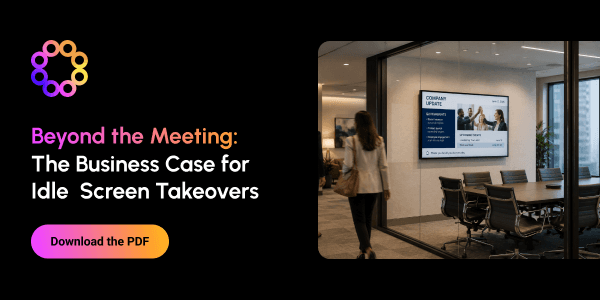
Beyond the Meeting: The Business Case for Idle Screen Takeovers
This guide explores how organizations can transform idle conference room screens into valuable employee communication channels. By displaying content between meetings—and automatically returning screens to their primary function when needed—businesses can extend the value of existing technology without disrupting workplace workflows. Idle screen takeovers can reinforce strategic priorities, expand campaign reach, promote time-sensitive information, improve meeting readiness, celebrate employee achievements, and deliver location- or audience-specific messages. The guide recommends keeping each screen focused on one clear message with concise copy, strong visual hierarchy, and an appropriate expiration date. The guide also provides a readiness checklist covering technical compatibility, stakeholder roles, content ownership, targeting capabilities, measurement, and governance. It encourages organizations to begin with a focused, low-risk pilot, evaluate its impact, and then scale the program across additional screens and locations.
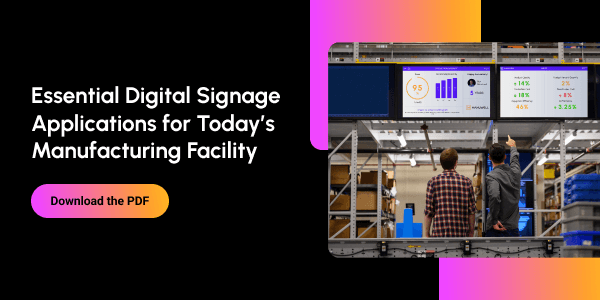
Essential Digital Signage Applications for the Modern Factory Floor
This guide explains how digital signage helps modern manufacturing facilities turn real-time information into action. Strategically placed screens give operators, supervisors, and plant leaders immediate visibility into production performance, machine status, schedules, alerts, standard work instructions, and operational milestones. It also highlights applications that support quality, safety, and employee communication. These include inspection and scrap dashboards, environmental monitoring, process-change notifications, safety metrics, hazard and emergency alerts, training reminders, company news, HR updates, and employee recognition. By connecting digital signage with MES, business intelligence, maintenance, quality, equipment, inventory, and logistics systems, manufacturers can bring previously siloed data directly onto the factory floor. The result is stronger situational awareness, faster responses, better coordination, and improved productivity, quality, safety, and workforce alignment.
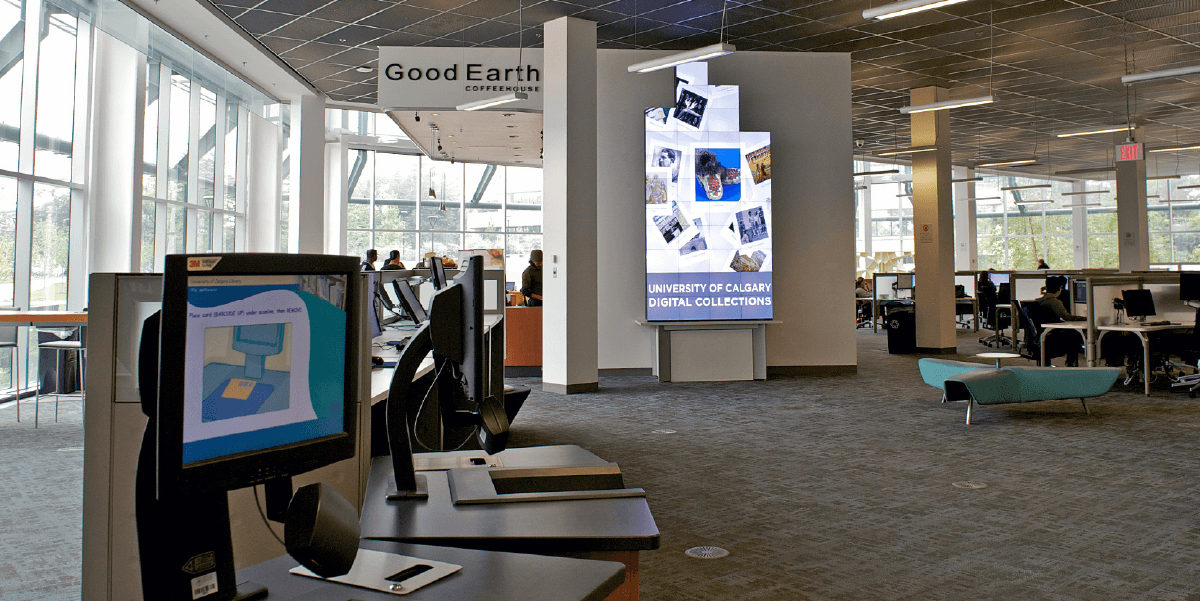
Campus Communication Reimagined: The Digital Signage Advantage
Over the past two decades, campus communication has shifted from posters and email blasts to a complex web of comms channels that are accessible to students, faculty, and visitors throughout their days. The modern university is both physical and digital, and the speed of communication must meet the needs of a digitally-native generation. In this environment, digital signage has moved from a nice-to-have to a strategic medium—visible, immediate, and flexible—one that connects a dispersed campus. This whitepaper explores how institutions are using digital signage to communicate smarter and faster, and how to build a program that is easy to operate, simple to scale, and resilient in the moments that matter most. Drawing on Poppulo’s expertise in digital signage for college campuses , we’ll share how leading universities are centralizing digital signage management, empowering multiple departments, and using data and design to make every message count. Keep reading to learn how top universities are leveraging digital signage to create more connected, informed, and vibrant campus communities, setting new standards for communication in higher education.