Winning Formula: How Internal Comms Can Make or Break HR & Change Initiatives
Watch On-demand

Speakers

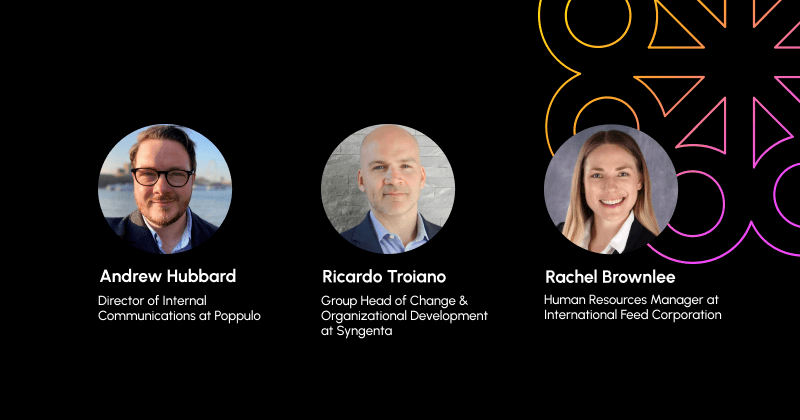
Ricardo Troiano
Global Head of Change & Organizational Development, Syngenta Group

Andrew Hubbard
Senior Director of Communications, Poppulo

Rachel Brownlee
Human Resources Manager at International Feed Corporation, International Feed Corporation
About this webinar
Today’s uncertain economic outlook and fast pace of change mean that businesses must continue transforming to keep up, and for most companies, HR and Transformation teams play a critical role in managing the necessary changes.
But the process of implementing change while continuing to drive business initiatives forward introduces several challenges for both HR and Transformation teams, adding to the hurdles they face as part of day-to-day operations.
The key to navigating these challenges is putting the most important part of the organization at the center of your strategy—the people. And putting your people first requires effective internal communication. Companies today must treat comms as the connector between all parts of the business to not only address the most common HR and change management challenges, but also drive key initiatives for the overall business.
Join us for a discussion with Ricardo Troiano, Global Head of Change & Organizational Development at Syngenta, Andrew Hubbard, Director of Internal Communications & Engagement at Poppulo, and Rachel Brownlee, Human Resources Manager at International Feed Corporation. In this webinar, we’ll dive into the top challenges that HR and Transformation professionals face in 2023, and how an integrated communications strategy plays a key role in solving these challenges.
You’ll learn:
- The top pain points for different business functions
- The role that communication plays in solving these challenges
- How IC can partner with HR and Transformation teams to drive business initiatives
Access On-Demand Webinars
L’employee advocacy à l’ère de l’IA: vos collaborateurs deviennent votre meilleur levier de visibilité
La façon dont nous découvrons l’information évolue. La recherche alimentée par l’IA s’intègre progressivement dans les usages quotidiens, tandis que les voix de confiance et les expertises reconnues jouent un rôle croissant dans la visibilité des entreprises. Au cours de cette session, nous verrons ce que ces évolutions impliquent pour l’employee advocacy et comment adapter votre programme pour en tirer pleinement parti. Nous nous intéresserons aux contenus qui fonctionnent aujourd’hui, aux différents profils que vous pouvez mobiliser (dirigeants, experts, ambassadeurs et collaborateurs), ainsi qu’aux leviers concrets pour renforcer votre visibilité, l’engagement et l’impact de vos prises de parole. Nous vous montrerons également comment Poppulo permet de déployer concrètement une stratégie d’employee advocacy, facilement et à grande échelle. Découvrez comment mobiliser les bonnes personnes, leur proposer des contenus pertinents, faciliter leur participation et piloter efficacement votre programme, le tout depuis une plateforme unique. Au programme: • Comment l’IA transforme la visibilité et la découverte de l’information, et pourquoi la voix et l’expertise des collaborateurs comptent plus que jamais • Les clés d’un contenu d’Employee Advocacy performant aujourd’hui : une expertise utile et authentique, associée à des contenus pensés à la fois pour les internautes et pour l’IA • Comment mobiliser les bonnes voix, des dirigeants et experts métier aux ambassadeurs et à l’ensemble de vos collaborateurs • Comment construire un programme d’employee advocacy plus performant et plus intelligent pour gagner en visibilité, stimuler l’engagement et générer un impact mesurable • Comment Poppulo facilite concrètement l’employee advocacy en vous aidant à proposer des contenus pertinents, à engager vos collaborateurs et à piloter votre programme à grande échelle À qui s’adresse ce webinar: Aux professionnels de la communication, des réseaux sociaux, de la marque employeur, du marketing et de l’engagement collaborateur qui souhaitent lancer, renforcer ou déployer à plus grande échelle un programme d’employee advocacy. Que vous disposiez déjà d’un programme bien établi ou que vous commenciez tout juste à explorer l’employee advocacy, vous repartirez avec des pistes concrètes pour accroître la participation de vos collaborateurs et maximiser l’impact de votre programme. Inscrivez-vous dès maintenant pour découvrir comment l’employee advocacy évolue à l’ère de l’IA et comment faire de la voix et de l’expertise de vos collaborateurs de véritables leviers de visibilité et d’impact.
Employee Advocacy in the Age of AI: Build Visibility Through Your People
The way people discover information, brands, and expertise is changing. AI-powered search becomes part of everyday discovery, while trusted human voices and credible expertise are playing an increasingly important role in how organizations build visibility. In this session, we’ll explore what these shifts mean for employee advocacy and how you can adapt your program to make the most of it. We’ll look at the types of content that perform today, the different voices you can activate (from leaders and experts to ambassadors and employees) and practical ways to strengthen visibility, engagement, and impact. We’ll also show you how Poppulo brings employee advocacy to life and makes it easy to put into practice and scale. See how you can activate the right people, deliver relevant content, make participation simple for employees, and manage your program effectively. All from one platform. What you’ll learn : How AI is changing visibility and discovery, and why employee voices and expertise matter more than ever What makes advocacy content effective today, from useful, authentic expertise to content structured for both people and AI How to activate the right voices, from leaders and subject-matter experts to ambassadors and wider employee communities How to build a stronger, smarter advocacy program that drives visibility, engagement, and measurable impact How Poppulo supports employee advocacy in practice, making it easier to deliver relevant content, engage employees, and manage your program at scale Who it’s for: Communications, social media, employer brand, marketing, and employee engagement professionals who want to build, strengthen, or scale an employee advocacy program. Whether you’re already running an established program or exploring employee advocacy for the first time, you’ll leave with practical ideas to increase participation and impact. Watch now to discover how employee advocacy is evolving, and how to turn your employees’ voices and expertise into greater visibility and impact.
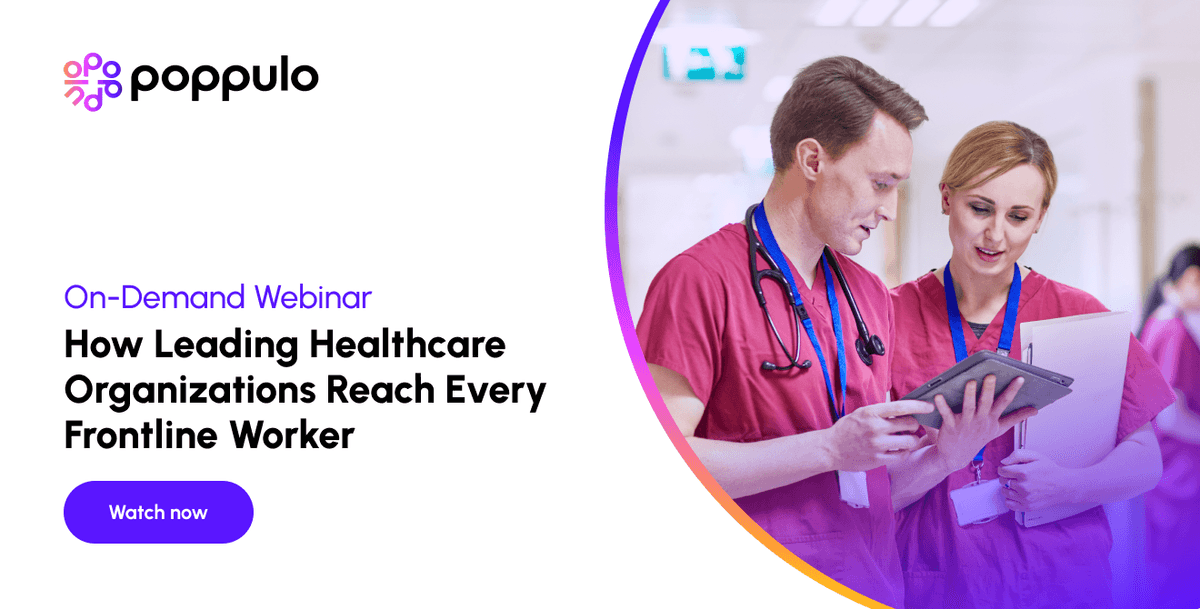
How Leading Healthcare Organizations Reach Every Frontline Worker
Ask a hospital's communications team whether last week's safety alert reached every person who needed it—nurses, care assistants, porters, techs, cleaners, kitchen staff—and most can't tell you. The message went out, but who read it is guesswork. That blind spot is the real problem, and it starts with the staff. Most of the people keeping a hospital running have no company email and no desk, so an update reaches them through a manager who remembers to pass it on—or it doesn't reach them at all. When that message is a changed protocol or updated equipment guidance, a missed message is a patient-safety risk you never see. What you'll learn During this session, we'll show how healthcare organizations: Reach every clinical and support worker across hospitals, clinics, home visits, and community sites, without relying on email or a shared device. Deliver shift-relevant safety and compliance alerts with read tracking and must-read acknowledgment. Personalize communications by role, location, shift, and language, so people get only what's relevant to them. Use AI to help staff find the right policy or procedure in seconds. Replace scattered, manager-by-manager messaging with communications every employee receives, whatever their shift or location. Support wellbeing and recognition programs that help retain people in demanding roles. Let ward and department leaders communicate locally while central teams keep governance intact. See who opened and acknowledged each critical message. Watch the on-demand recording now.